
Arabs on Horseback — History & Facts
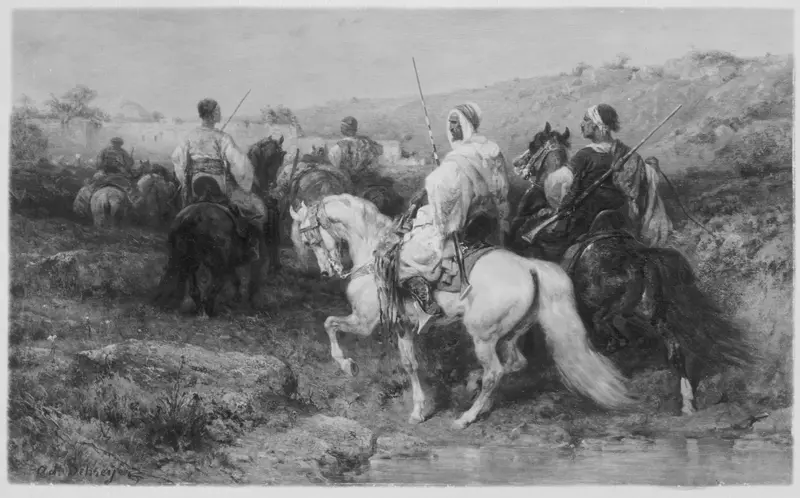
What first seizes the eye in Arabs on Horseback is the restless energy of the horses, their hooves caught mid-stride, as if the entire company might thunder out of the frame at any moment. The artist, Adolf Schreyer, orchestrates a scene of motion and command: two riders at the fore exchange a glance, one gesturing with his rifle, the other’s mount prancing, its flanks tense beneath elaborate trappings. Sunlight glances off white burnooses and the glossy coats of the horses, while the dust and earth churned up beneath them blurs the boundary between foreground and the distant, sun-bleached settlement.
The palette is earthy and robust, the brushwork loose where the dust swirls, tightening to describe the proud arch of a horse’s neck or the glint of metal on a saddle. This is a painting born from the nineteenth-century European fascination with North Africa, a genre often called Orientalism. Artists like Schreyer—celebrated in his day for his equestrian scenes—catered to an audience hungry for images of distant lands, their customs and conflicts rendered dramatic and immediate. Such works were collected by European patrons who rarely traveled so far themselves, eager to possess a vision of the exotic that was both thrilling and safely contained within a gilded frame.
Today, Arabs on Horseback resides in the Princeton Art Museum, a reminder both of the era’s tastes and of the enduring power of a well-captured moment of motion and encounter. The story it tells is as much about the gaze of the viewer as the riders themselves—look again, and see where your own imagination is led.
More Artworks by Adolf Schreyer
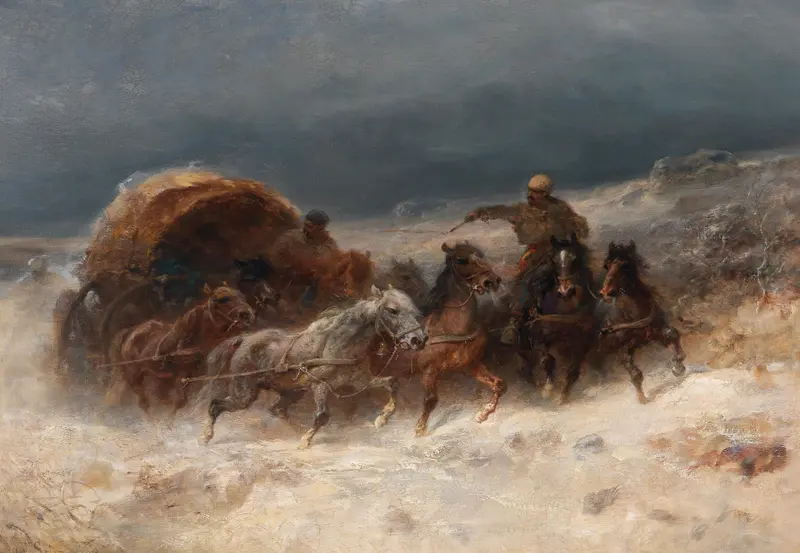
Geldings In A Winter Landscape
Adolf Schreyer
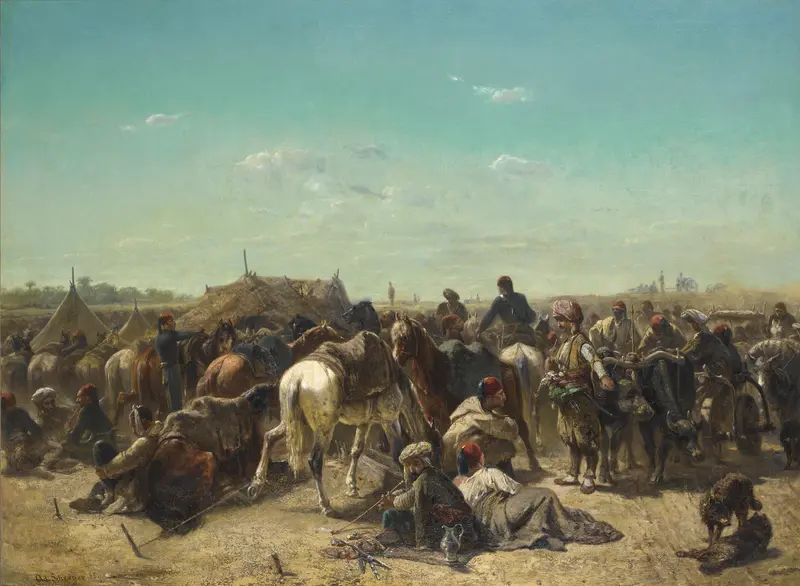
An Ottoman encampment
Adolf Schreyer
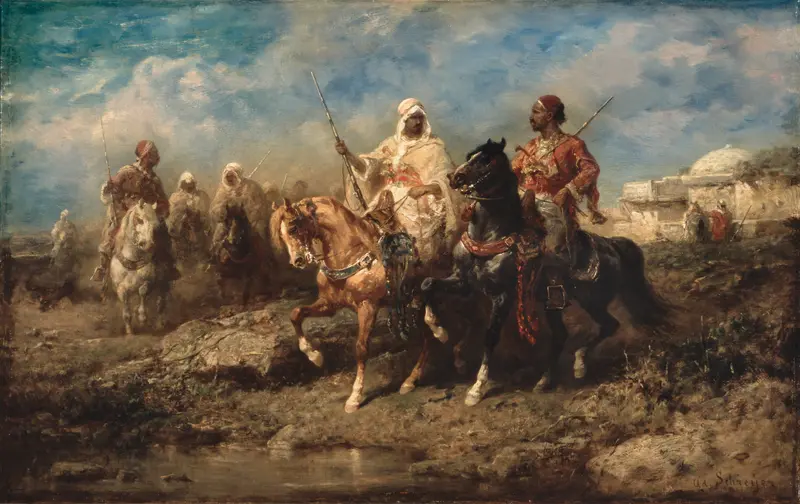
Arabs
Adolf Schreyer
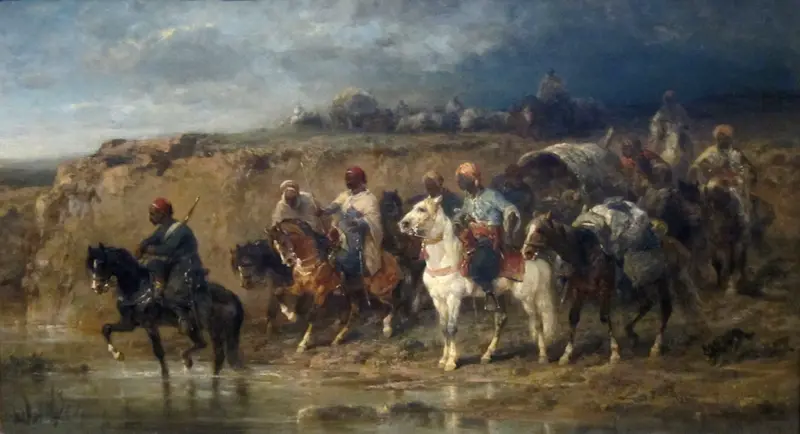
Arab Caravan
Adolf Schreyer
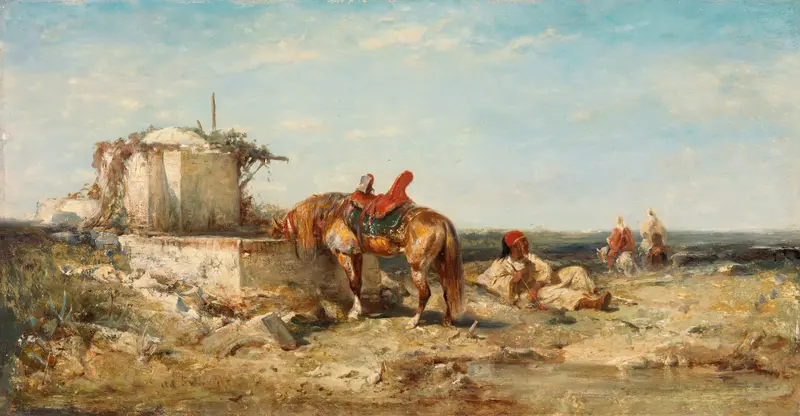
Eastern Soldiers with a Horse Drinking
Adolf Schreyer
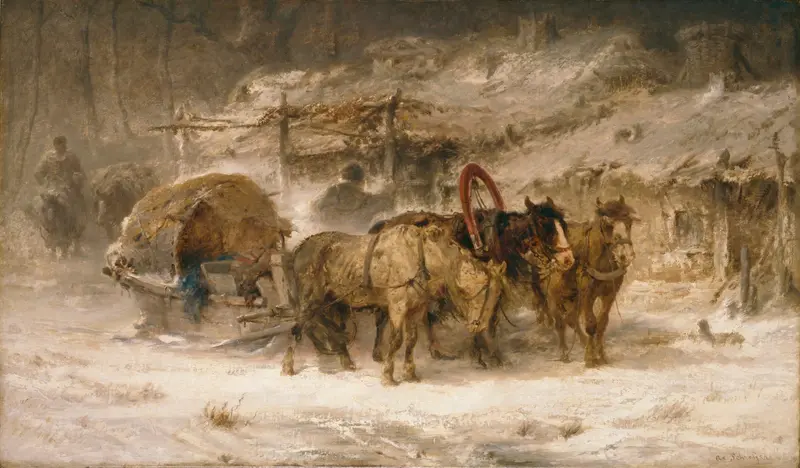
Halt at the Inn
Adolf Schreyer
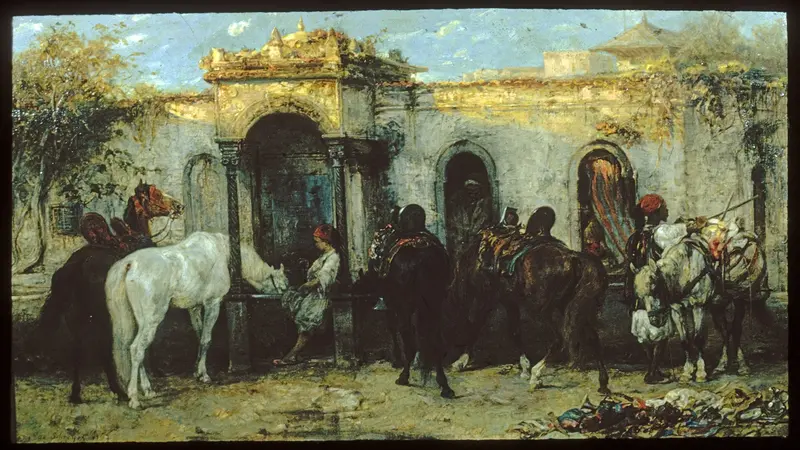
Arabs in Egypt, Sunrise
Adolf Schreyer
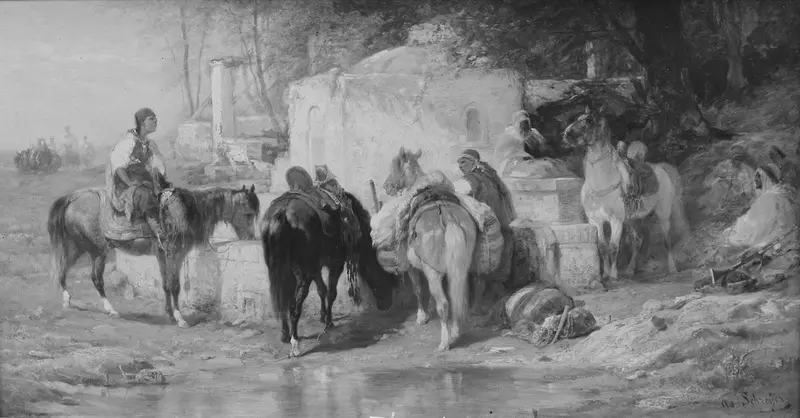
Arab Horsemen Resting at a Fountain
Adolf Schreyer
Arabs on the March
Adolf Schreyer
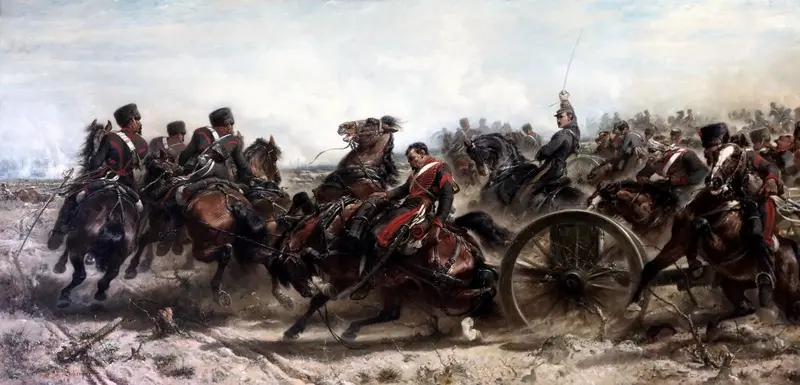
Charge de l'artillerie de la Garde Impériale à Traktir Orsay RF 440
Adolf Schreyer





