
Arakawa no tsuki, Akabane (Moon on the Arakawa River in Akabane) — History & Facts
In the delicate interplay of light and shadow, an illusion of tranquility emerges, inviting contemplation of the unseen. Look to the foreground, where the smooth surface of the Arakawa River reflects the silvery glow of the moonlight. The subtle gradations of blue and grey evoke a sense of calm, while the silhouettes of trees flanking the river’s banks create a harmonious border, guiding your gaze to the luminous orb above. The artist's masterful use of Ukiyo-e techniques—layering colors and utilizing negative space—imbues the scene with an ethereal quality, capturing a fleeting moment suspended in time. Beneath this serene facade lies a poignant tension; the silence of the water belies the frenetic life of the city beyond the horizon.
The moon, a symbol of longing and introspection, casts its light on the river, suggesting both the beauty and the melancholy of fleeting moments. The contrast between the tranquil landscape and the implied vibrancy of urban existence raises questions about connection and isolation, echoing the complexities of life itself. In 1929, Kawase Hasui painted this work during a period of significant change in Japan, where traditional aesthetics were being challenged by modernity. As a leading figure in the Shin-hanga movement, he sought to bridge the old and new, capturing the essence of natural beauty in an increasingly industrial world.
This painting reflects both his dedication to the Ukiyo-e tradition and his response to the transformative currents of his time.
More Artworks by Kawase Hasui
Browse all →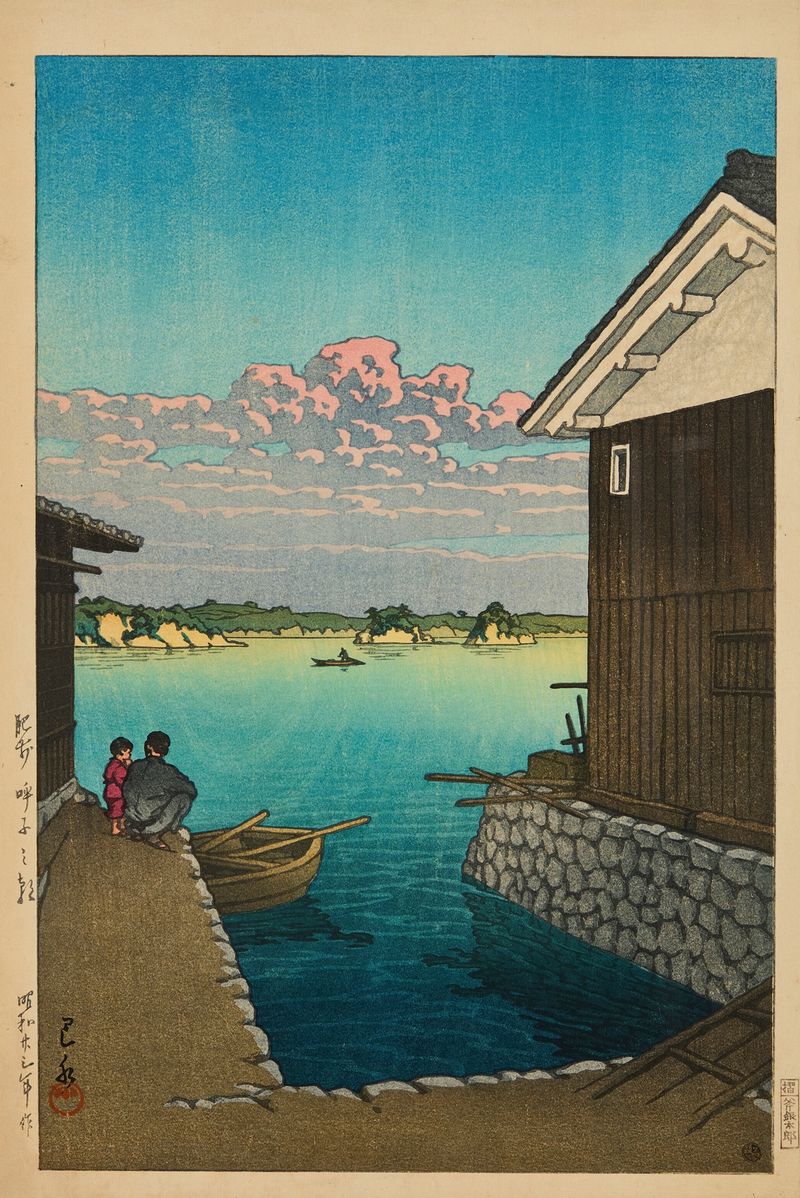
Hizen Yobuko no asa (Morning in Yobuko, Hizen)
Kawase Hasui
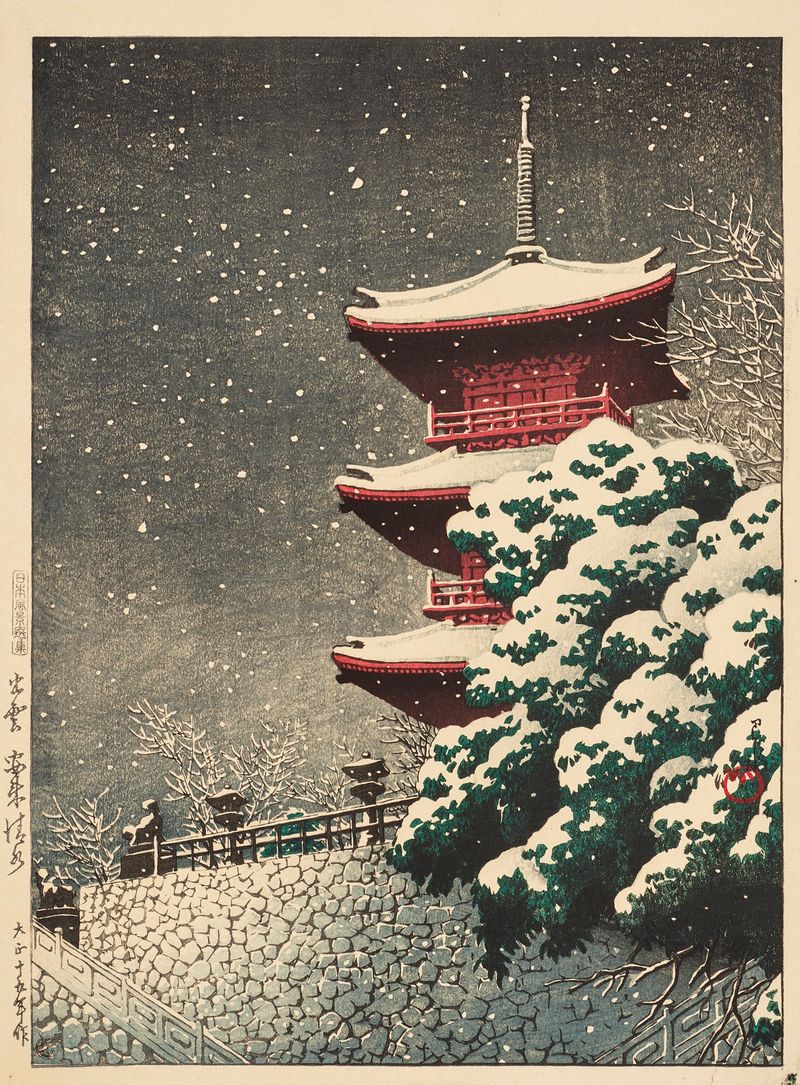
Izumo, Yasugi Kiyomizu (Yasugi Kiyomizu Temple at Izumo)
Kawase Hasui
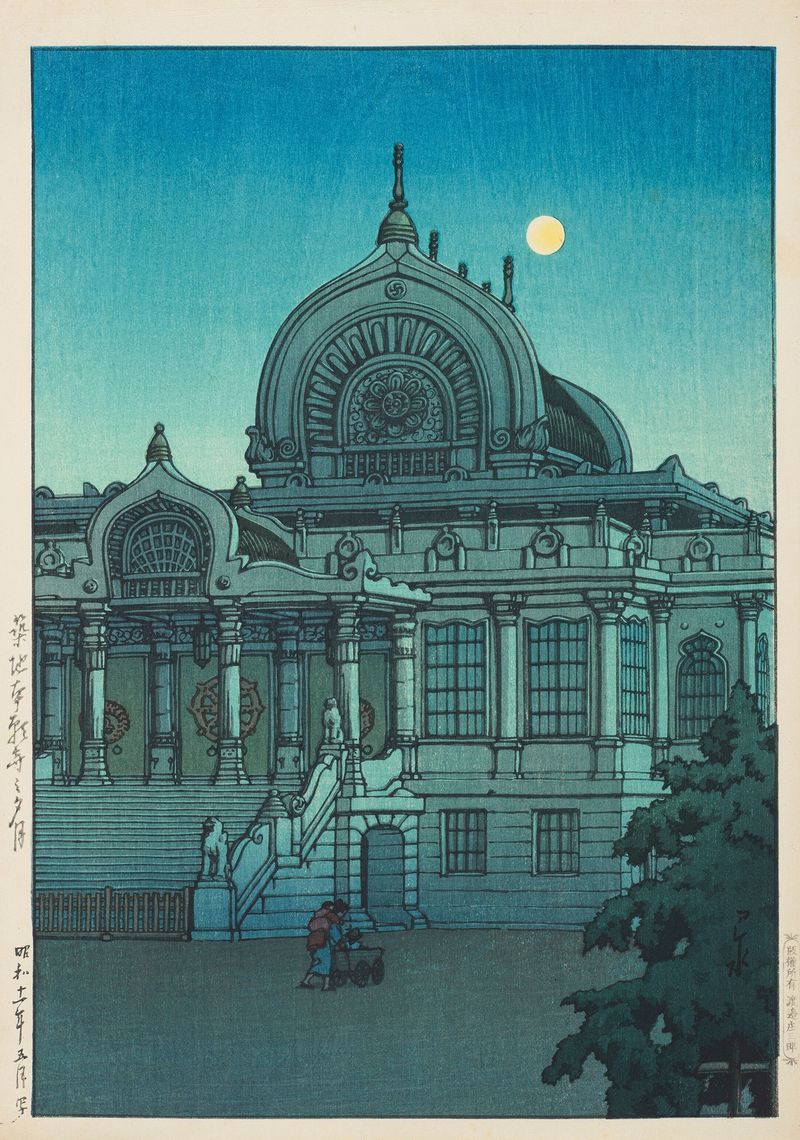
Tsukiji Honganji no yuzuki (Evening moon at Honganji Temple in Tsukiji)
Kawase Hasui
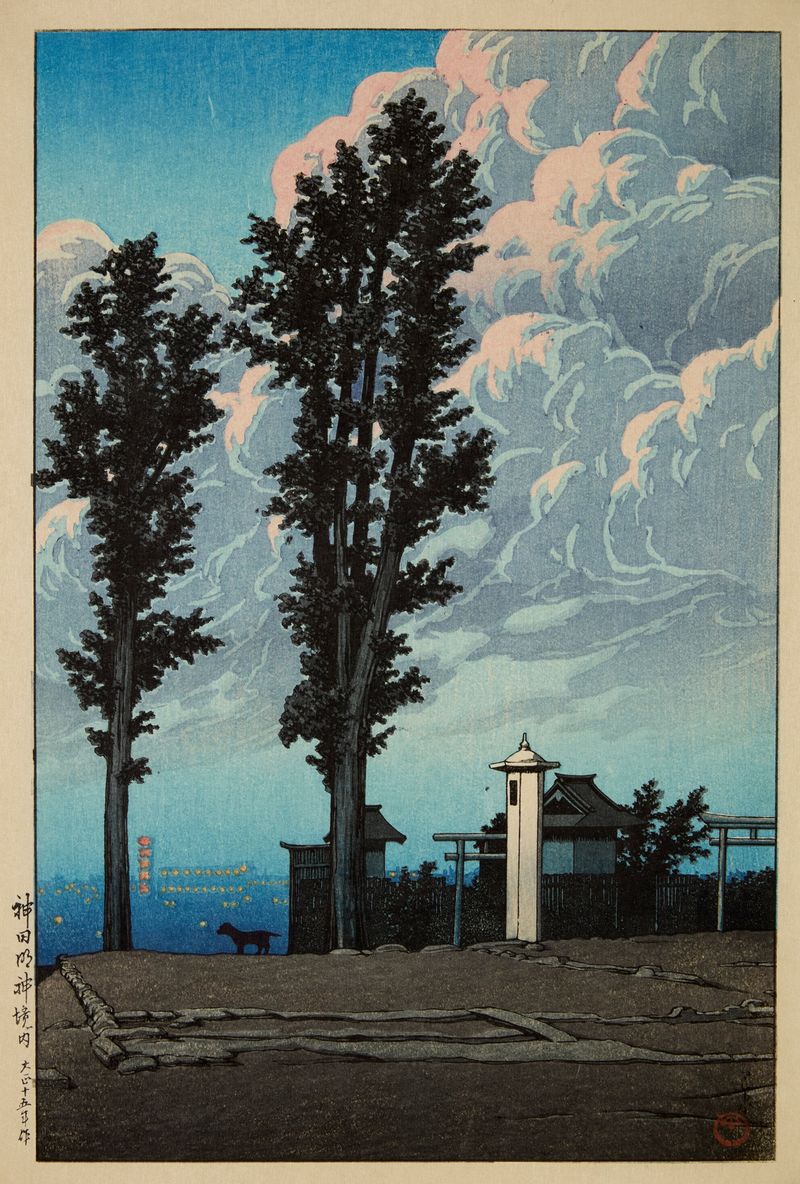
Kanda Myojin keidai (Kanda Myojin Shrine precent)
Kawase Hasui
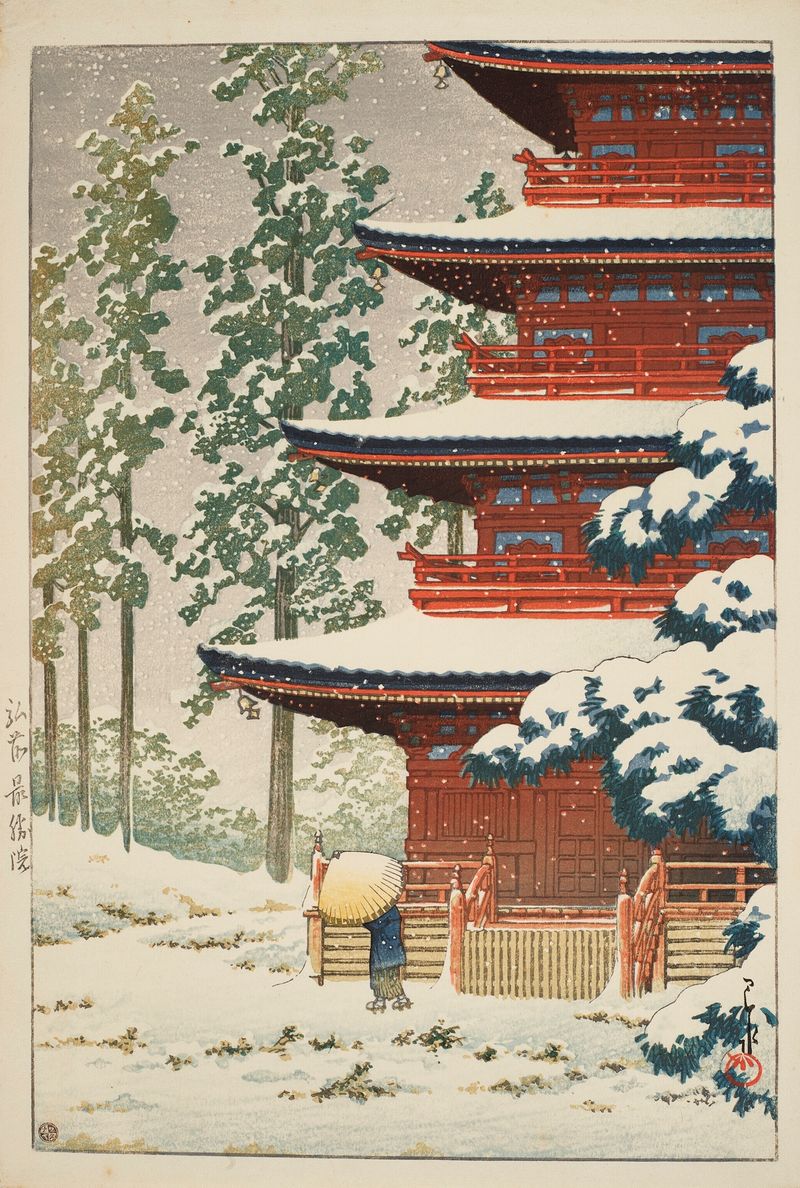
Saisho-in Temple, Hirosaki
Kawase Hasui
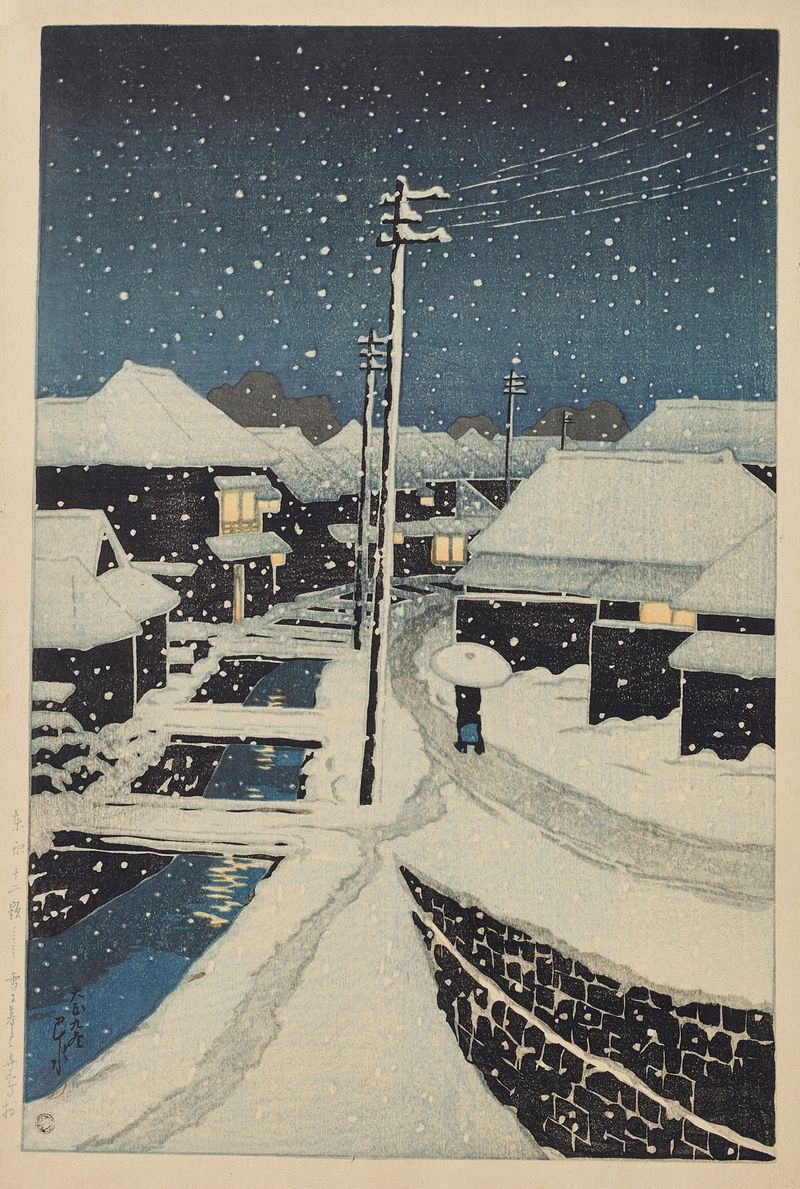
Yuki ni fururu Terajima mura (Evening snow at Terajima Village)
Kawase Hasui
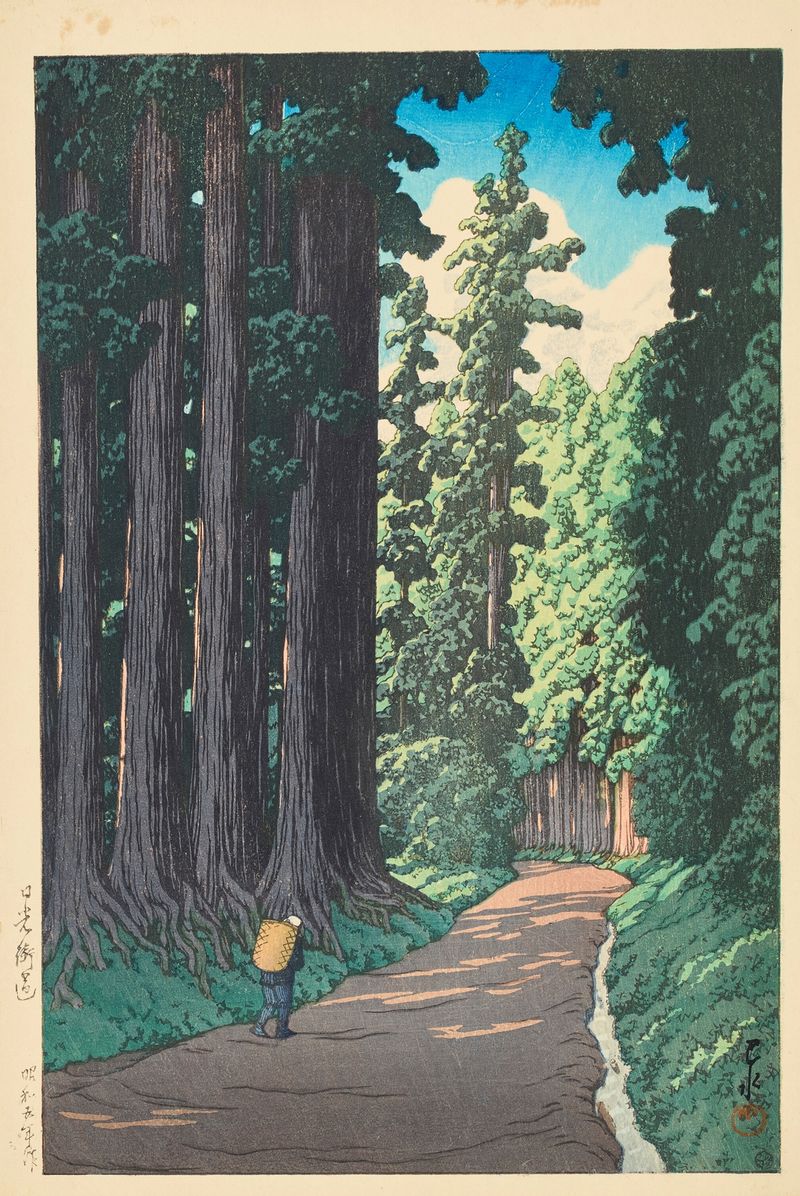
Nikko gaido (The Road to Nikko)
Kawase Hasui
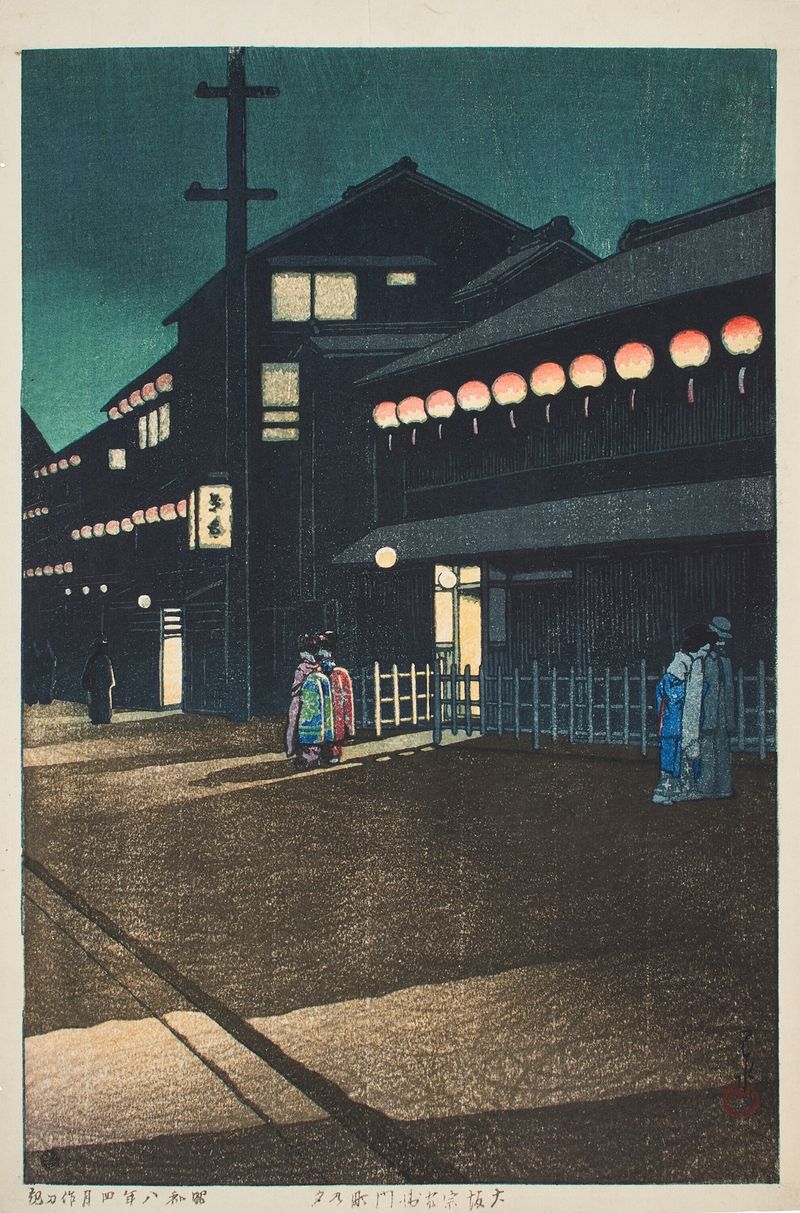
Osaka Soemon-cho no yu (Evening in Soemon-cho, Osaka)
Kawase Hasui
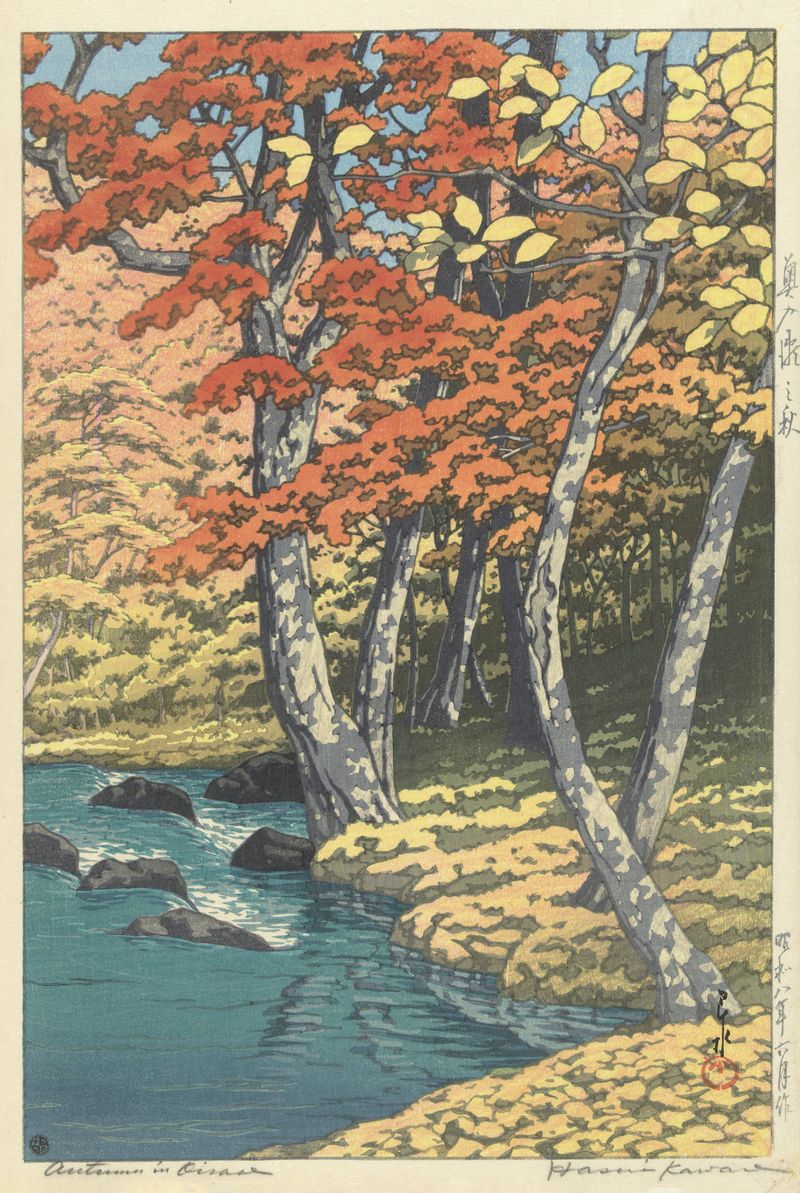
Autumn In Oirase
Kawase Hasui
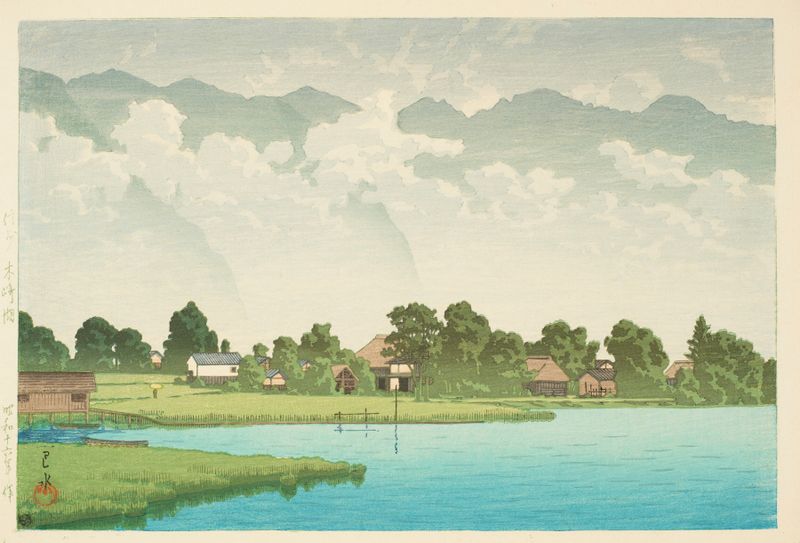
Shinshu Kizakiko (Kizaki Lake in Shinshu)
Kawase Hasui





