
Arbeit auf dem Feld — History & Facts
Can paint confess what words never could? In Arbeit auf dem Feld, movement becomes the silent language through which toil and nature dance together in harmonious labor. Look to the left at the figure, a farmer with bent shoulders, caught in a moment of laborious grace. Notice how the vibrant greens of the field flow like waves beneath the weight of his work, contrasting against the rich earthy browns of the soil. The brushwork is both lively and textured, capturing the essence of movement, as if the canvas breathes with the rhythm of nature’s cycle and the laborer’s dedication. Delve deeper into the details—the sunlit patches illuminating the farmer’s back while shadows linger around him evoke a poignant sense of solitude amidst toil.
The distant hills, softly blurred, suggest the vastness of the world beyond the field, hinting at the struggles and dreams of those who labor beneath the sky. This contrast between the intimate moment of work and the expansive landscape speaks to the unyielding connection between humanity and the land, presenting both vulnerability and resilience. Hugo Mühlig painted this scene in 1898, during a period when the agrarian lifestyle was undergoing profound changes due to industrialization. Living in Germany, he sought to capture the dignity of rural laborers and the beauty of their relationship with the earth.
This work reflects the broader art movements of the time, where artists were increasingly drawn to subjects that celebrated the simple, yet profound aspects of everyday life.
More Artworks by Hugo Mühlig
Browse all →
Sommerliche Heuernte
Hugo Mühlig

Holzfäller am Feuer
Hugo Mühlig

Horse cart on a hill
Hugo Mühlig
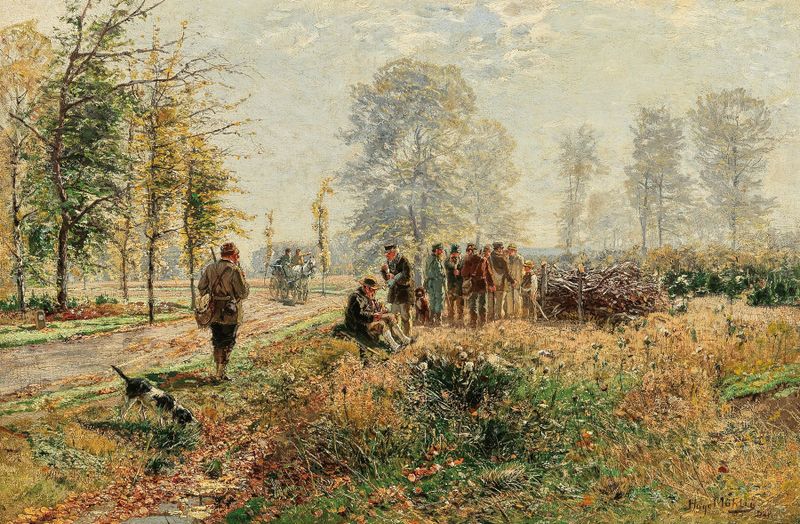
Aufbruch zur Jagd
Hugo Mühlig

Schäfer auf dem Heimweg
Hugo Mühlig
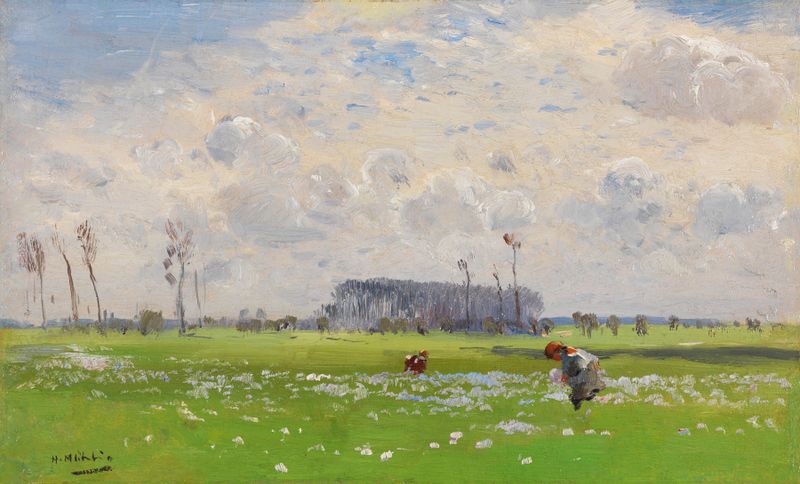
Sommerwiese mit blumenpflückenden Mädchen
Hugo Mühlig
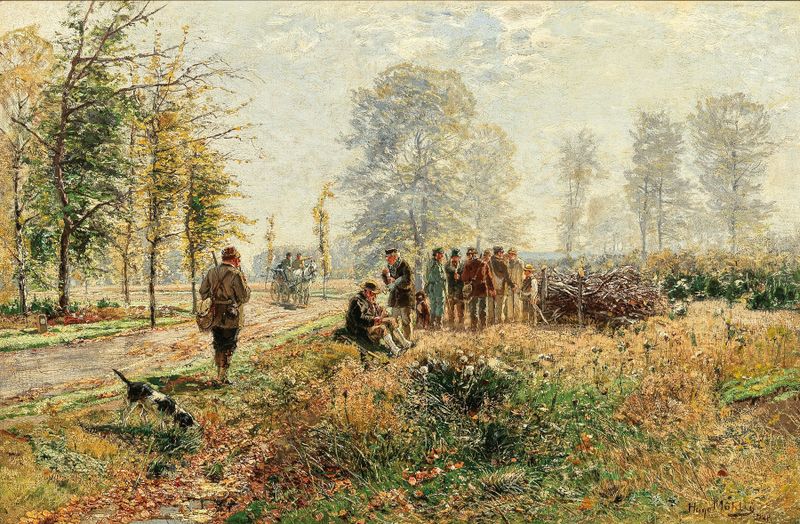
Off to the Hunt
Hugo Mühlig

Bei der Ernte (Niederrhein)
Hugo Mühlig
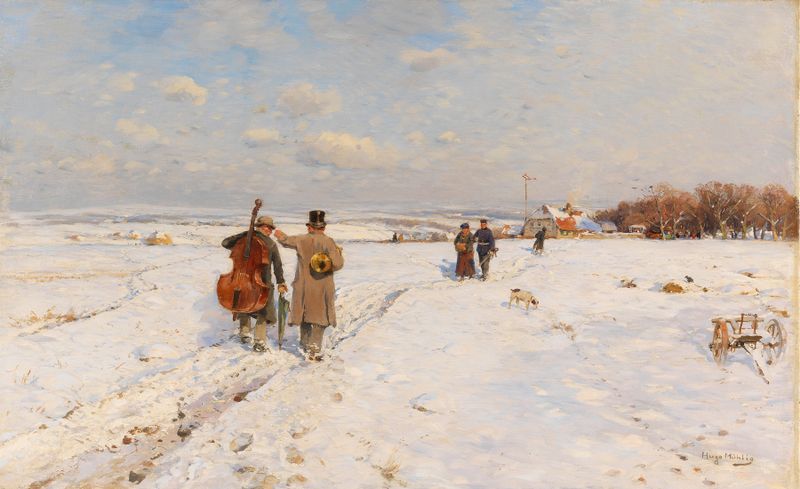
Heimkehrende Musikanten im Schnee
Hugo Mühlig
Herbstmorgen am Niederrhein
Hugo Mühlig





