
Arcadian landscape — History & Facts
Can beauty exist without sorrow? In the lush expanse of a pastoral scene, Jan van Huysum captures the delicate balance between life's vibrancy and its inevitable decay. Look to the left at the vivid greens, where trees stand like sentinels, their foliage intricately detailed and alive. Notice the soft, golden light bathing the landscape, creating a warm embrace that draws your gaze across the serene water. The gentle undulations of the hills in the background contrast with the meticulous foreground, where flora bursts forth in a riot of colors—each petal rendered with painstaking precision.
This interplay of shadow and light not only highlights van Huysum's mastery of texture but also invites contemplation of the transient nature of beauty. As your eyes wander through the scene, subtle hints of mortality begin to surface. The vibrant flowers, though stunning, are emblematic of a fleeting existence, reminding the viewer of nature's impermanence. In the distance, a soft haze envelops the horizon, suggesting an uncertain future that looms over the idyllic surroundings.
This balance of life and decay resonates with a quiet tension, prompting reflection on the fragility beneath the surface beauty. In 1729, van Huysum was considered one of the leading still-life painters in the Netherlands, famed for his ability to infuse vibrancy into lifeless subjects. This work was created during a period when the art world was shifting, moving towards more nuanced representations of nature and life. Amidst this transition, he dedicated himself to exploring themes of transience and beauty, leaving behind a legacy that would resonate well beyond his time.
More Artworks by Jan van Huysum
Browse all →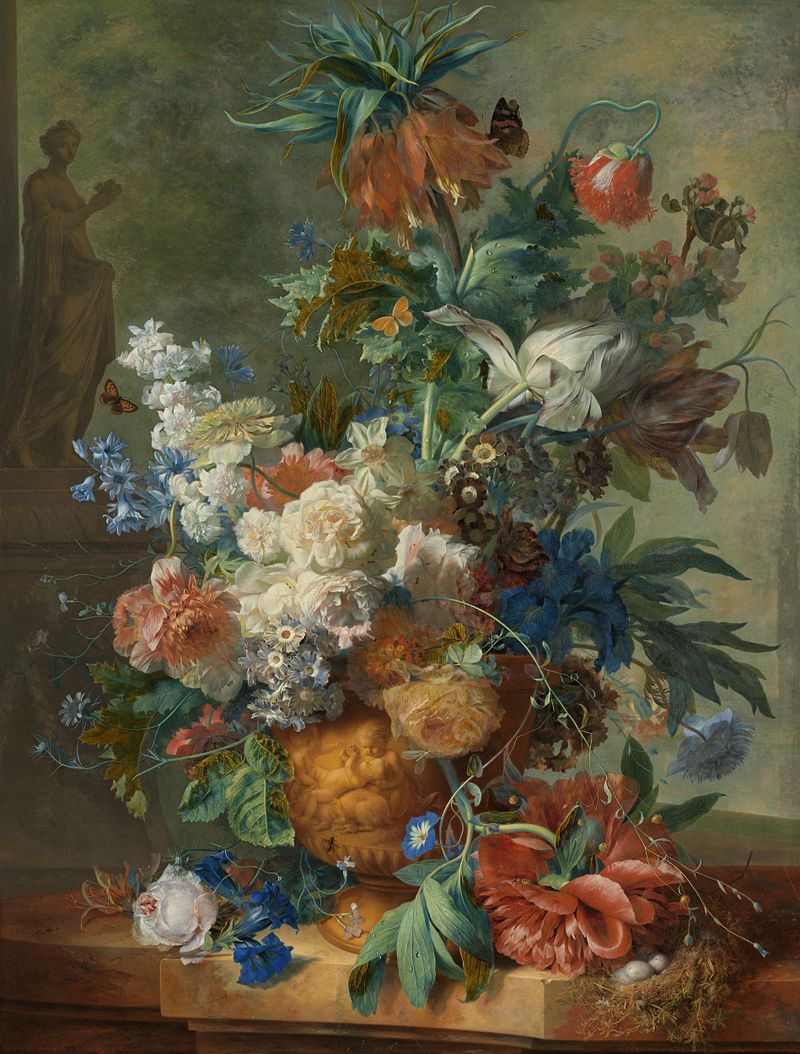
Still Life with Flowers
Jan van Huysum

Rosella
Jan van Huysum
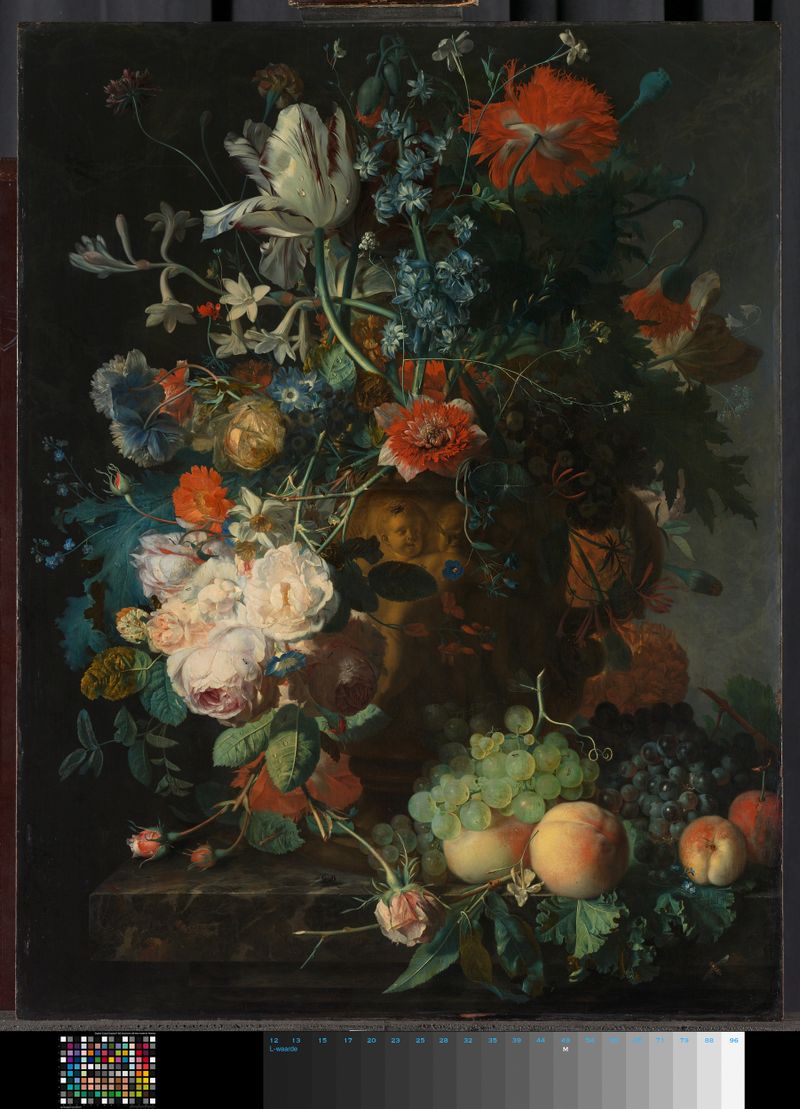
Still Life with Flowers and Fruit
Jan van Huysum
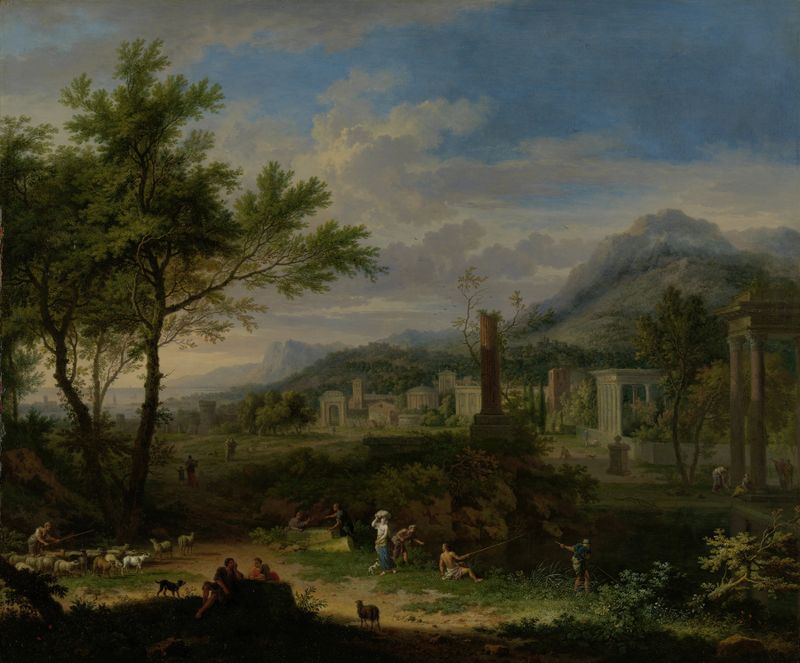
Arcadian Landscape with Fishermen
Jan van Huysum

Arcadian Landscape with Figures Making Music
Jan van Huysum
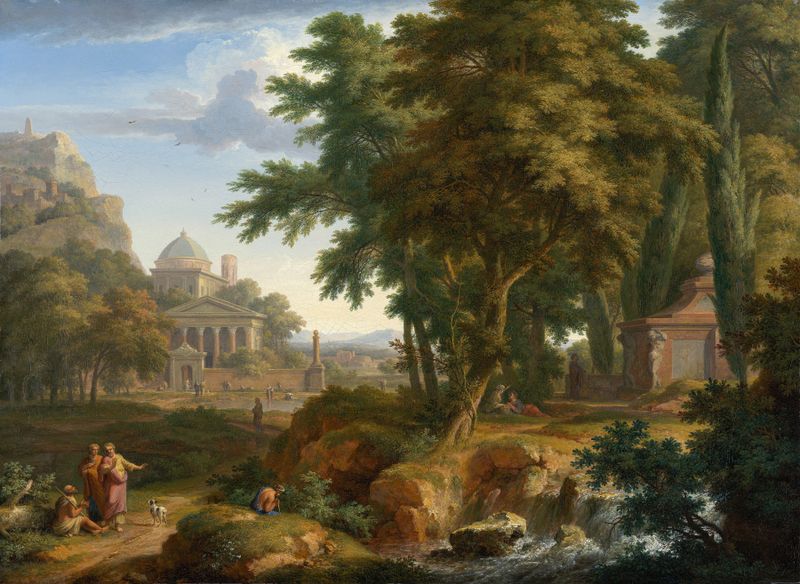
Arcadian Landscape with Saints Peter and John Healing the Lame Man
Jan van Huysum

Italian Landscape
Jan van Huysum

Landschaft mit einer italienischen Stadt bei einem hohen Berg, rechts die Ruine eines Tempels, im Vordergrund zwei Figuren und ein Hund
Jan van Huysum

Italienische Landschaft mit Wasserfall und rastenden Hirten
Jan van Huysum

Arcadian Landscape with a Bust of Flora
Jan van Huysum





