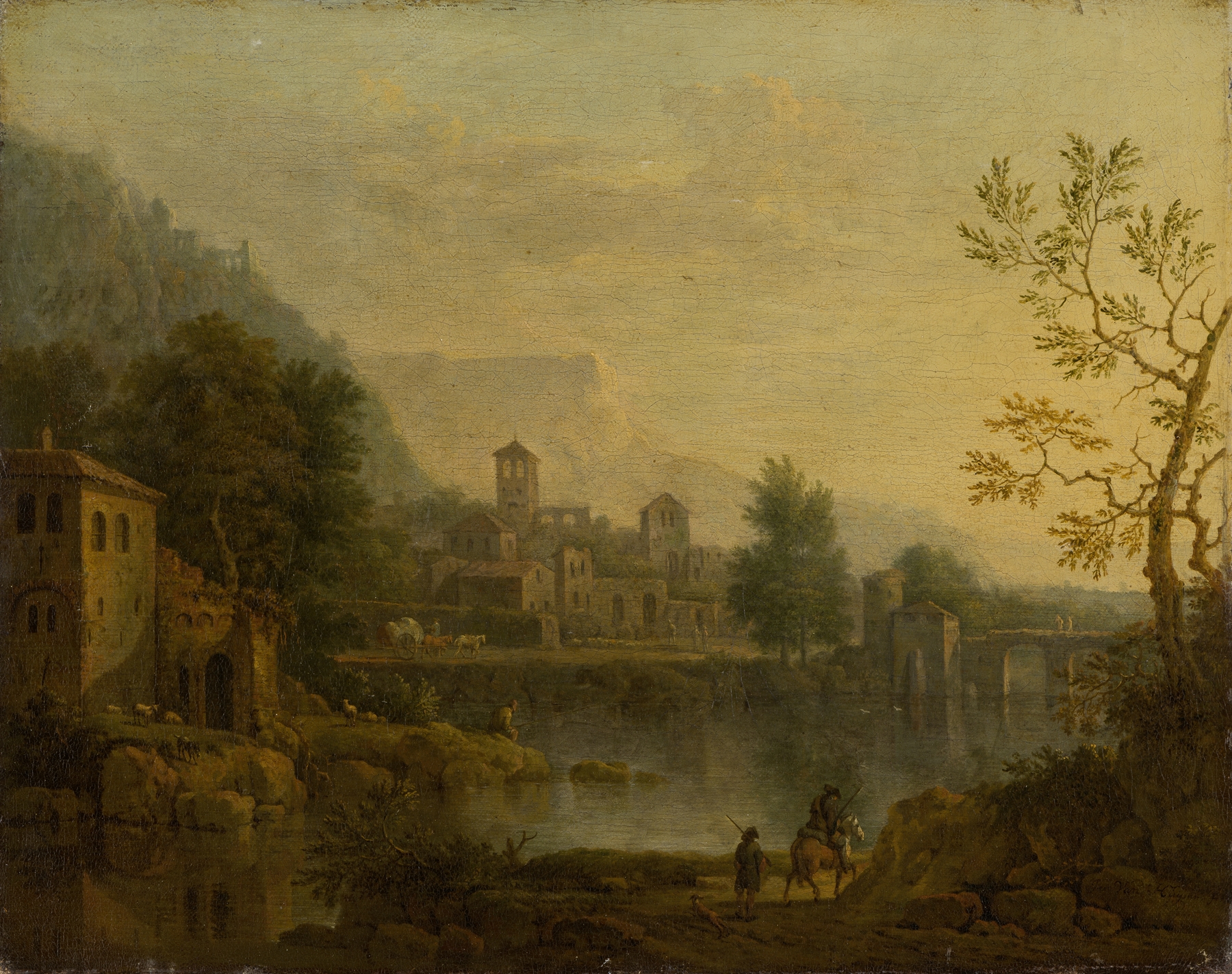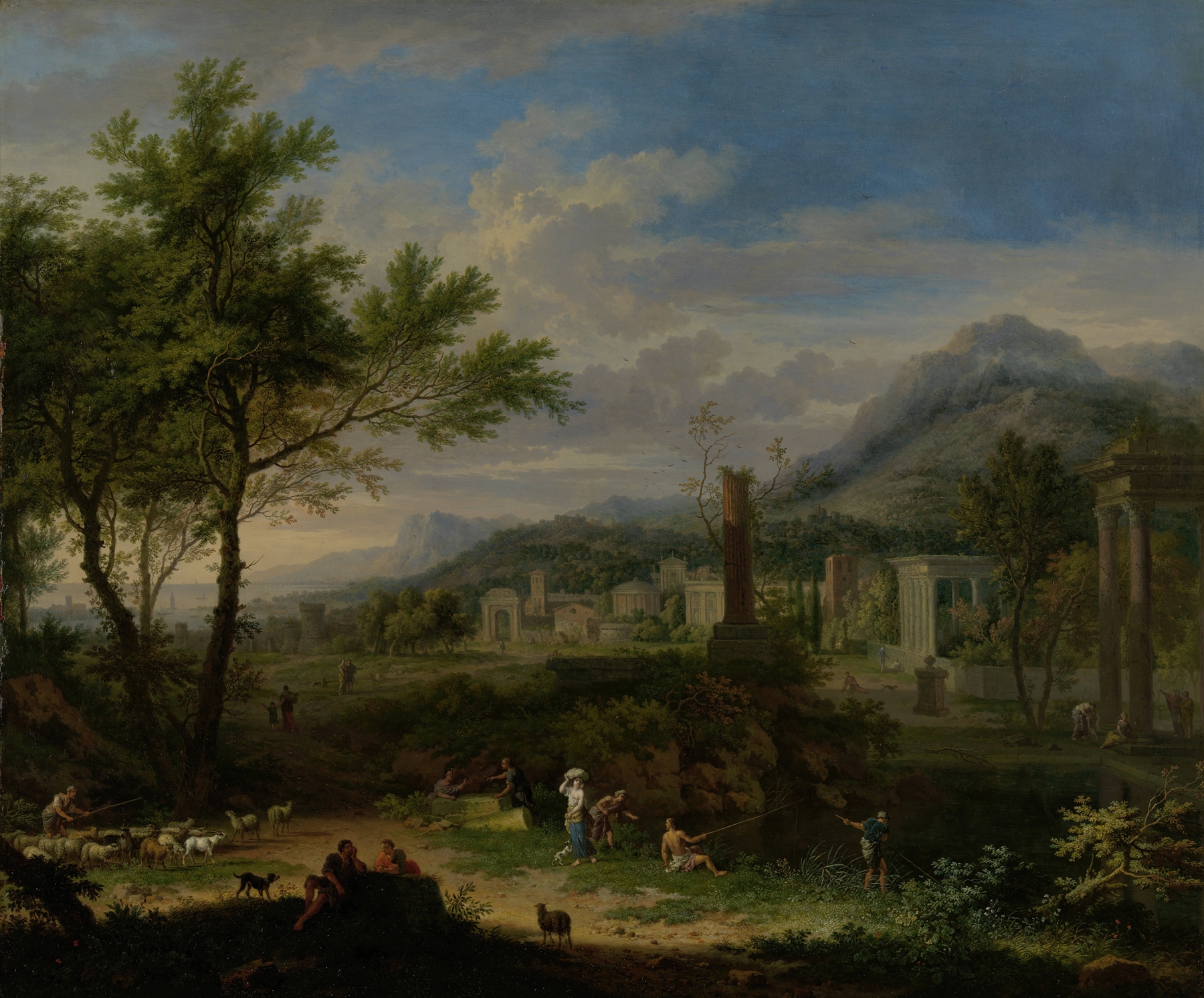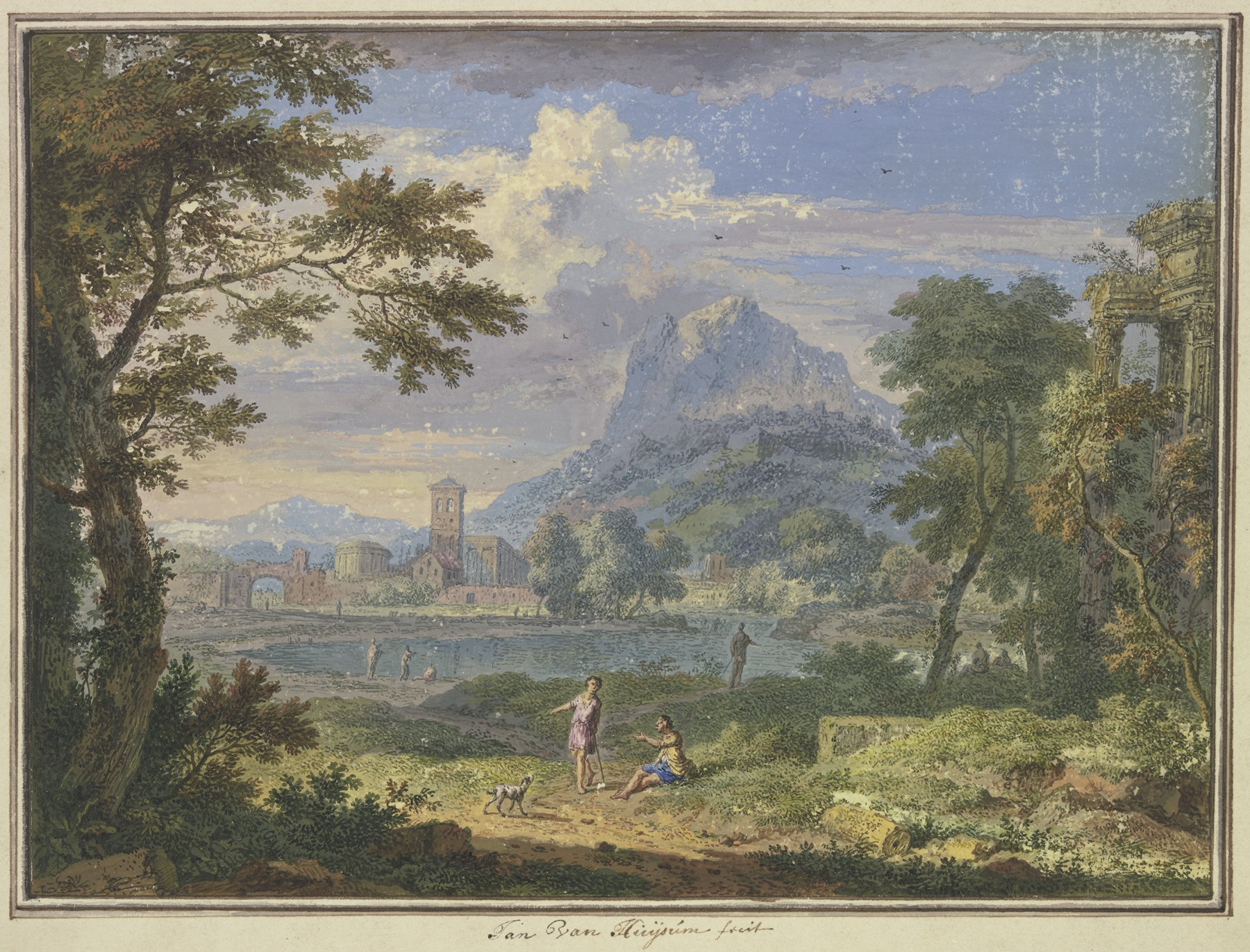
Landschaft mit einer italienischen Stadt bei einem hohen Berg, rechts die Ruine eines Tempels, im Vordergrund zwei Figuren und ein Hund — History & Analysis
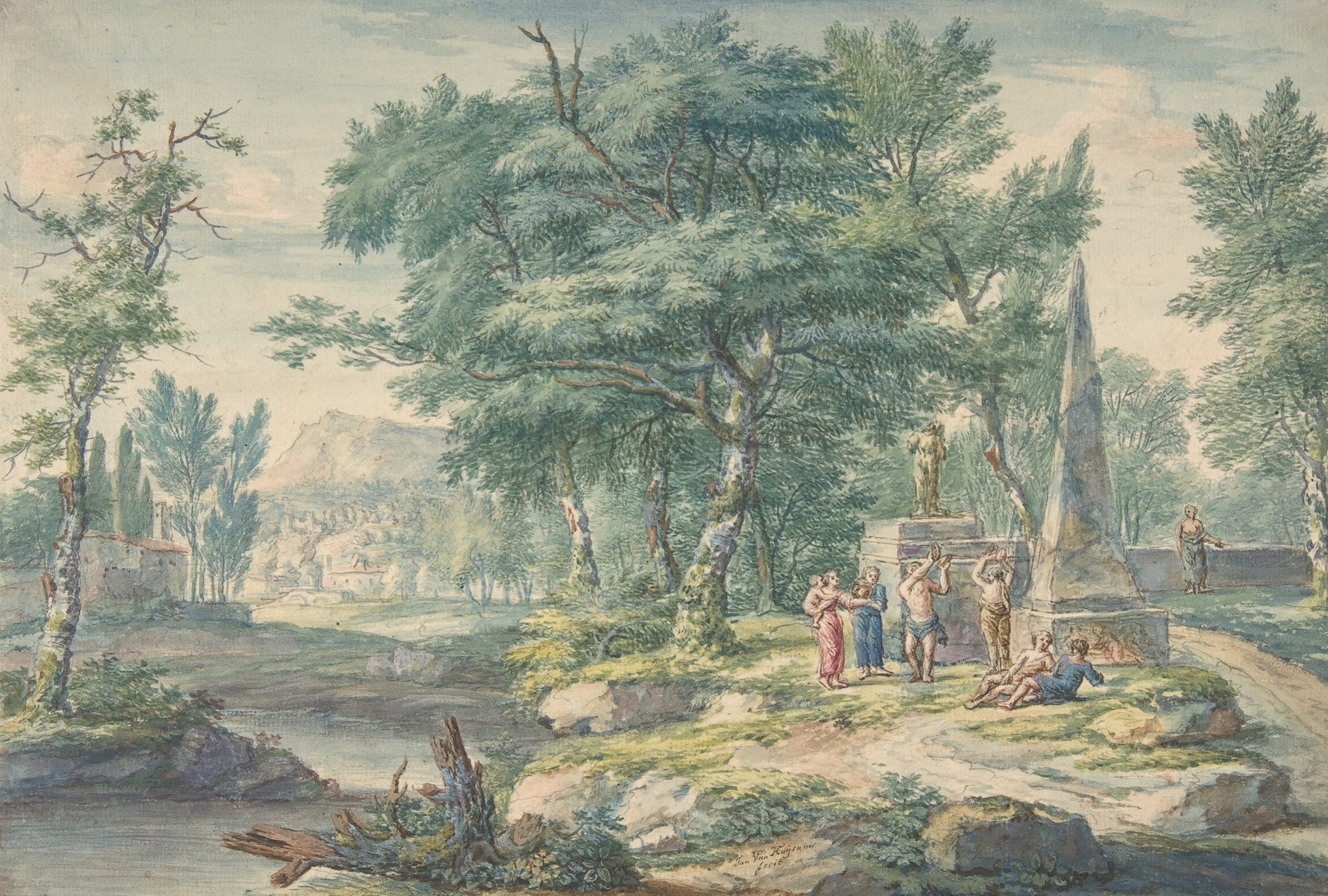
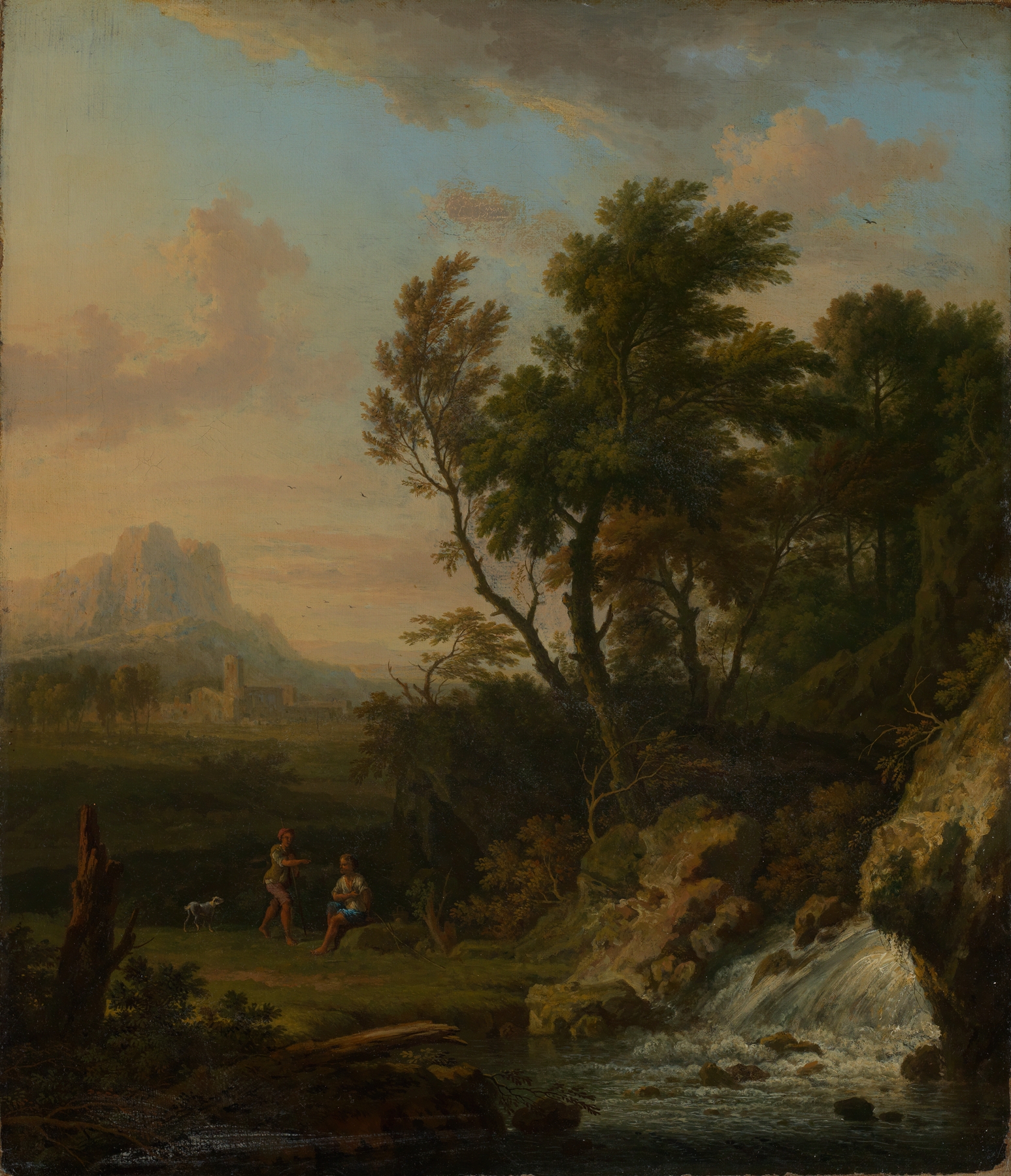
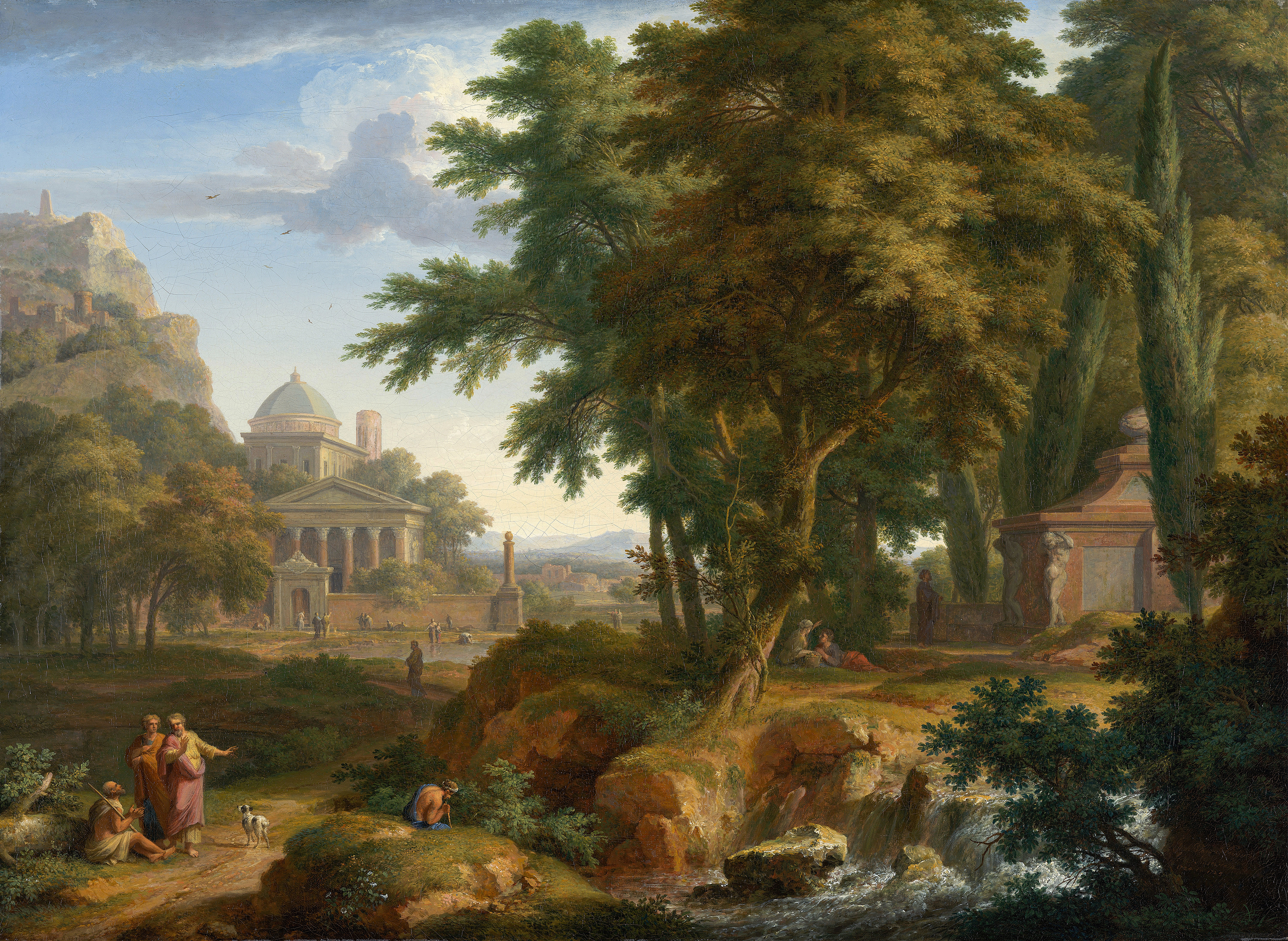
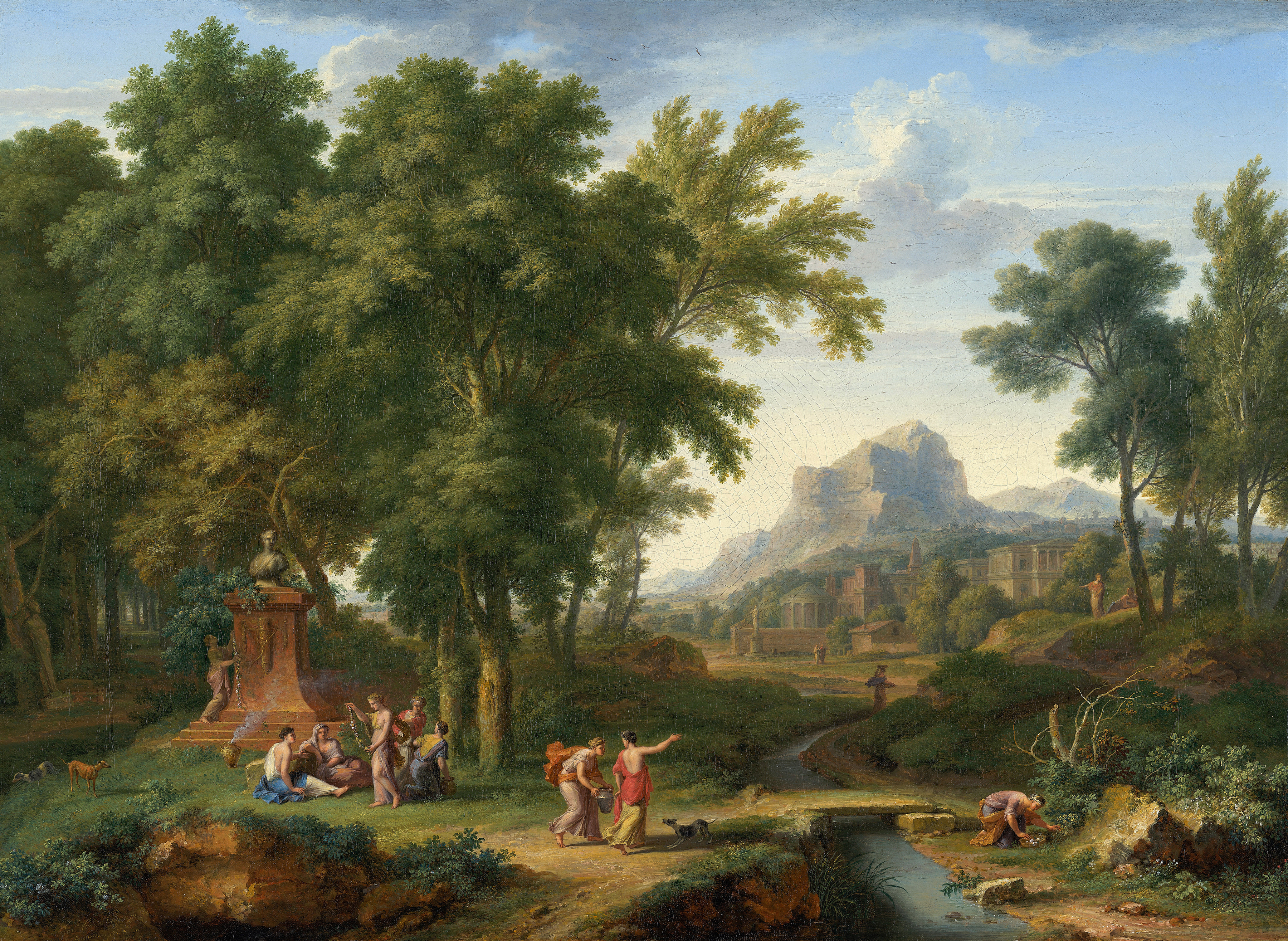
Can beauty exist without sorrow? In Jan van Huysum’s work, a delicate balance of light and shadow evokes the dual nature of existence, inviting us to ponder life’s visceral contrasts. Look closely at the foreground, where two figures stand together, their postures suggesting a moment of quiet reflection. The soft brushwork captures their attire and the gentle sway of the dog at their feet, creating a serene yet poignant tableau. The vibrant palette of greens and the warm hues of the temple ruins draw the eye to the interplay of light across the landscape, guiding us on a journey through the lush Italian scenery. Beneath the idyllic beauty lies deeper significance. The dilapidated temple hints at the passage of time and the remnants of history, a reminder that all might fade despite the natural splendor surrounding it. The figures, although in repose, seem to embody a contemplative silence, contrasting with the fervor of the landscape; they are both part of this beauty and distanced from it. This tension suggests a shared human experience of joy intertwined with loss, the ephemeral nature of life captured within an eternal scene. Jan van Huysum painted this landscape during the early years of the 18th century, a time when the Baroque style was giving way to new artistic expressions. Working in the Netherlands, he found inspiration in the lush vistas of Italy, reflecting both the emerging interest in classical themes and a personal longing for exploration. At this moment in his career, he was navigating the transition from still life to landscape, capturing the essence of beauty and decay that would mark his legacy.