
Army Camp — History & Facts
What secret hides in the quiet of the canvas? A world poised between action and stillness, teetering on the brink of decay, whispers tales of soldiers and their transient lives. Look to the left at the encampment, where vibrant tents dot the landscape, their hues reflecting the warm light of the late afternoon sun. Notice how the brushwork captures the play of light and shadow, almost breathing life into the scene. The figures, engaged in various tasks, provide a sense of dynamic rhythm, while the muted earth tones suggest the encroaching stillness of nature beyond their temporary world.
The artist's keen eye for detail reveals not just a moment in time, but also the textures of life—the worn fabric of uniforms, the gentle rustle of foliage, and the glint of metal against the fading light. Beneath the surface, a tension unfurls. The juxtaposition of lively soldiers against the backdrop of a decaying landscape suggests a fleeting existence, an impending end to their endeavors. The distant trees, stripped of leaves, hint at nature’s indifference to human drama, while the subtle interplay of colors evokes a sense of nostalgia and loss.
Each stroke embodies the paradox of vitality and decay, a reminder of the impermanence that surrounds us. In the latter half of the 17th century, amidst the chaos of the Thirty Years' War and its aftermath, Army Camp emerged from the brush of Philips Wouwerman. Working in Haarlem, the artist found himself amidst a burgeoning interest in genre and landscape painting. This period saw artists like Wouwerman capturing not just the valor of battles but also the quieter, often overlooked moments in the lives of soldiers—encouraging viewers to reflect on the fragility of life and the echoes of history.
More Artworks by Philips Wouwerman
Browse all →
Halt of Cavaliers at an Inn
Philips Wouwerman

Halt of Travellers
Philips Wouwerman

Travelers Awaiting a Ferry
Philips Wouwerman
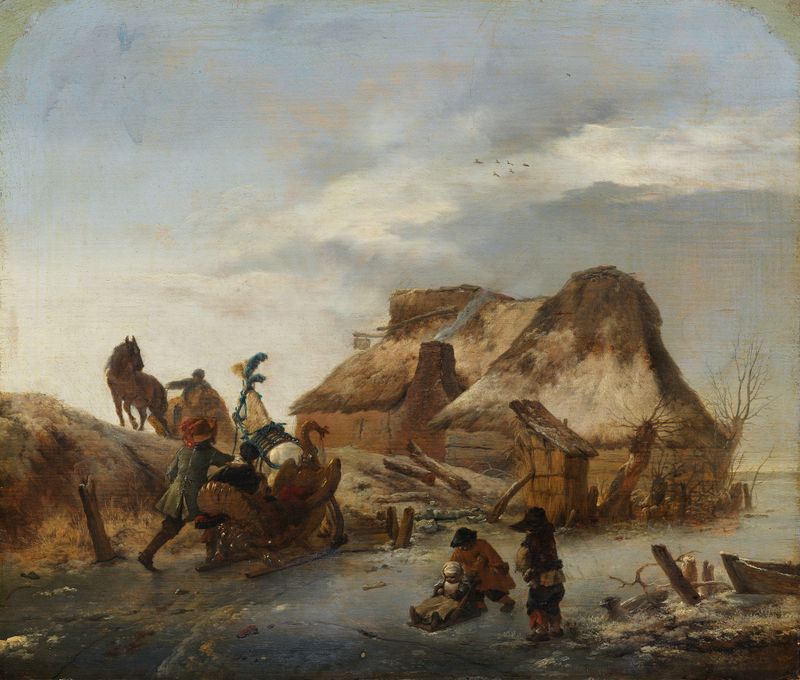
A Nobleman’s Sleigh on the Ice
Philips Wouwerman
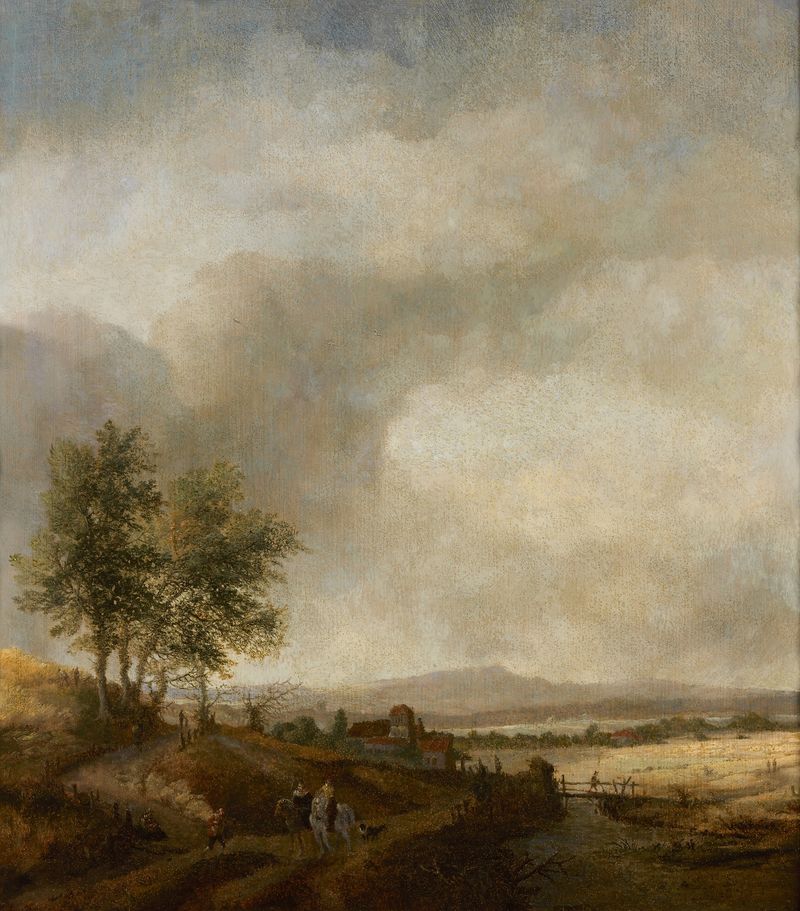
Landschap met ruiters
Philips Wouwerman
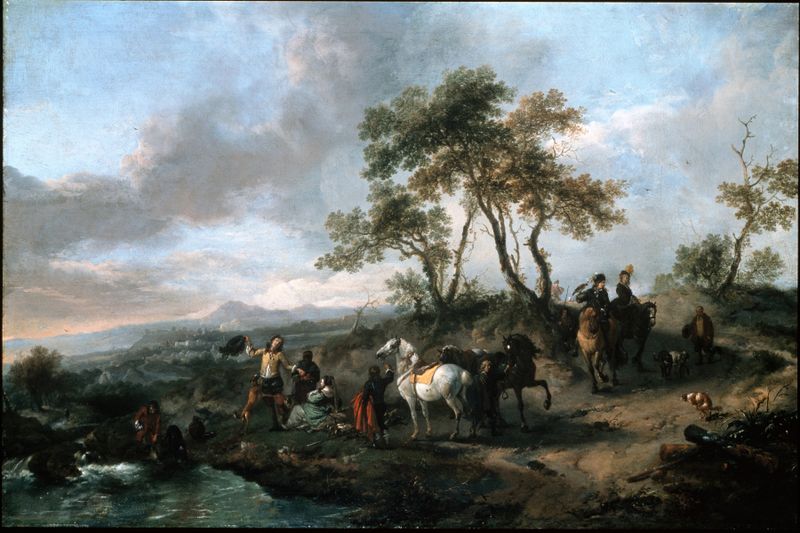
Halt of a Hunting Party
Philips Wouwerman
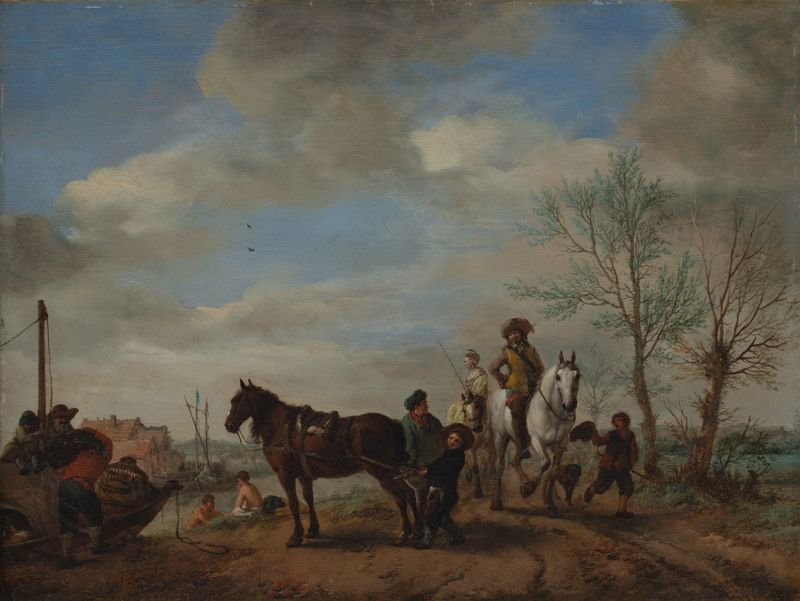
A Man and a Woman on Horseback
Philips Wouwerman
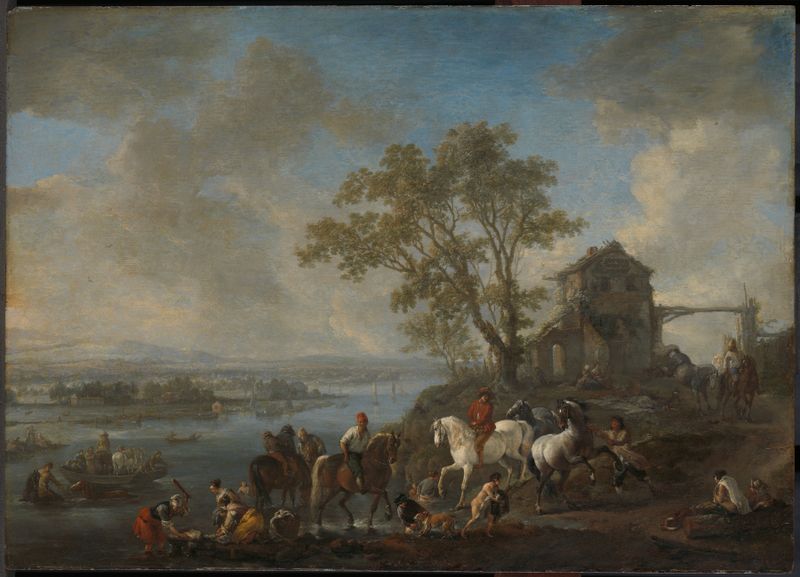
Horsepond on a River
Philips Wouwerman
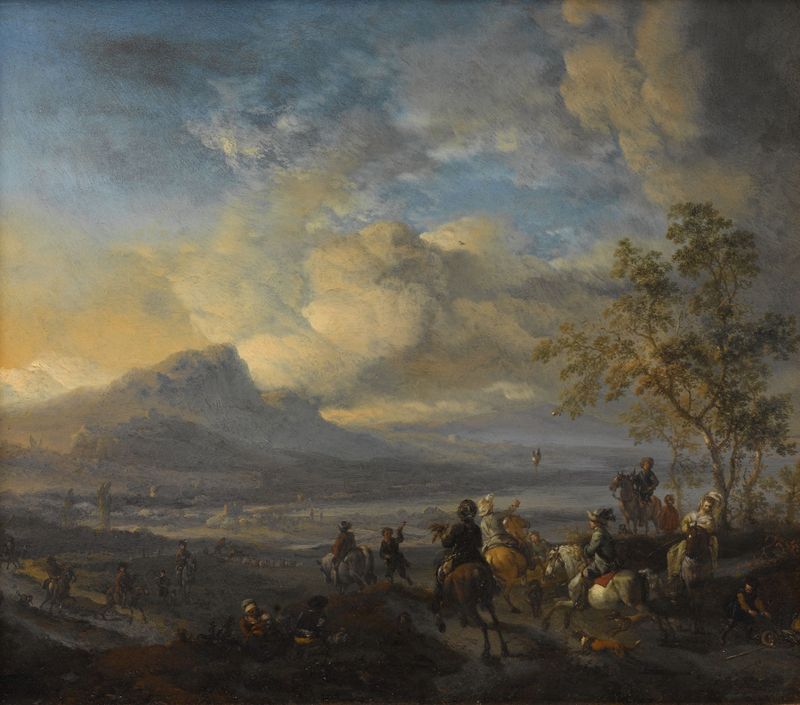
The Falcon Hunt
Philips Wouwerman

Riders at a Blacksmith’s
Philips Wouwerman





