
At the Water Trough — History & Facts
At the Water Trough depicts a woman in a rustic setting, gently watering her horse. She is dressed in simple, practical clothing, suggesting a connection to her daily life. The water trough is made of stone, and the surrounding area is filled with lush greenery.
The colors are earthy and natural, with greens, browns, and the soft hues of the woman's attire blending harmoniously. Take a moment to observe the details of the horse, which is depicted with a shiny coat and attentive eyes. The woman's expression conveys a sense of care and affection for her animal. Notice how the light falls on the water, creating gentle reflections that add to the scene's realism.
Courbet's brushwork emphasizes the textures of both the horse's fur and the stone trough. Gustave Courbet created this work during the Realism movement, which focused on depicting everyday life and ordinary people. He believed in portraying subjects with honesty and without idealization. This painting is a fine example of his dedication to realism, capturing a moment that many can relate to.
An interesting fact about Courbet is that he often painted en plein air, or outdoors, to better capture the natural light and atmosphere.
More Artworks by Gustave Courbet
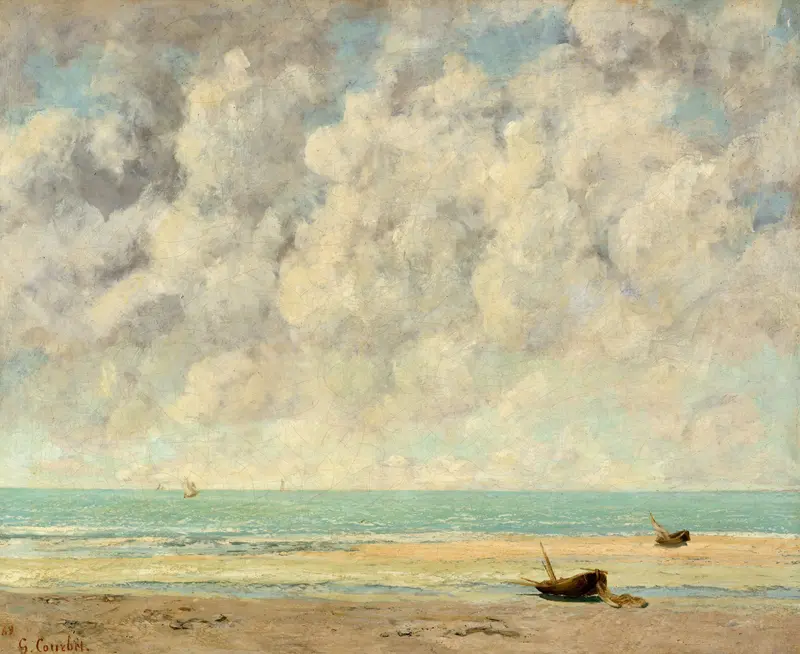
The Calm Sea
Gustave Courbet

A Burial at Ornans
Gustave Courbet
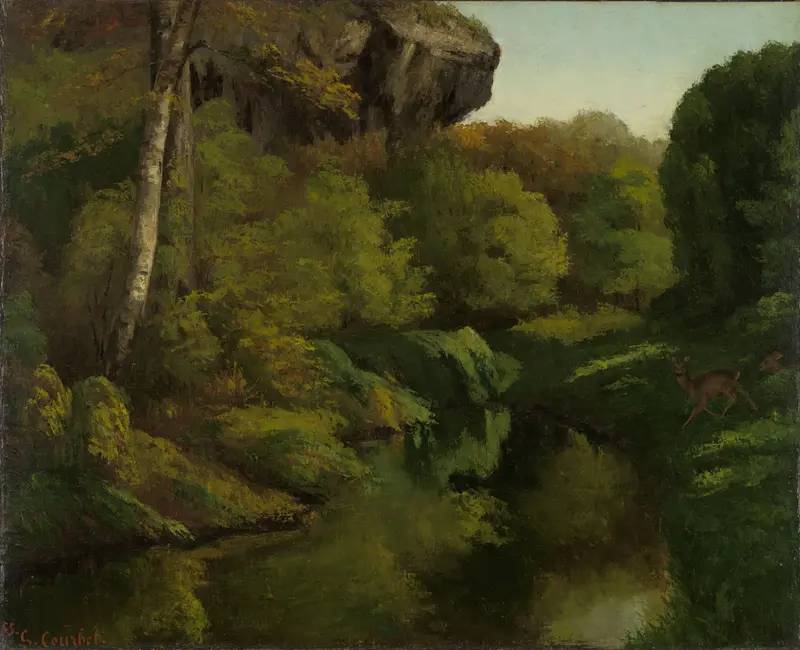
View in the Forest of Fontainebleau
Gustave Courbet
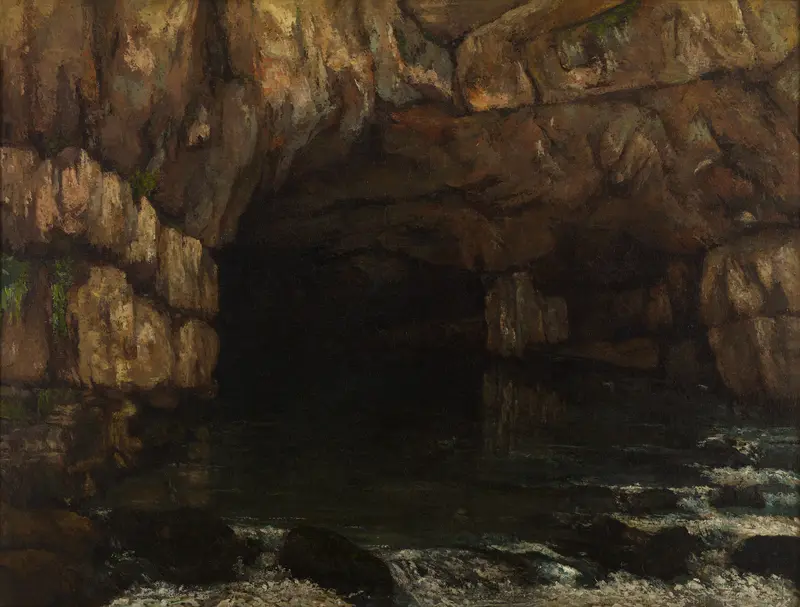
La source de la Loue (The Source of the Loue)
Gustave Courbet
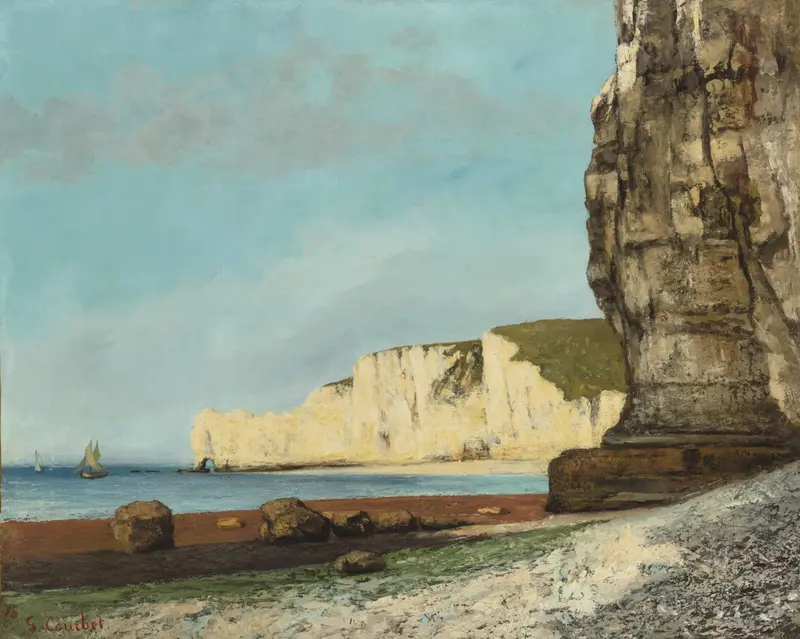
Étretat; Les Falaises
Gustave Courbet
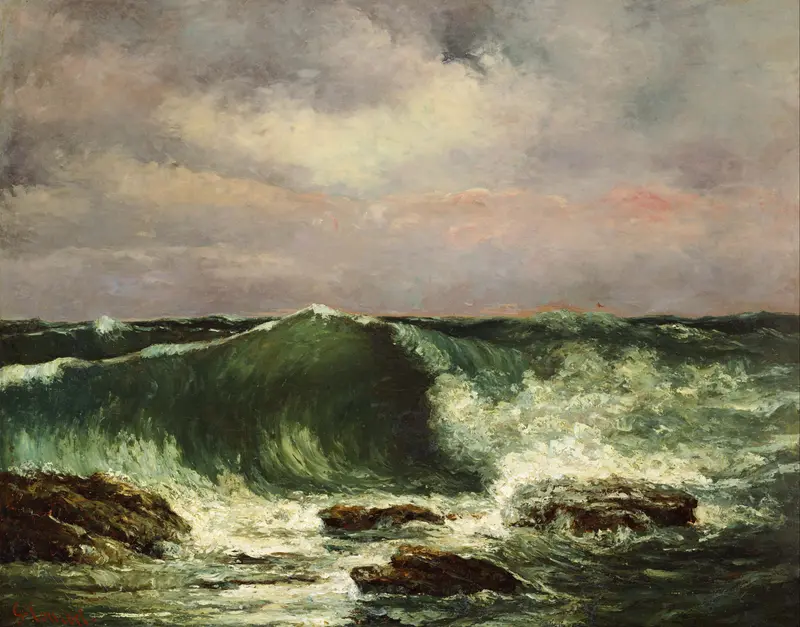
Waves
Gustave Courbet
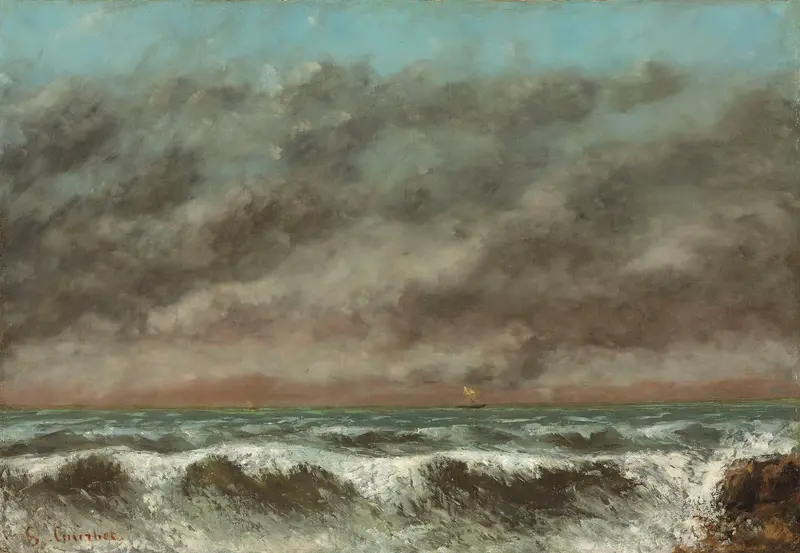
Marine
Gustave Courbet
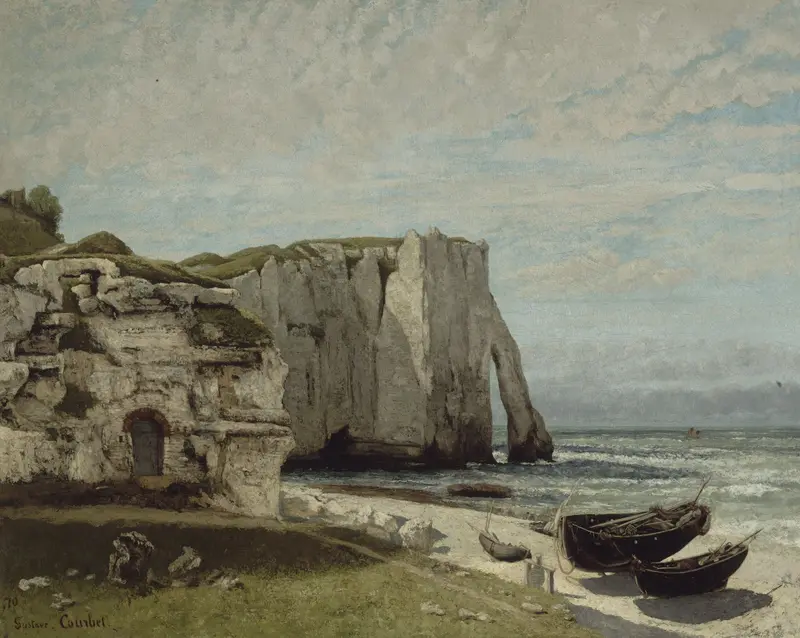
The Etretat Cliffs after the Storm
Gustave Courbet
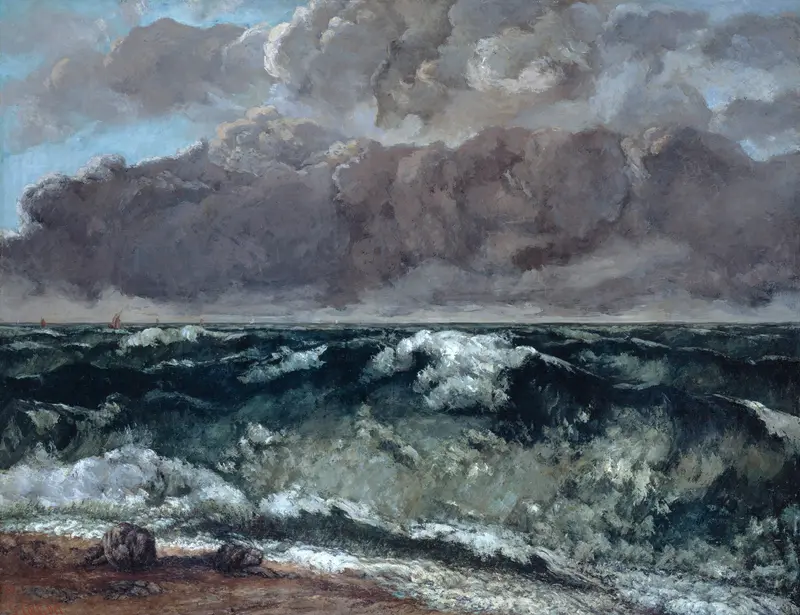
The Wave
Gustave Courbet
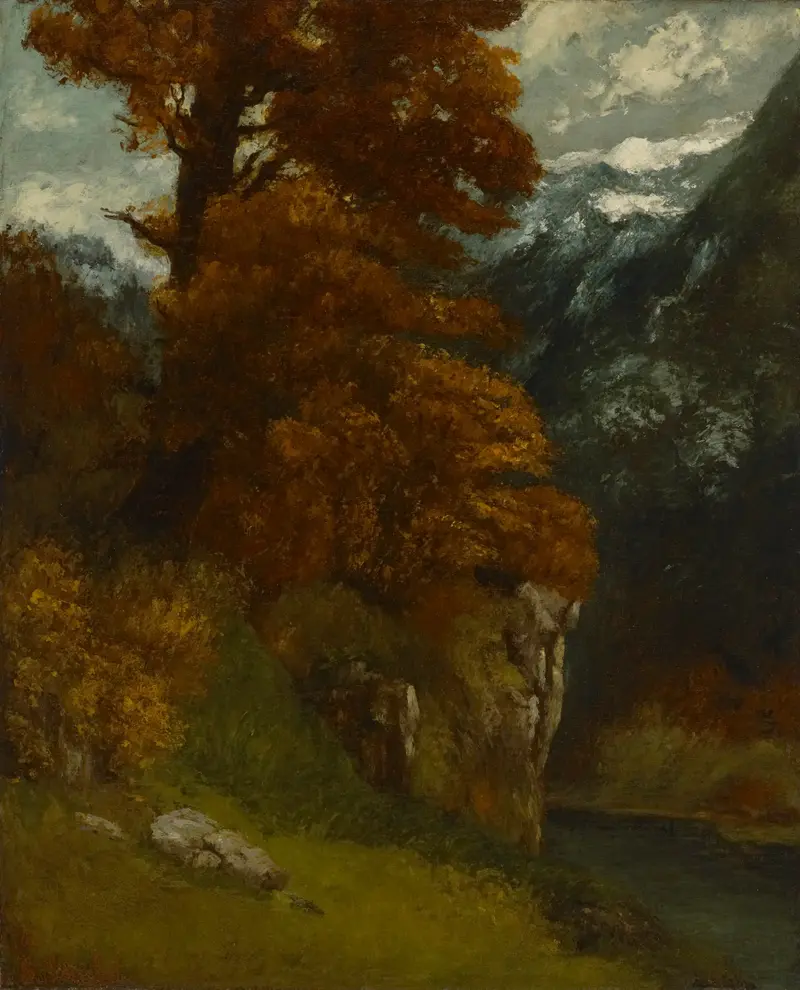
The Glen at Ornans (Bords du Doubs; Effet d’Automne)
Gustave Courbet
More Genre Scene Art

Banquet of the Officers of the St George Civic Guard
Frans Hals

Rembrandt and Saskia in the Scene of the Prodigal Son
Rembrandt van Rijn

Bal du moulin de la Galette
Pierre-Auguste Renoir

Quadrille at the Moulin Rouge
Henri de Toulouse-Lautrec
A Burial at Ornans
Gustave Courbet

When Will You Marry?
Paul Gauguin