Au dormoir de Lantara — History & Facts
In the gentle embrace of twilight, the weight of mortality lingers, revealing the essence of existence in the stillness of slumber. Focus on the sleeping figure, draped in soft, muted tones that reflect the quiet intimacy of night. Look closely at the delicate interplay between light and shadow, where warm hues wrap around the form like a protective shroud. The brushstrokes are soft yet deliberate, each stroke whispering the fragility of life as it captures the ephemeral beauty of a moment lost in time. Notice the subtle details — the way the fingers rest in serene surrender, the slight rise and fall of the chest that hints at life.
They hold a poignant contrast against the surrounding darkness, evoking a sense of vulnerability and tranquility intertwined. The serene atmosphere prompts reflection on the transient nature of existence; each element underscores the inevitable passage of time, creating a poignant dialogue about mortality. In 1890, while residing in Paris, Auguste Louis Lepère painted Au dormoir de Lantara amidst a burgeoning artistic landscape that embraced modernity. During this period, he was deeply influenced by Impressionism and the exploration of light and color, which infused his work with a unique atmospheric quality.
The piece reflects not only his personal artistic journey but also the broader context of an era grappling with change, encapsulating both a moment of stillness and an acknowledgment of life's ephemeral nature.
More Artworks by Auguste Louis Lepère
Browse all →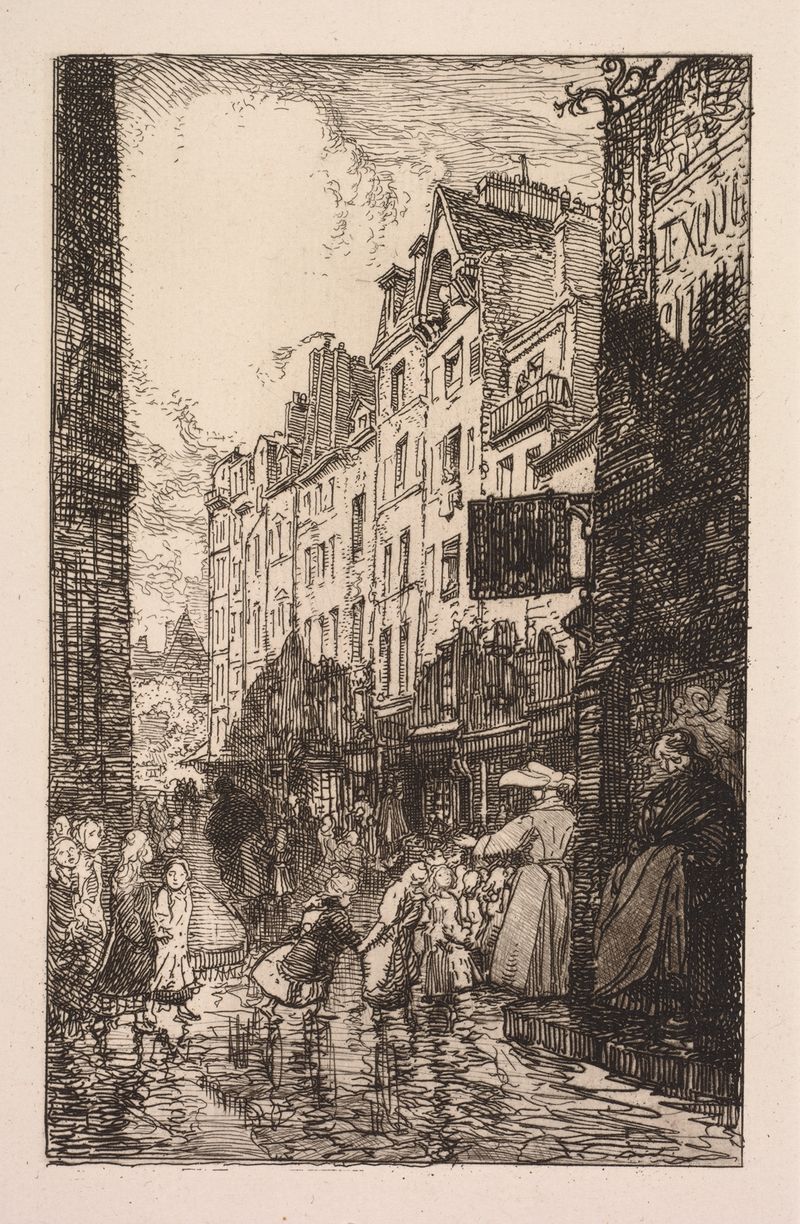
La Rue des Prêtres Saint-Séverin
Auguste Louis Lepère
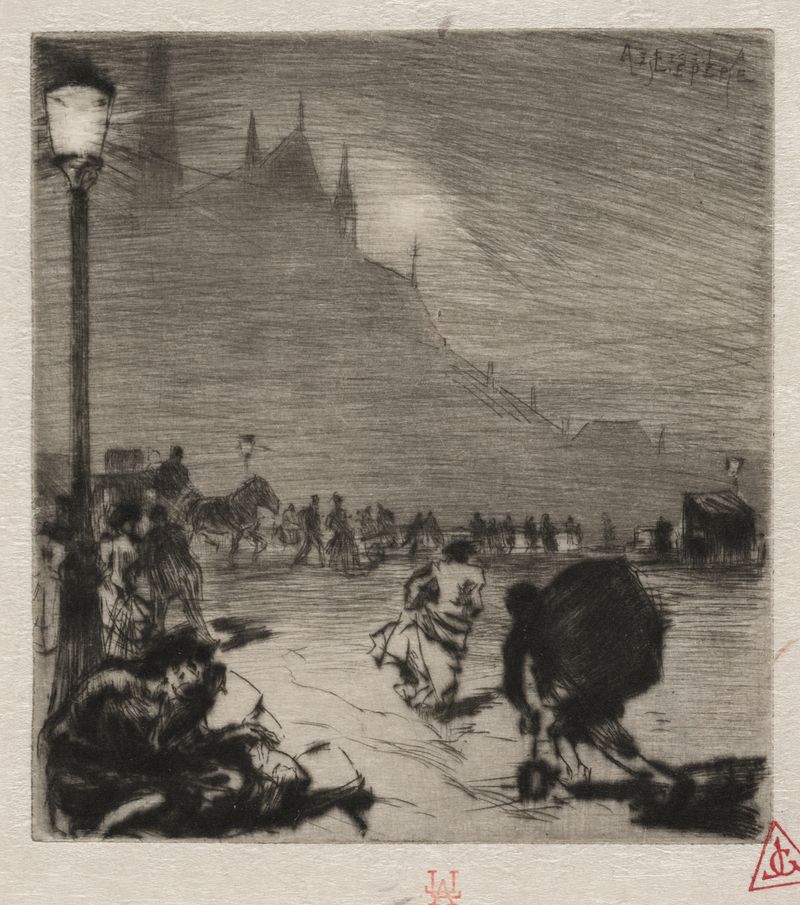
Au Coin du Pont-aux-Doubles
Auguste Louis Lepère
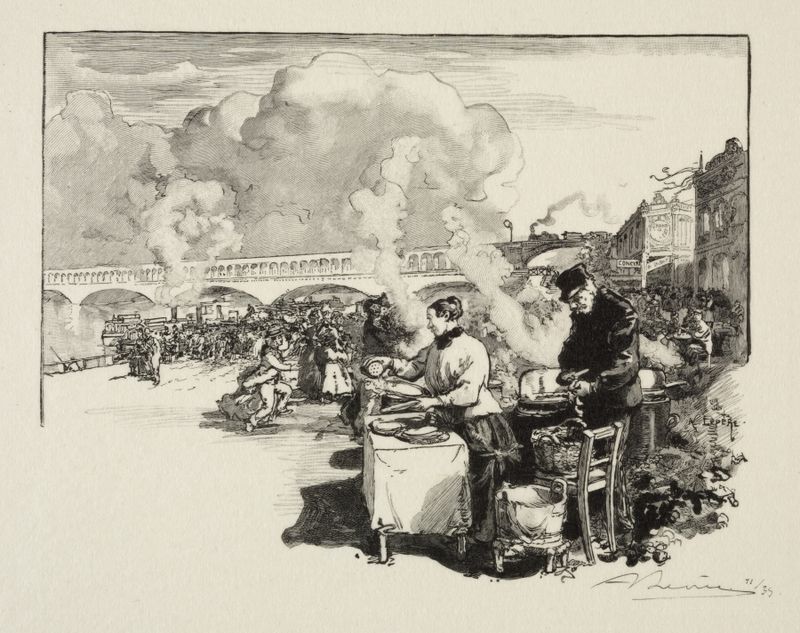
Debarcadère des bateaux-omnibus
Auguste Louis Lepère

La Seine, au quai de la Rapée
Auguste Louis Lepère
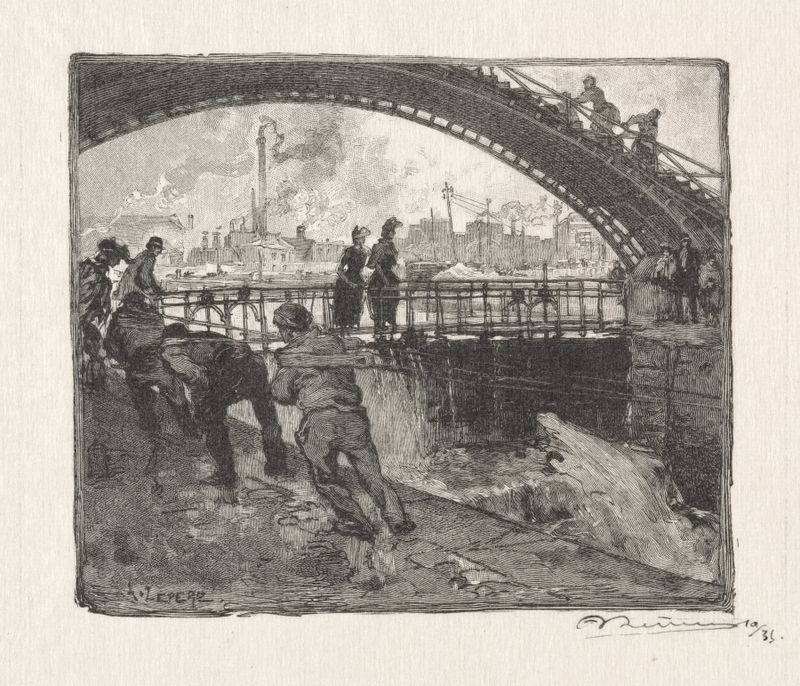
L’Ecluse du Canal St. Martin
Auguste Louis Lepère

Le Boulevard Montmartre, le Soir
Auguste Louis Lepère

Une Chasse au Mont Gérard
Auguste Louis Lepère
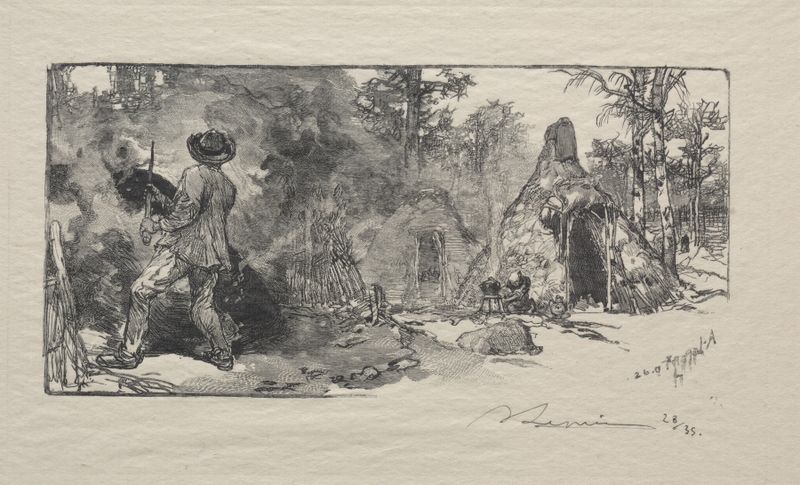
Les Charbonniere
Auguste Louis Lepère
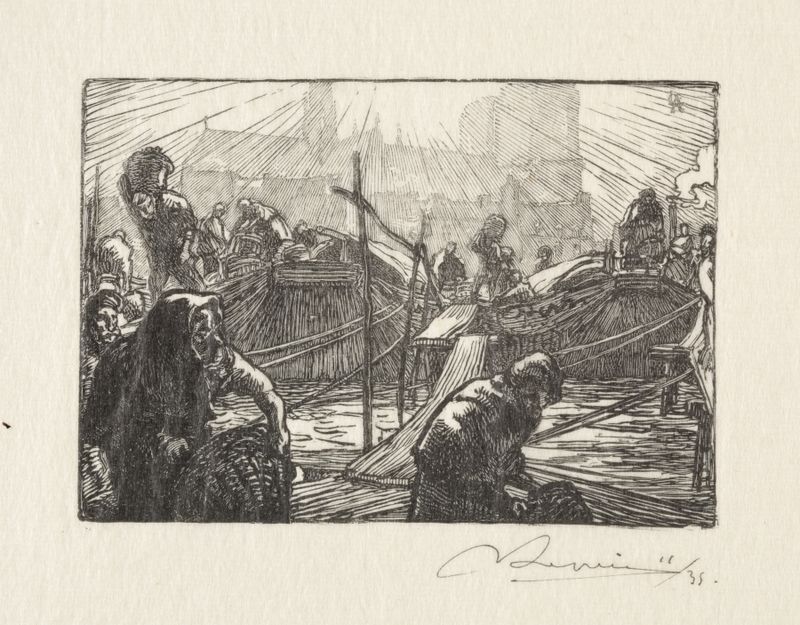
Notre Dame vue du Marché aux pommes
Auguste Louis Lepère

Le Palais des Arts Liberaux, Intèrieur
Auguste Louis Lepère