
Au Rocher Bernard — History & Facts
The chaotic brush strokes and vibrant hues of Au Rocher Bernard evoke a world on the brink, where nature’s allure masks a deeper madness beneath its surface. Look closely at the swirling waters in the foreground; the tumultuous waves seem to pulse with restless energy, inviting your gaze to dance across their crests. Notice how the artist employs a rich palette of blues and greens, juxtaposed with the warm ochres of the rocky shore, creating a sense of conflict. The bold, dynamic brushwork draws you into the scene, suggesting movement and emotion, while the jagged rocks stand resolutely, representing both beauty and danger. The hidden tensions in this piece lie in the stark contrasts of light and shadow, symbolizing the duality of tranquility and turmoil.
The sunlight glints off the water, offering a hint of warmth, yet the turbulent sea hints at an underlying chaos. This duality invites contemplation of the fine line between serenity and madness, urging the viewer to ponder the hidden struggles within nature and ourselves. Painted in 1889, Au Rocher Bernard reflects Auguste Louis Lepère's engagement with the Impressionist movement during a time of great innovation in the art world. Working in France, his exploration of light and color was both a personal and artistic revolution, as he sought to capture the ephemeral beauty of fleeting moments in nature against a backdrop of modernity and change.
More Artworks by Auguste Louis Lepère
Browse all →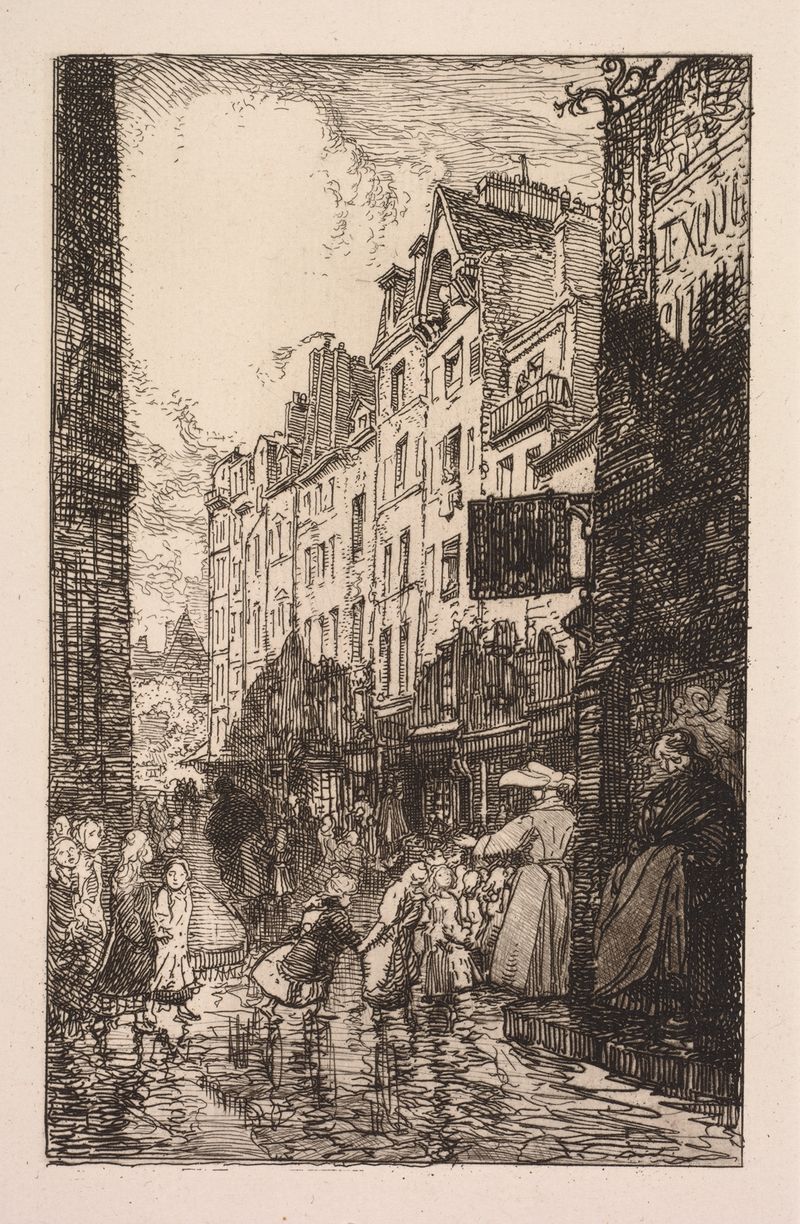
La Rue des Prêtres Saint-Séverin
Auguste Louis Lepère
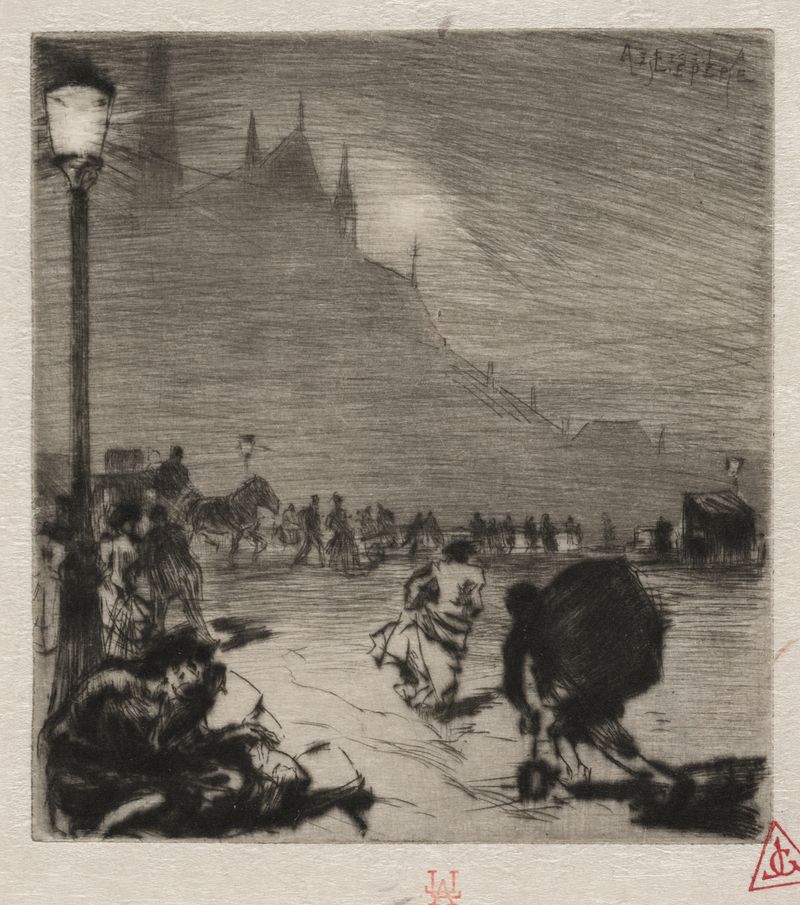
Au Coin du Pont-aux-Doubles
Auguste Louis Lepère
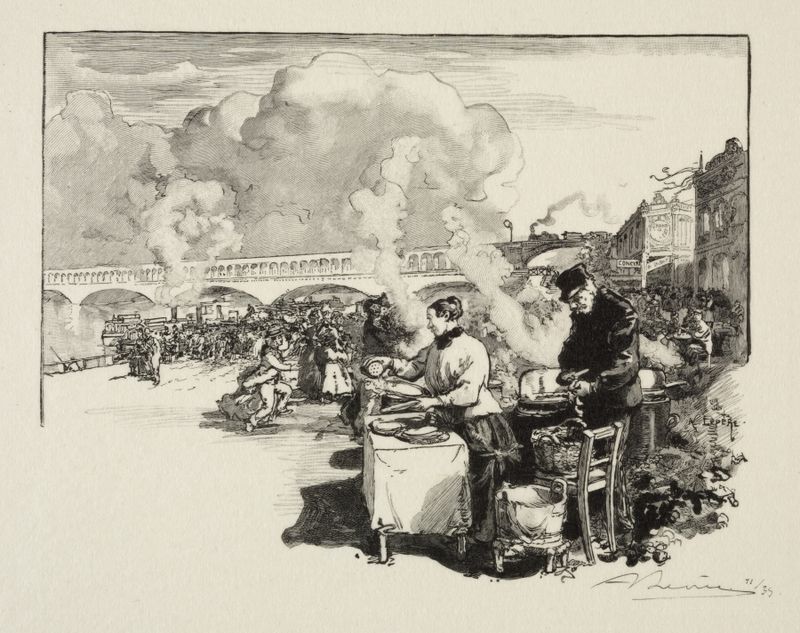
Debarcadère des bateaux-omnibus
Auguste Louis Lepère

La Seine, au quai de la Rapée
Auguste Louis Lepère
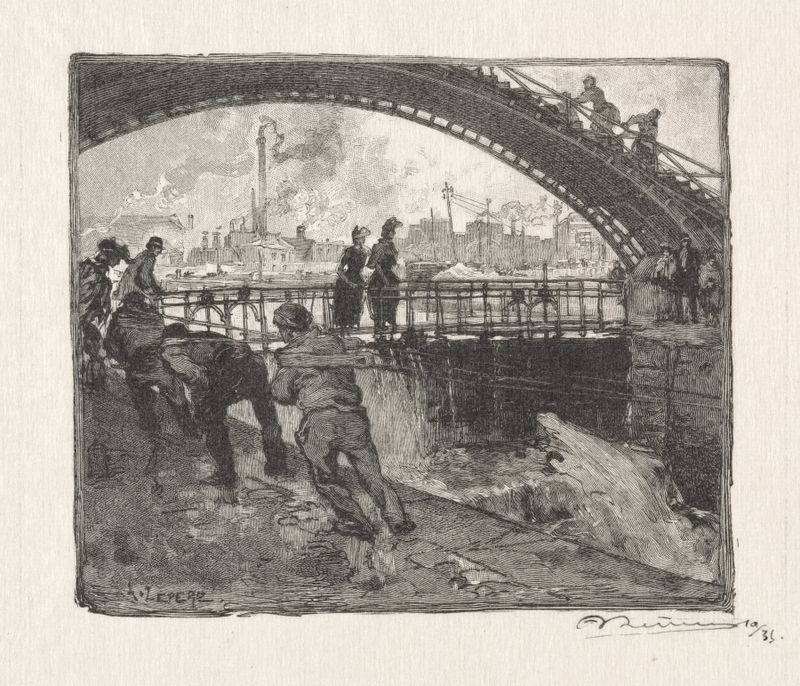
L’Ecluse du Canal St. Martin
Auguste Louis Lepère

Le Boulevard Montmartre, le Soir
Auguste Louis Lepère

Une Chasse au Mont Gérard
Auguste Louis Lepère
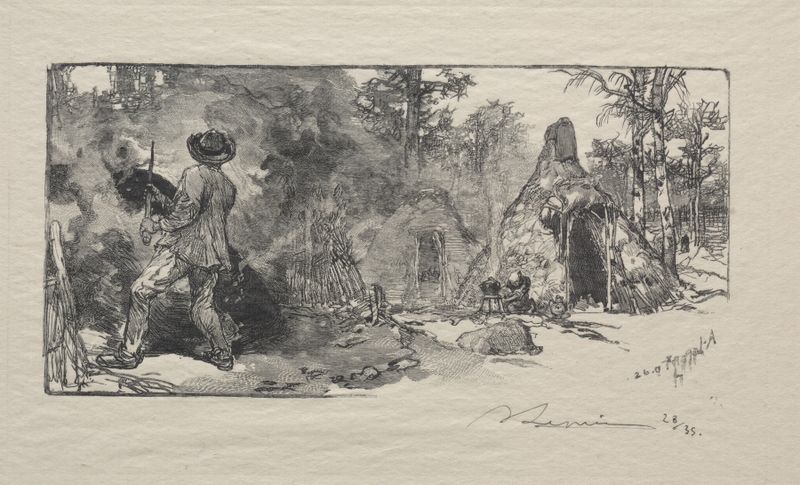
Les Charbonniere
Auguste Louis Lepère
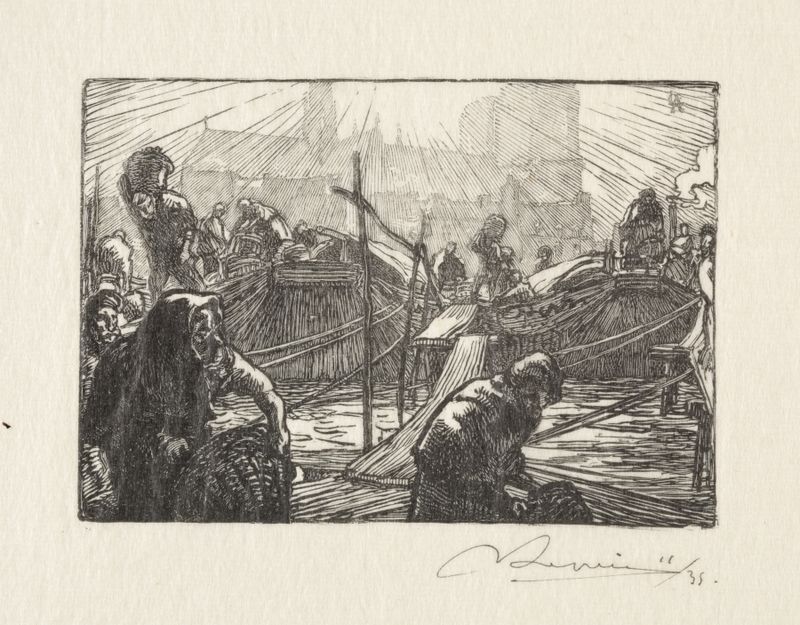
Notre Dame vue du Marché aux pommes
Auguste Louis Lepère

Le Palais des Arts Liberaux, Intèrieur
Auguste Louis Lepère





