Aufziehendes Gewitter über dem Chiemsee — History & Analysis
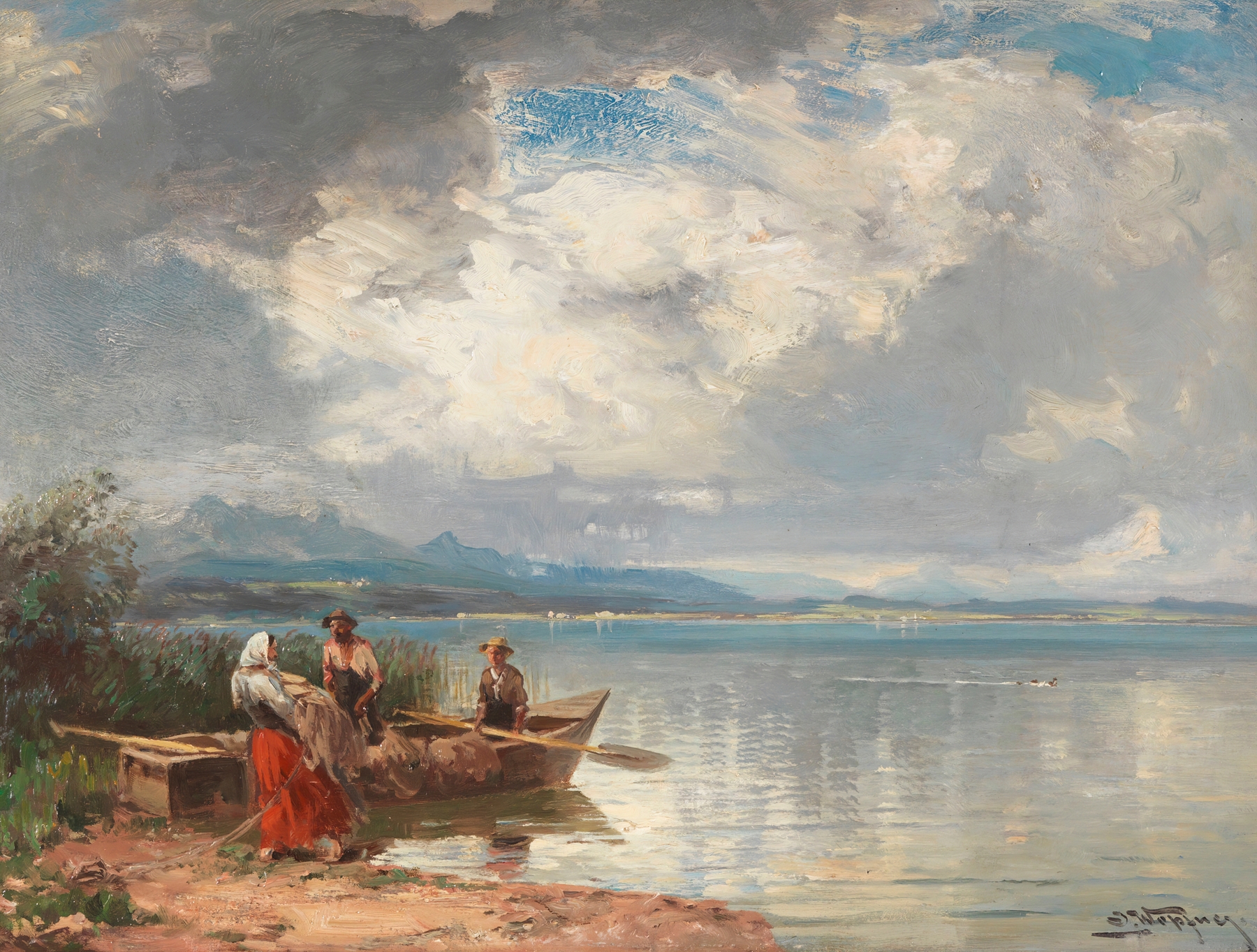
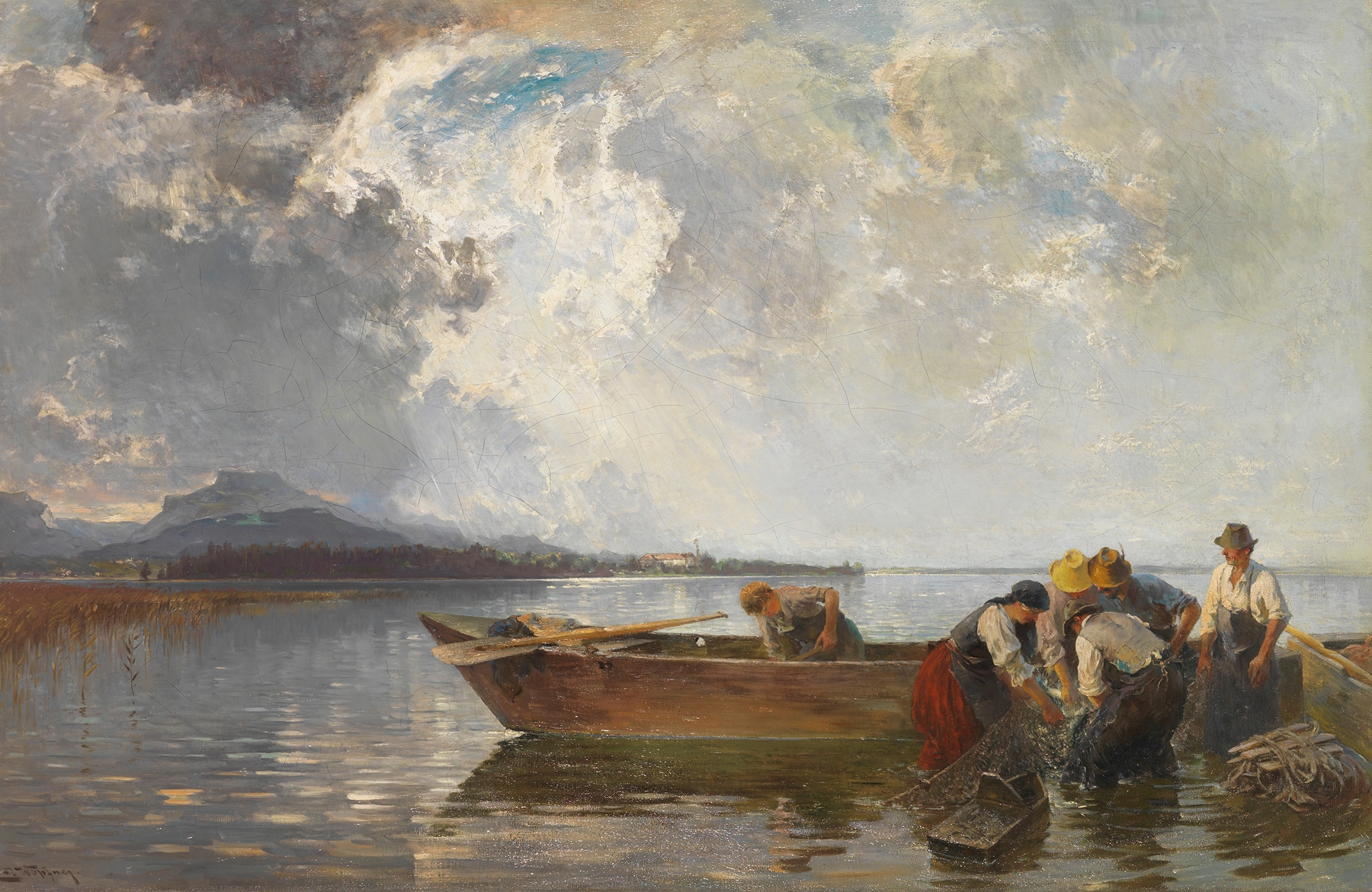
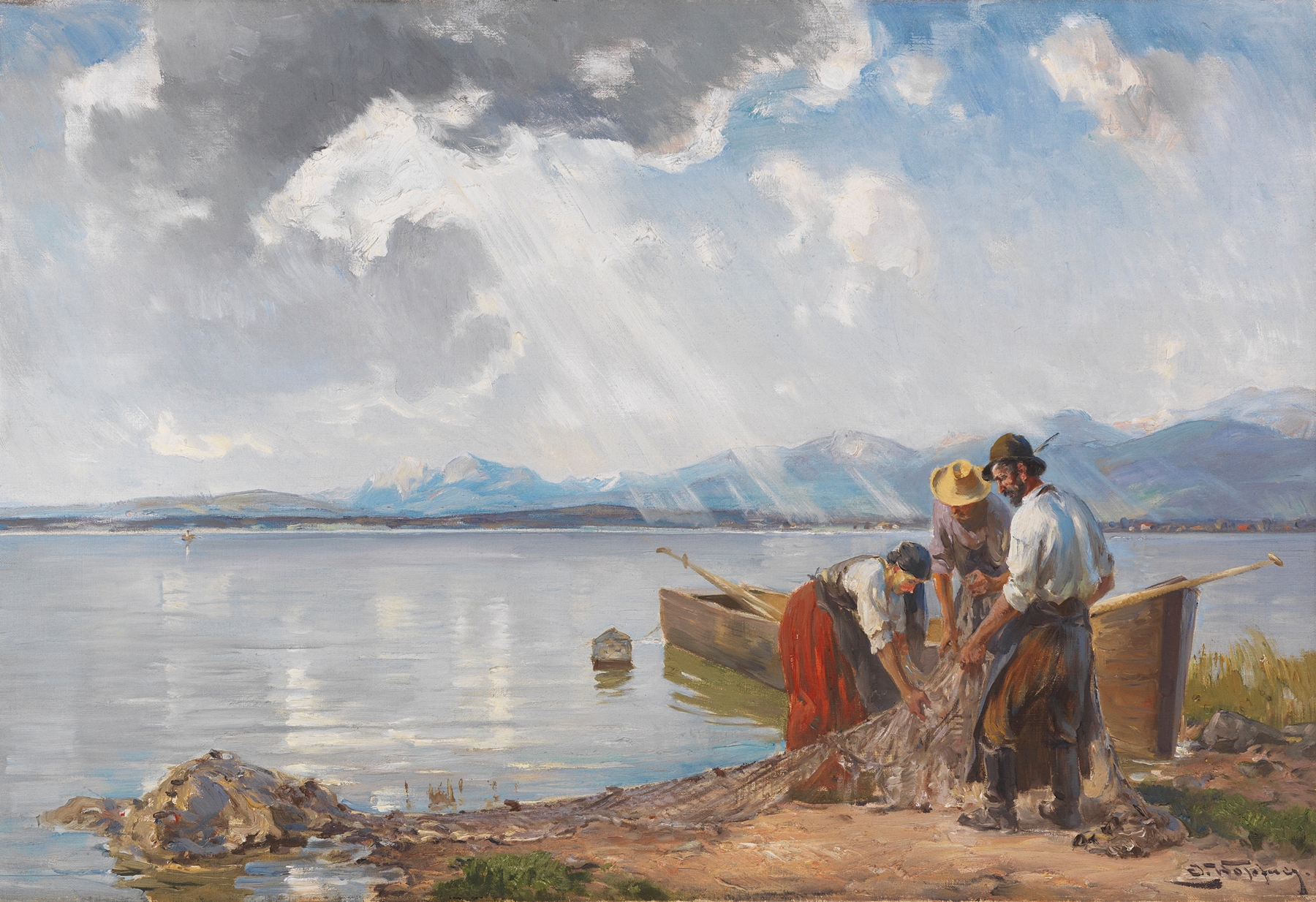
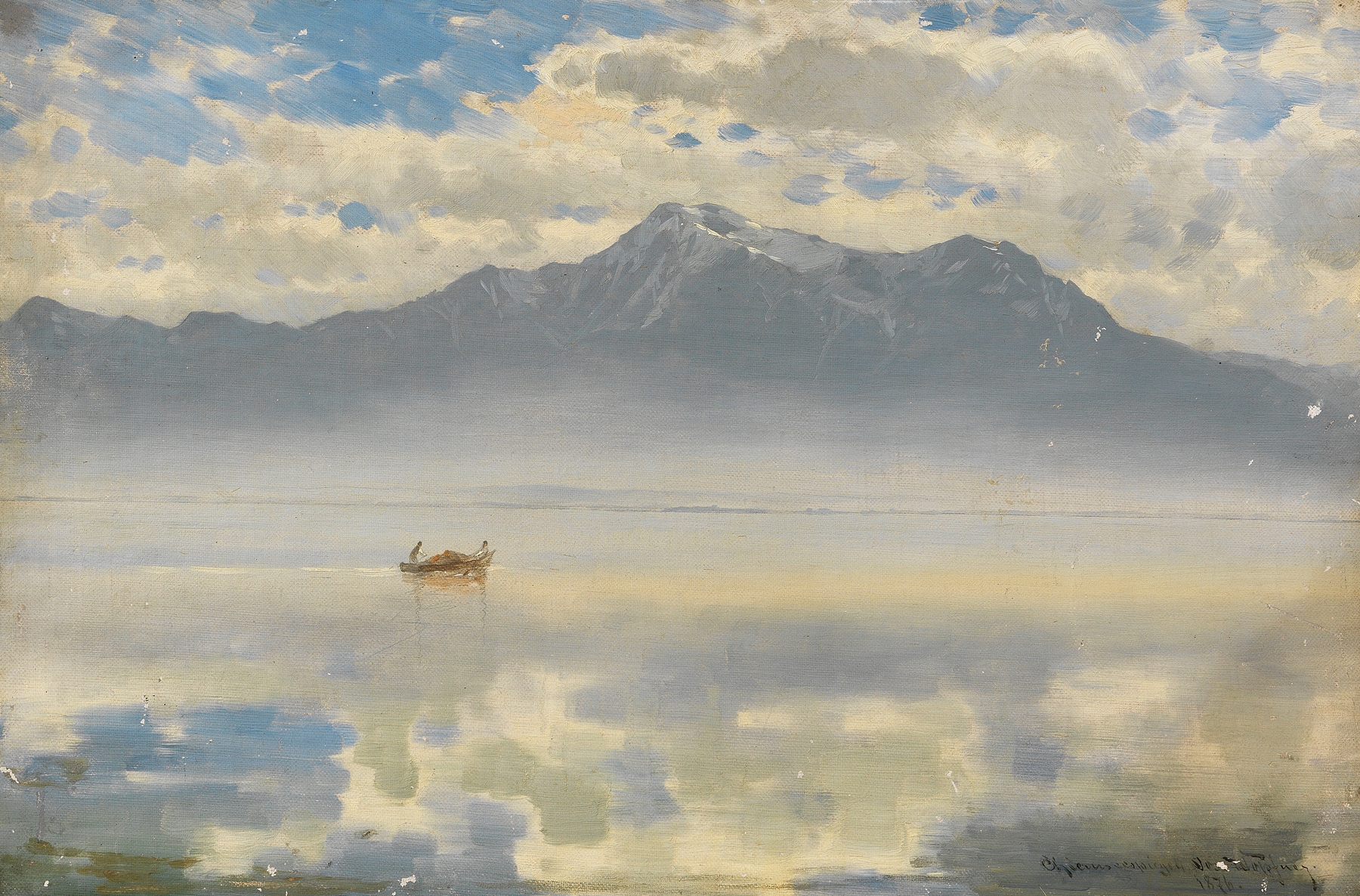
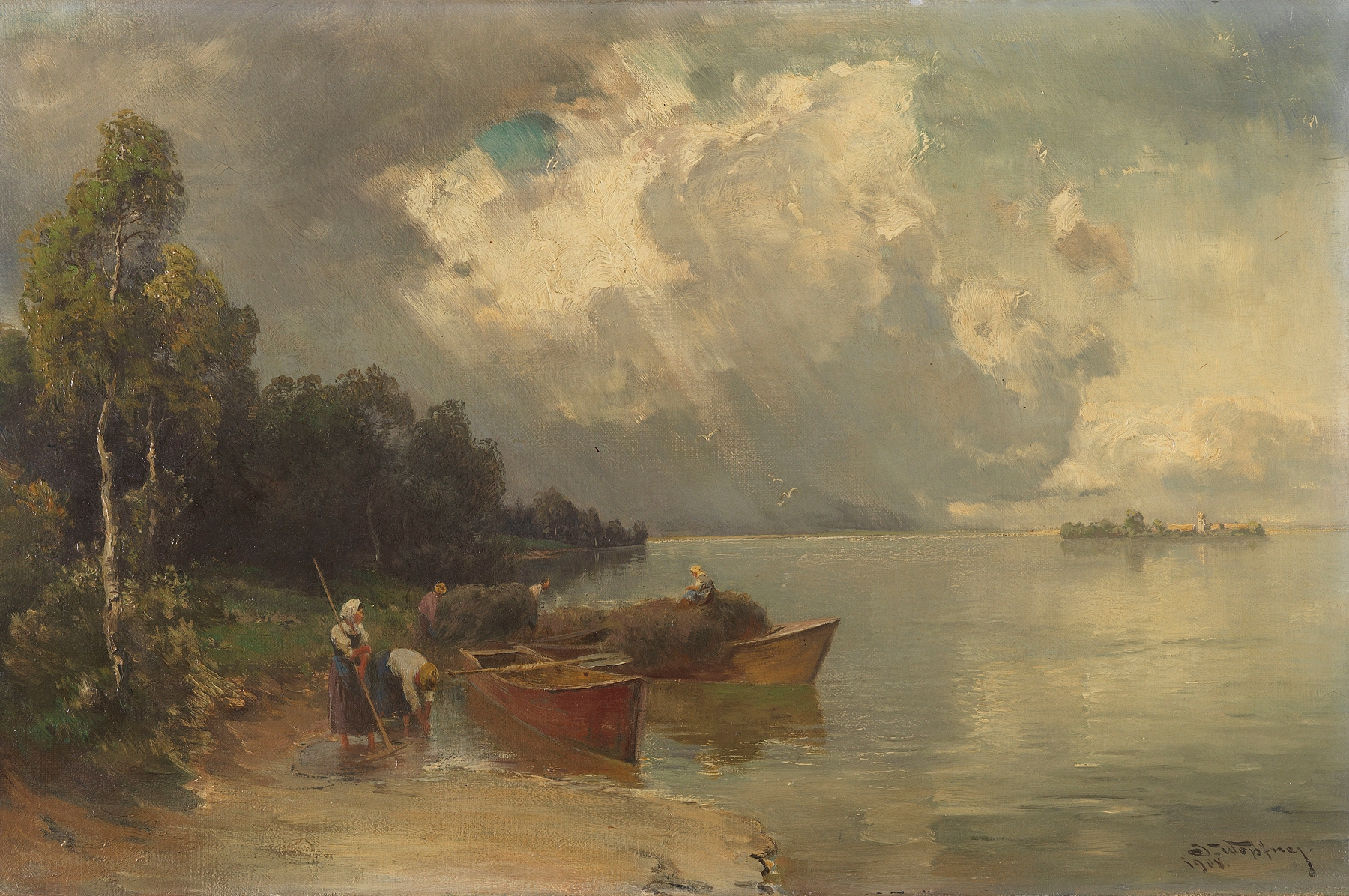
What if silence could speak through light? The weight of impending thunderclouds stirs a contemplative stillness, creating an atmosphere where every flicker of illumination holds its breath. Look to the center of the canvas, where a tumultuous array of dark, swirling clouds dynamically contrasts with the ethereal glow of the retreating sunlight. Notice how the horizon dances between light and shadow, with hints of gold illuminating the water’s surface, creating a shimmering path that leads the eye toward the distant hills.
The artist masterfully employs a palette of moody grays and blues, punctuated by the soft warmth of amber light—each brushstroke capturing the tension between nature’s serenity and its ferocity. In this painting, emotional undercurrents pulse beneath the surface. The vivid contrast between the stormy sky and the tranquil lake reflects an inner turmoil, as if nature itself is poised on the brink of revelation. The encroaching storm hints at inevitable change, a metaphor for the challenges life presents, while the illuminated water offers a glimmer of hope amidst the chaos.
Together, these elements create a dialogue of fear and reassurance, inviting the viewer to contemplate their own crossroads. Joseph Wopfner created Aufziehendes Gewitter über dem Chiemsee around 1900, during a period of artistic transition in Germany. He worked primarily in Bavaria, where the natural beauty of the landscape inspired his endeavors. This era was marked by a burgeoning interest in impressionism, which infused his technique with light and color, as he sought to capture the fleeting moments of life and nature.