
August Macke, Selbstbildnis (Studie) — History & Facts
What first seizes the eye in Selbstbildnis (Studie) by August Macke is the direct, almost unflinching gaze of the sitter—an artist confronting his own reflection, yet leaving the brushstrokes raw and the colors boldly unblended. The face emerges from a haze of cool greens and mauves, the planes of the cheeks and forehead mapped out in confident, angular strokes. Macke’s signature use of color is already present: the flushed reds of the cheeks and lips pulse with life, while the shadowed eyes remain enigmatic, half-shadowed, half-revealed.
The background is barely suggested, pushing the viewer’s attention entirely onto the head and shoulders, as if the world beyond the canvas has fallen away for this moment of self-scrutiny. Painted in 1910, this work belongs to a period when young artists across Germany were searching for new ways to express the inner life, breaking with academic traditions in favor of immediacy and sensation. August Macke was a key figure in the Expressionist movement, and this study captures the restless energy of that era—a time when artists painted not for patrons, but for themselves and their peers, often experimenting in private or in small circles. History has kept few traces of some of these studies, but their urgency remains.
Look again at the brushwork: every mark is a decision, every patch of color a note in the artist’s search for self-understanding.
More Artworks by August Macke
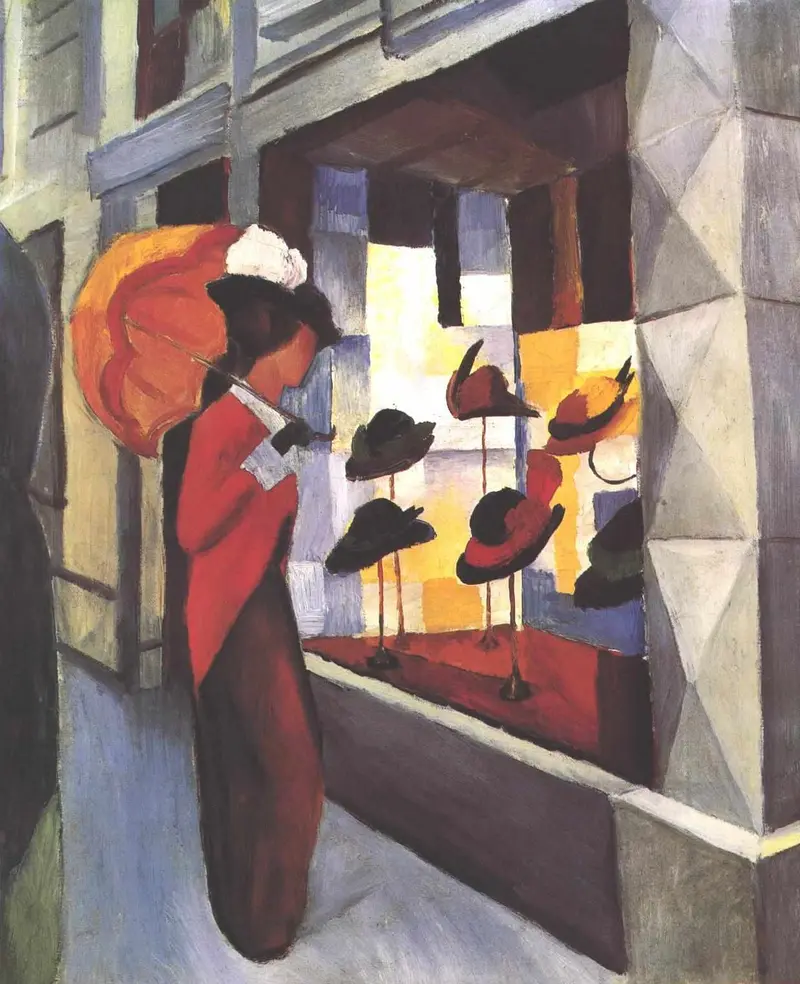
Woman with a Parasol in Front of a Hat Shop
August Macke

Street with Church in Kandern
August Macke
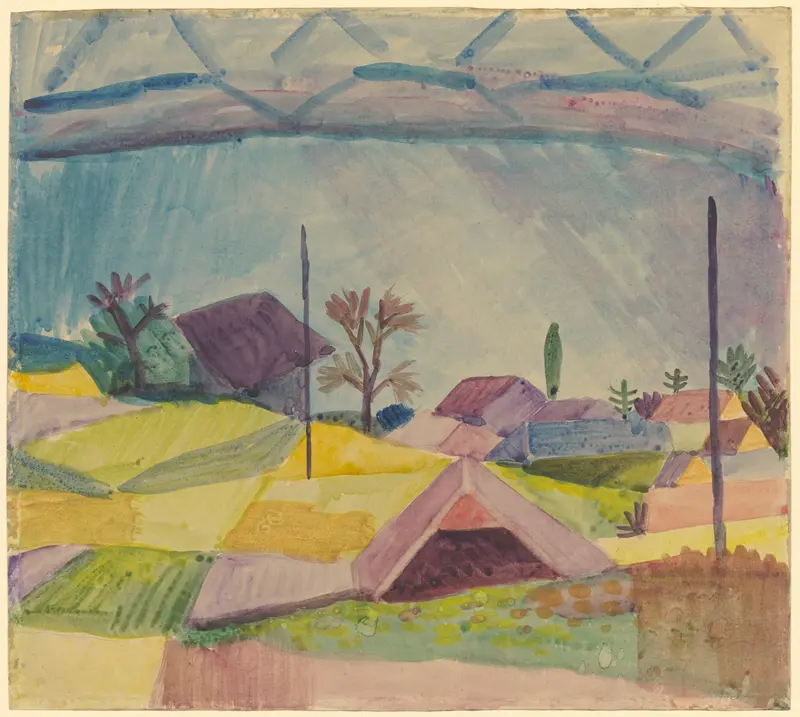
View of Hilterfingen
August Macke

Paar im Nachen
August Macke
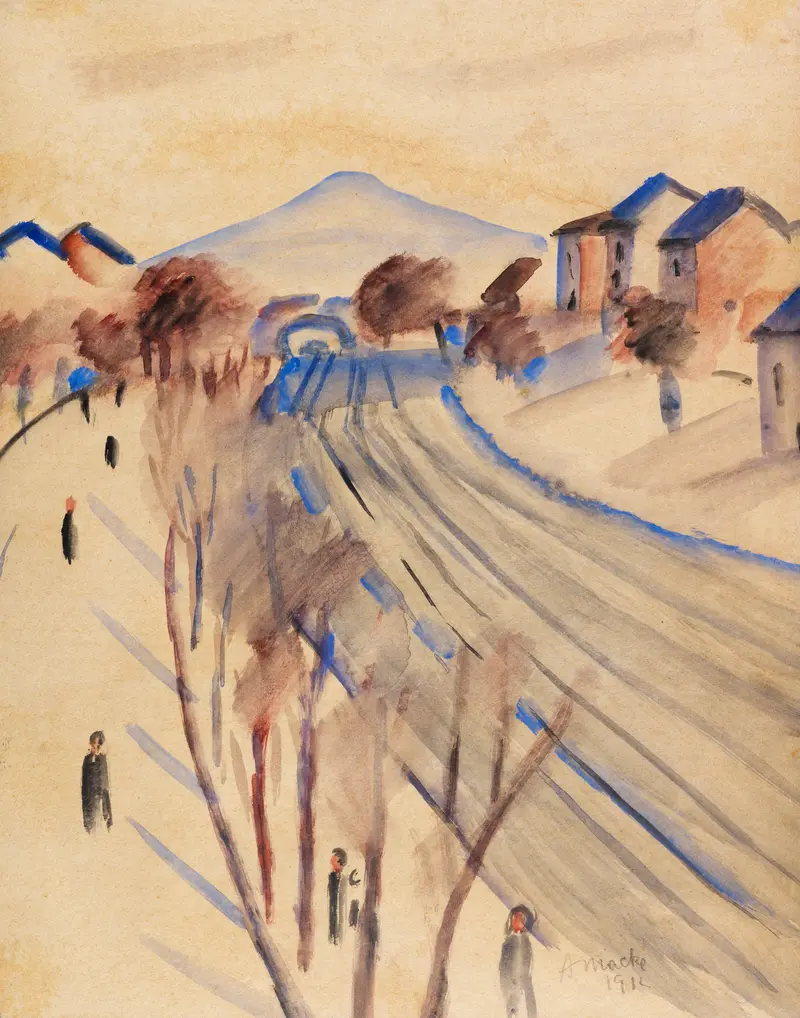
Ölberg mit Bahngleisen II
August Macke
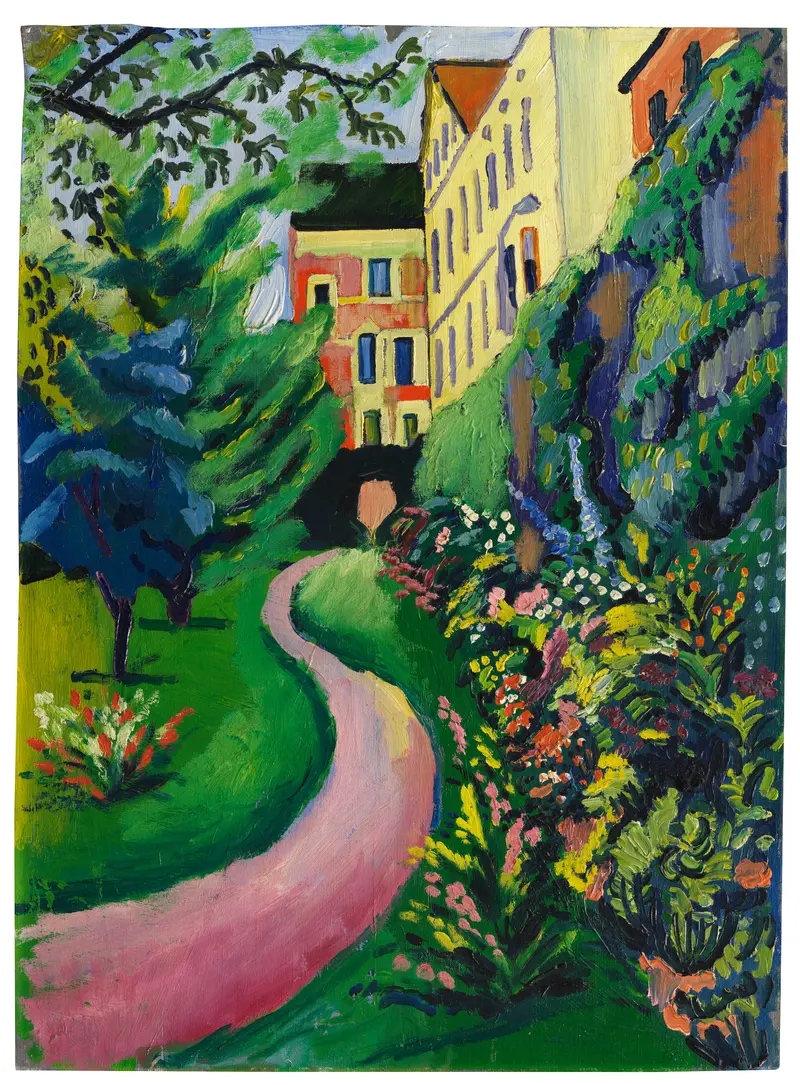
Unser Garten mit blühenden Rabatten
August Macke
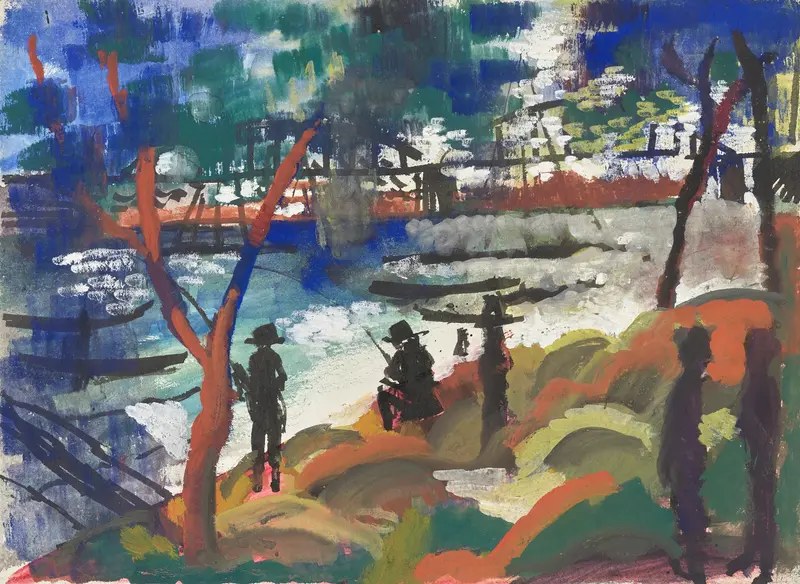
Angler am Fluss
August Macke
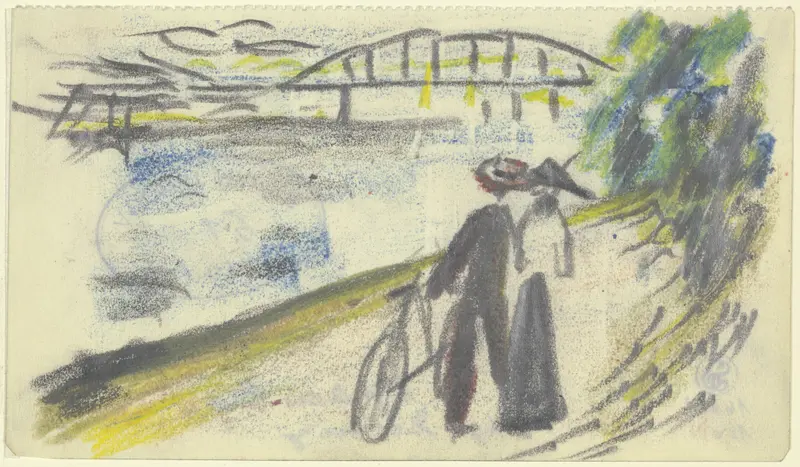
Path at the Rhine
August Macke
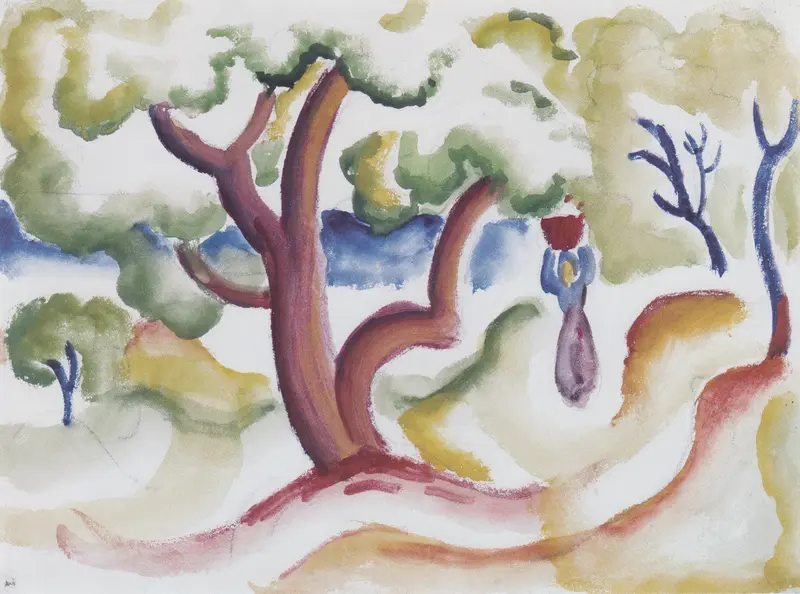
Frau mit Krug unter Bäumen
August Macke
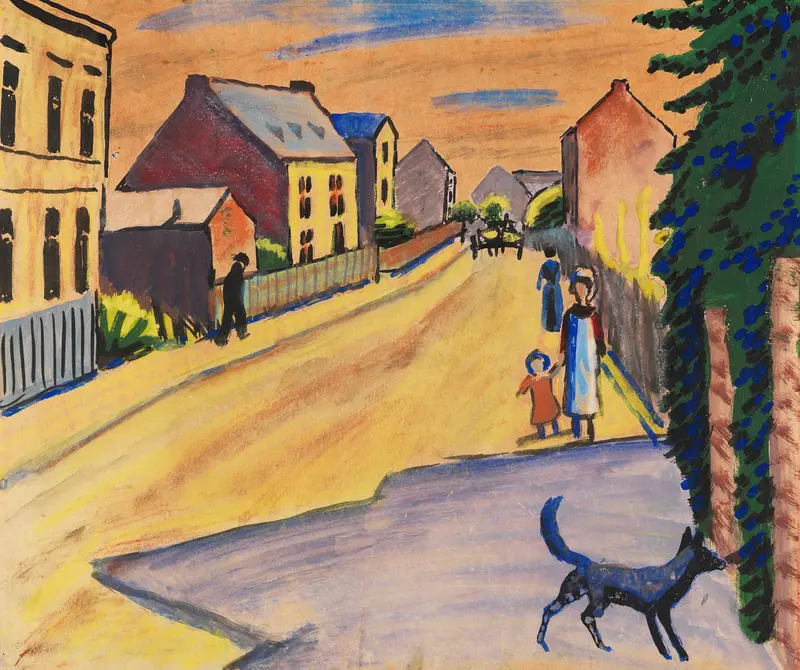
Sonnige Straße mit Hund
August Macke





