
Aumotiv bei Lichtenwörth — History & Facts
What secret hides in the quiet of the canvas? In the stillness captured by the brush, a delicate balance unfolds, whispering tales of harmony and contemplation. Focus on the center of the composition, where soft greens and deep, earthy browns converge in a serene landscape. The gentle sweep of the horizon leads your gaze across the canvas, inviting you to explore the subtle interplay of light and shadow. Notice how Zetsche employs a muted palette, each hue blending seamlessly into the next, creating a sense of tranquility that envelops the viewer.
The meticulous brushwork reveals the artist’s dedication to detail, drawing forth a sense of realism that feels almost tangible. Yet beneath this surface calm, tensions arise — the juxtaposition of natural beauty against the solitude of human existence. The trees stand tall, guardians of a silent conversation, while the expansive sky above suggests both freedom and isolation. One can sense the weight of existence in this unassuming landscape, where every element holds significance, reflecting a struggle between human aspiration and nature's indifferent embrace. In 1899, Eduard Zetsche painted this work during a period of personal and artistic exploration.
Living in Germany, he was influenced by the burgeoning Symbolist movement, which sought to express deeper meanings through nature and emotion. As he navigated his own artistic identity, Aumotiv bei Lichtenwörth emerged as a testament to his quest for balance amid the changing tides of art and life.
More Artworks by Eduard Zetsche
Browse all →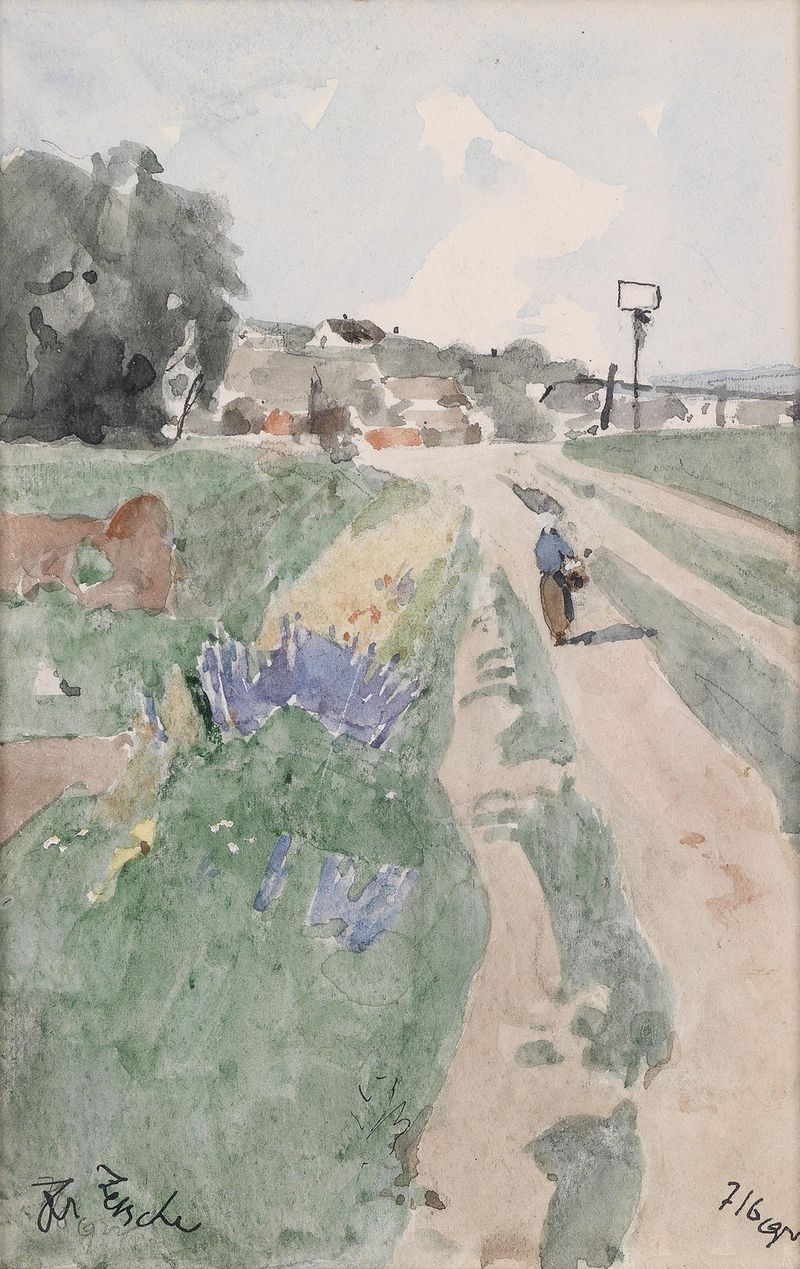
Weg bei Hadersdorf
Eduard Zetsche
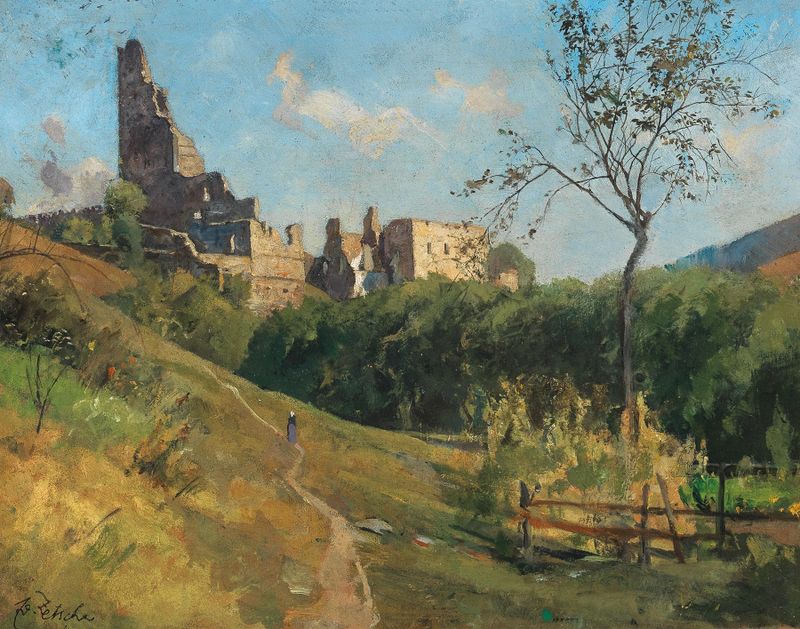
Ruins in the Wachau region
Eduard Zetsche
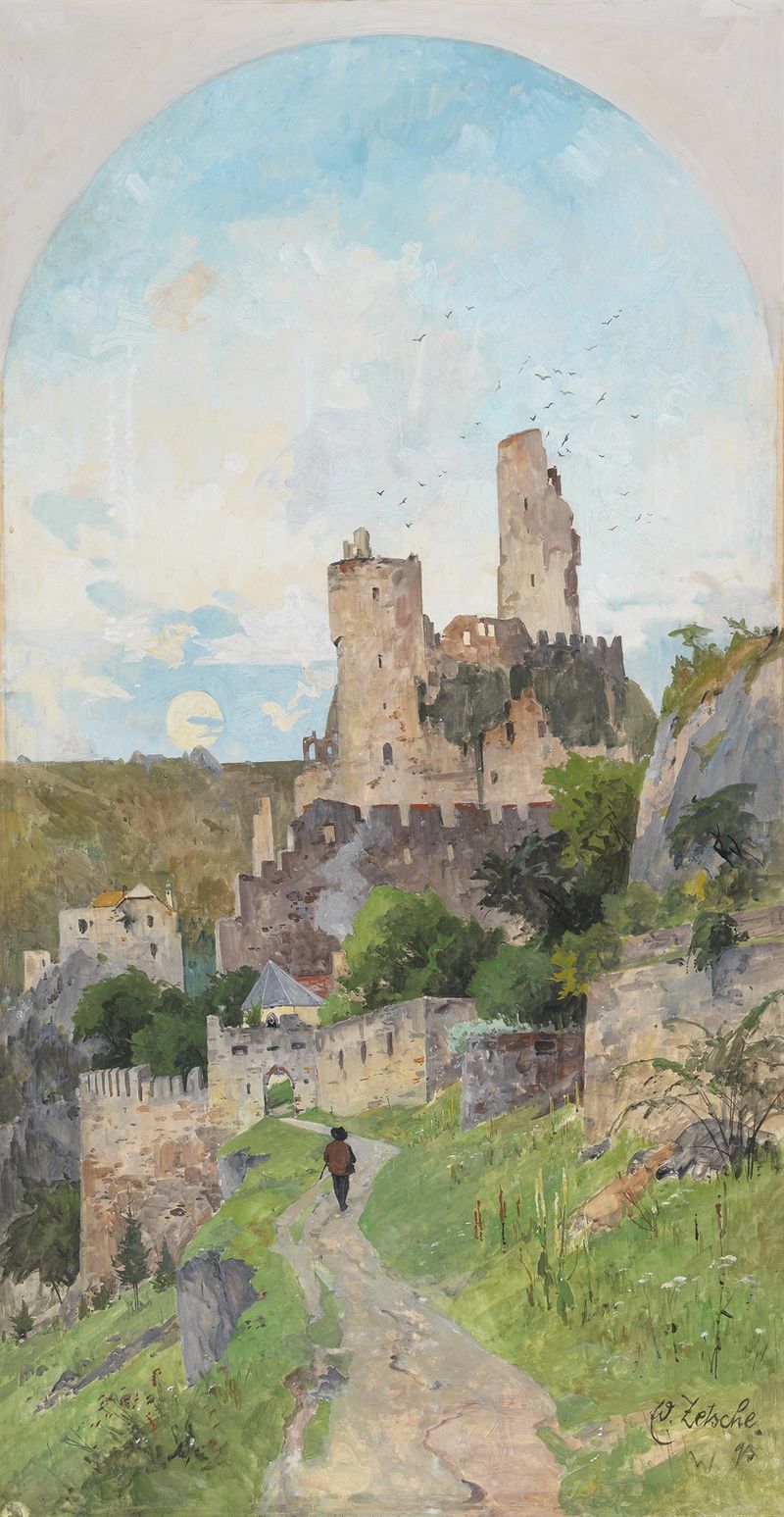
Blick auf die Ruine Dürnstein
Eduard Zetsche
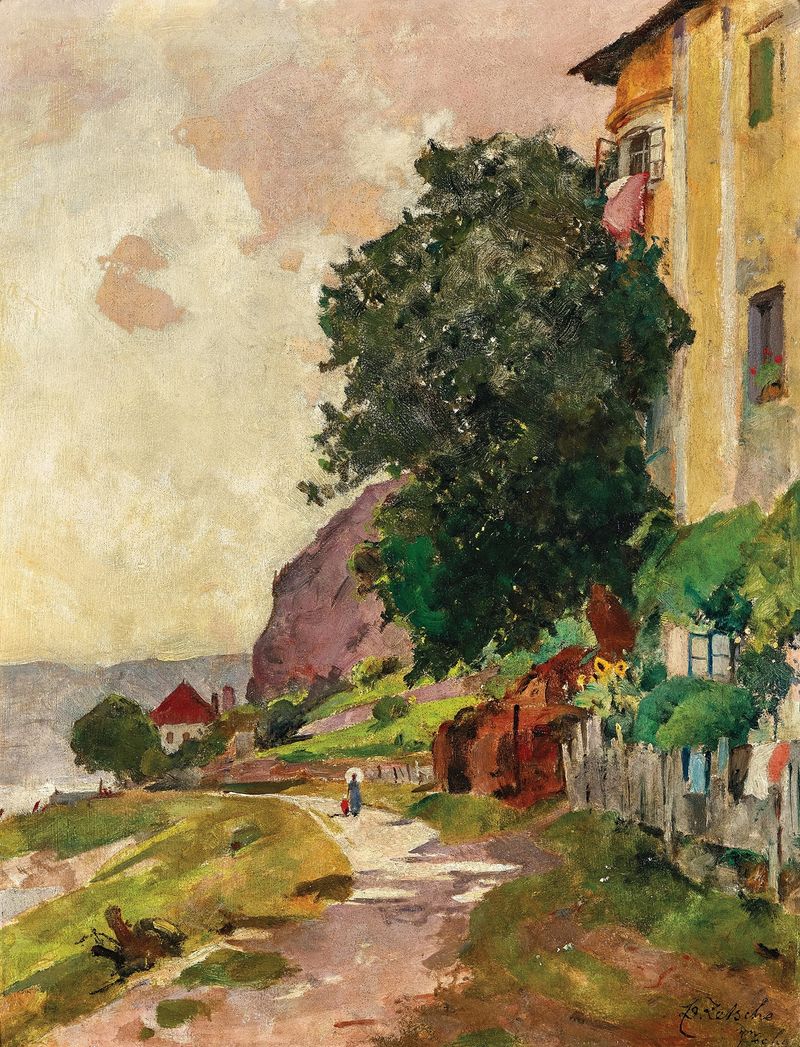
Beim Förthof, Ramsau
Eduard Zetsche
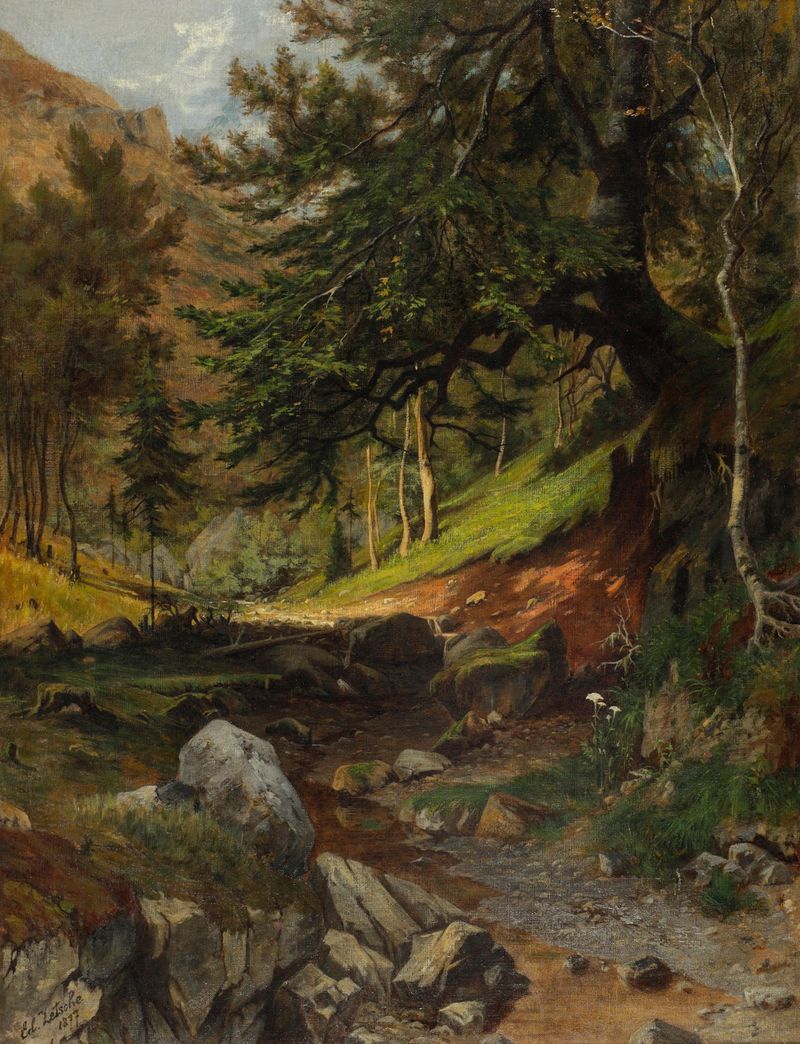
Waldpartie mit Bachlauf
Eduard Zetsche
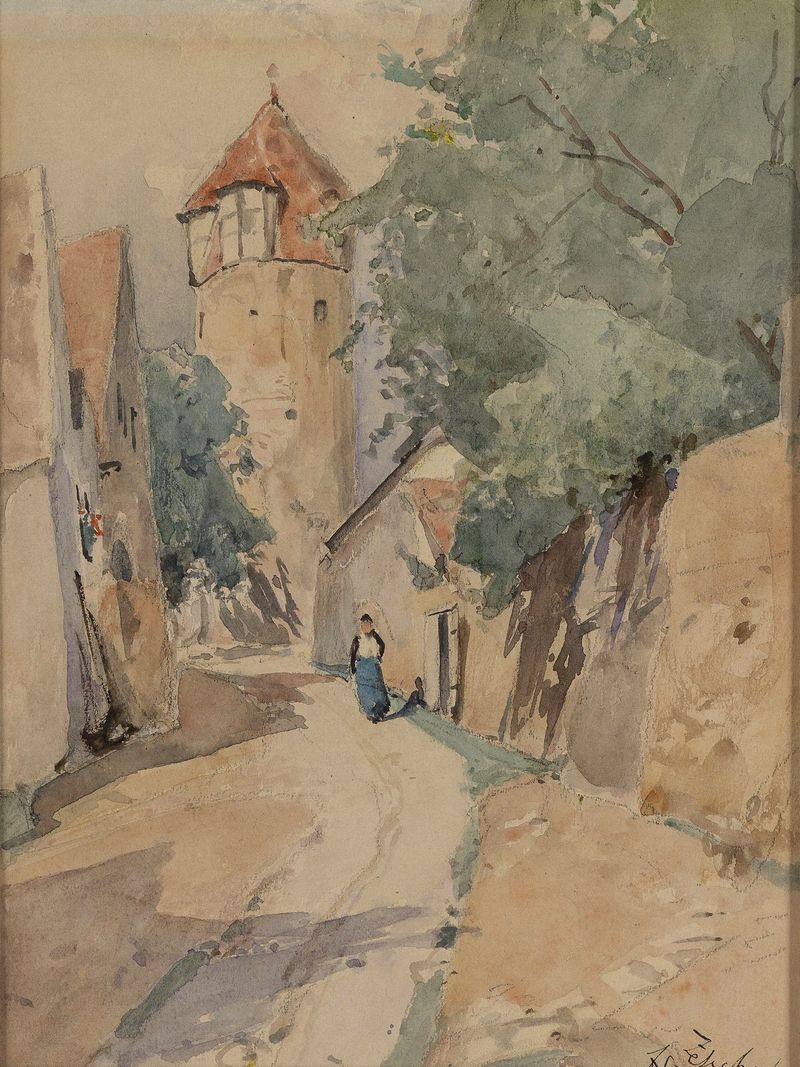
Sulzbach
Eduard Zetsche

Praterpartie
Eduard Zetsche
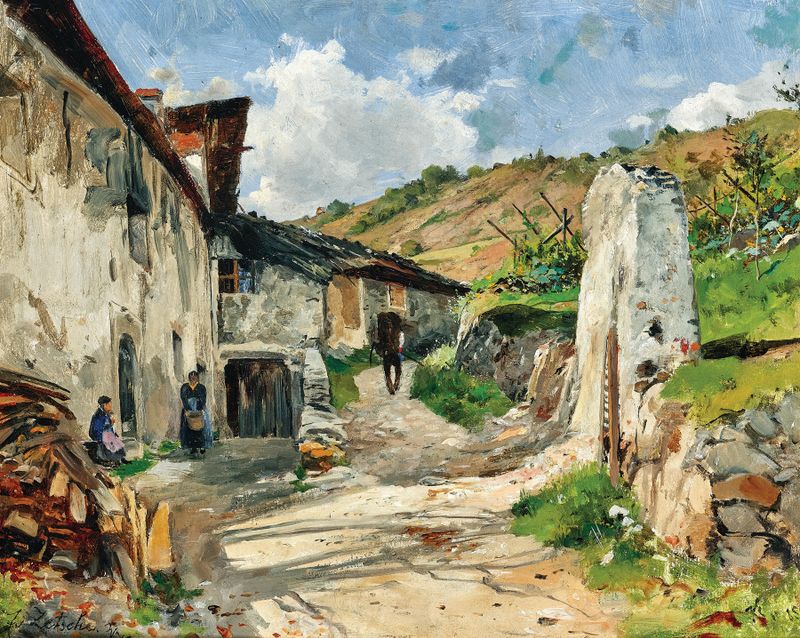
Wachau region, a path to a vineyard near a village
Eduard Zetsche

Motiv bei Lichtenwörth
Eduard Zetsche
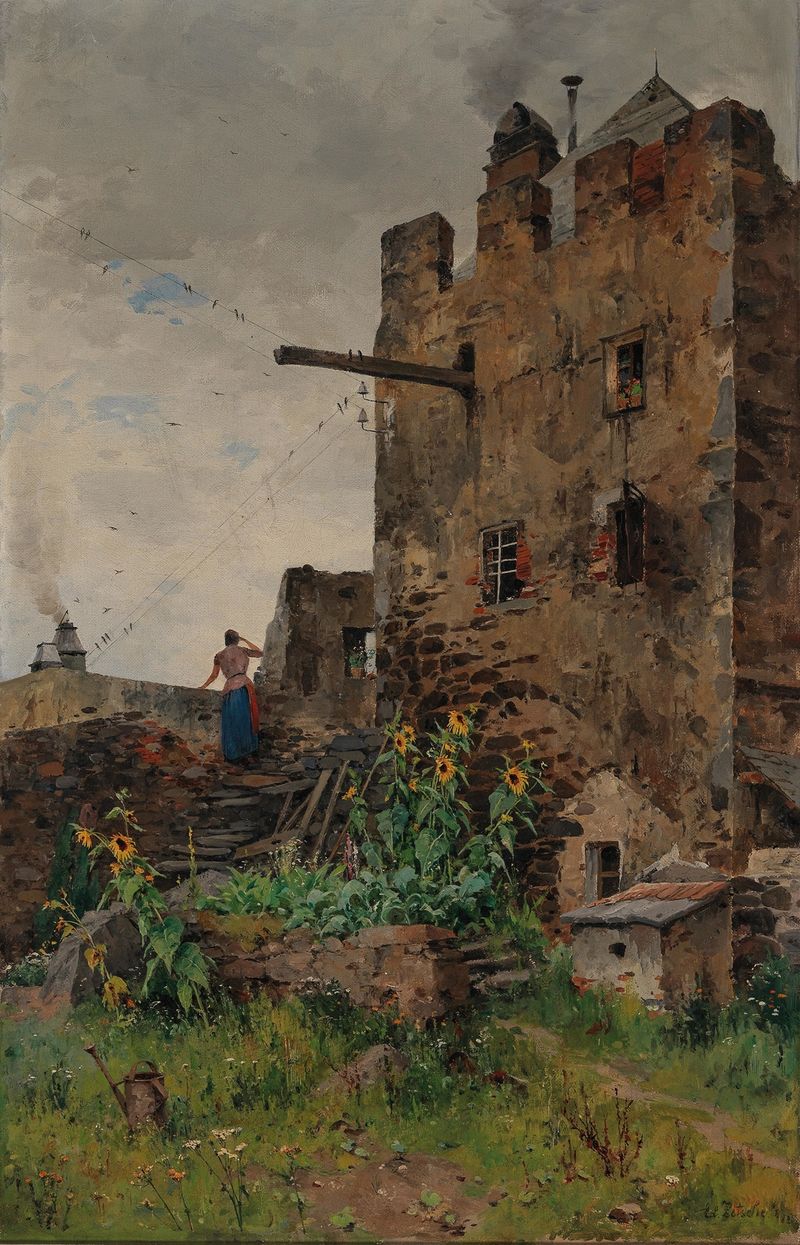
Wachau, Scene of Dürnstein, by the Old Town Wall
Eduard Zetsche





