
Australian landscape — History & Facts
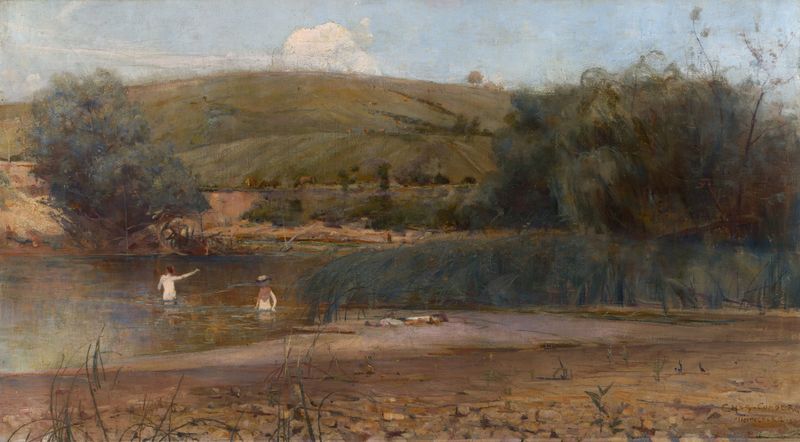
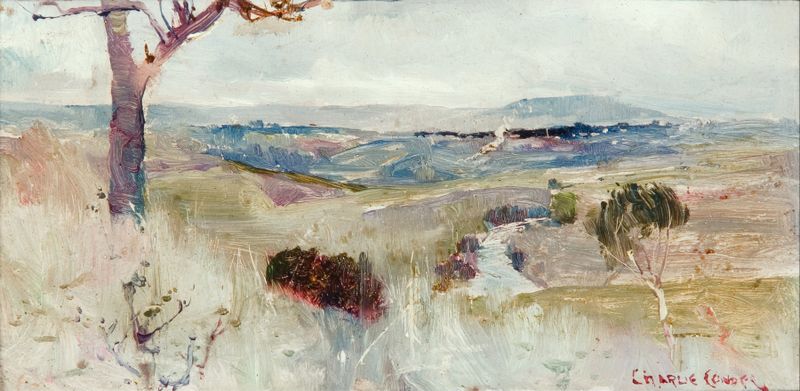
In the gentle embrace of natural light, the Australian landscape unfolds like a whispered secret, revealing its hidden depths. Look to the horizon where the sun spills its golden warmth across the undulating hills. The vibrant palette of ochres and greens creates a tapestry that pulls the viewer’s eye, inviting exploration. Notice how the soft brushstrokes blend seamlessly, suggesting the wind's gentle caress upon the land.
Shadows dance lightly, creating a rhythm that breathes life into the scene, while the delicate interplay of light and color evokes a sense of timelessness. Beyond its immediate beauty, this landscape encapsulates a deeper narrative of connection and isolation. The vast expanse hints at the solitude of the Australian outback, where the vastness can feel overwhelming yet liberating. The subtle presence of the sky, sometimes stormy and sometimes serene, reflects the emotional landscape of those who inhabit it.
Each element speaks to a complex relationship between man and nature, suggesting both harmony and dissonance. In the late 1880s, Conder found himself captivated by the Australian countryside, just as the Impressionist movement was gaining momentum. He painted this work while living in Sydney, amidst a burgeoning interest in capturing the essence of the Australian light and land. This piece reflects not only personal exploration but also the broader transition in art, where light became a powerful subject in its own right, reshaping the perception of landscapes.
More Artworks by Charles Conder
Browse all →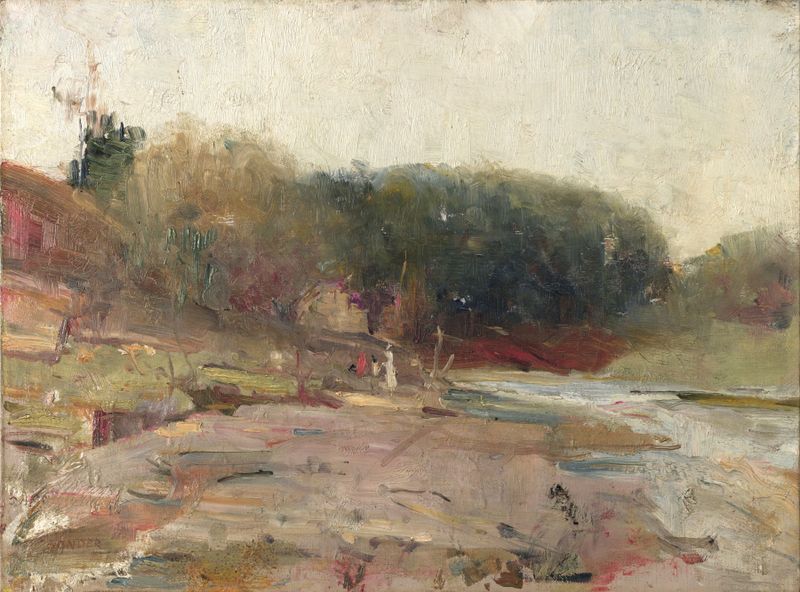
On the River Yarra, near Heidelberg, Victoria
Charles Conder
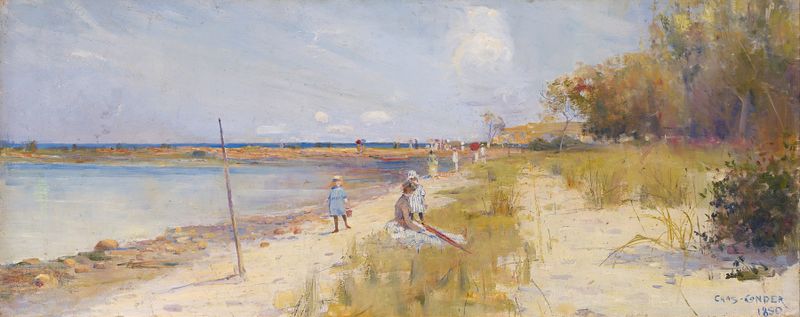
Rickett’s Point
Charles Conder

Sunset, Sydney Harbour
Charles Conder

Riddell’s Creek
Charles Conder
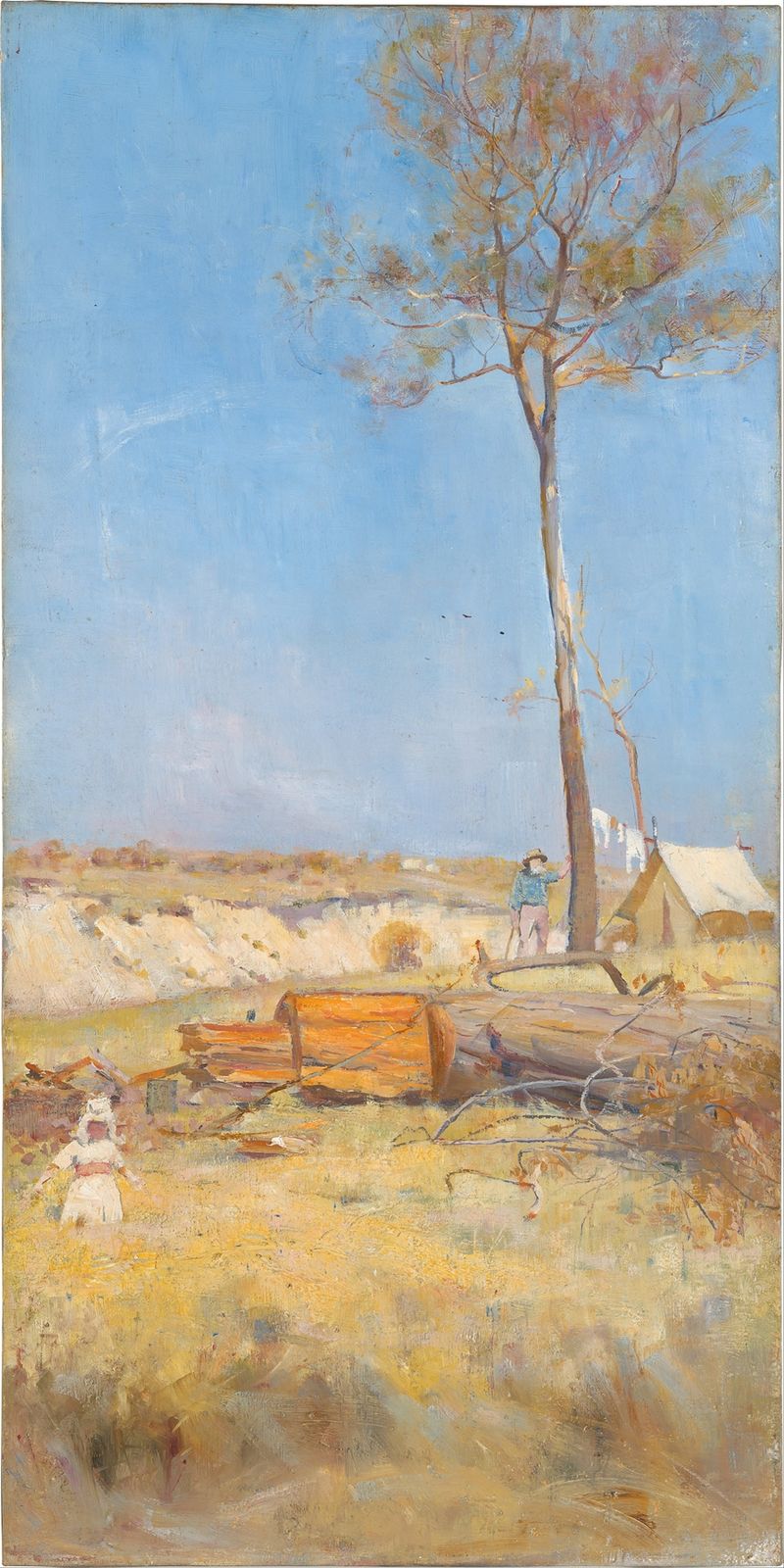
Under a southern sun
Charles Conder
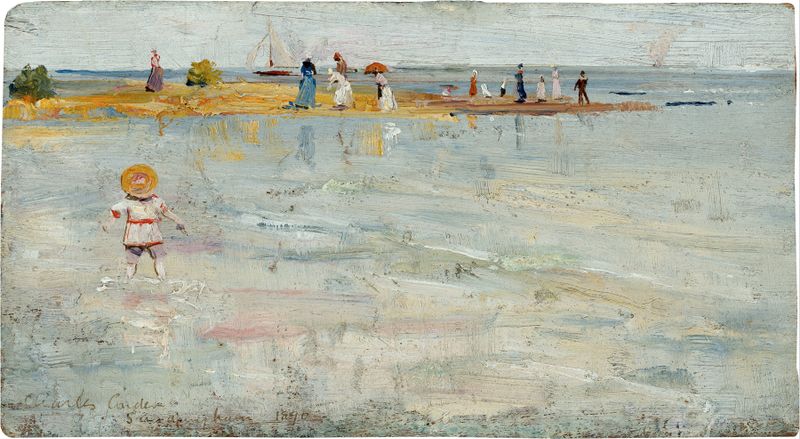
Ricketts Point, Beaumaris
Charles Conder

Going home
Charles Conder
The Yarra, Heidelberg
Charles Conder
Dandenongs from Heidelberg
Charles Conder
A holiday at Mentone
Charles Conder





