Aviatic Evolution — History & Facts
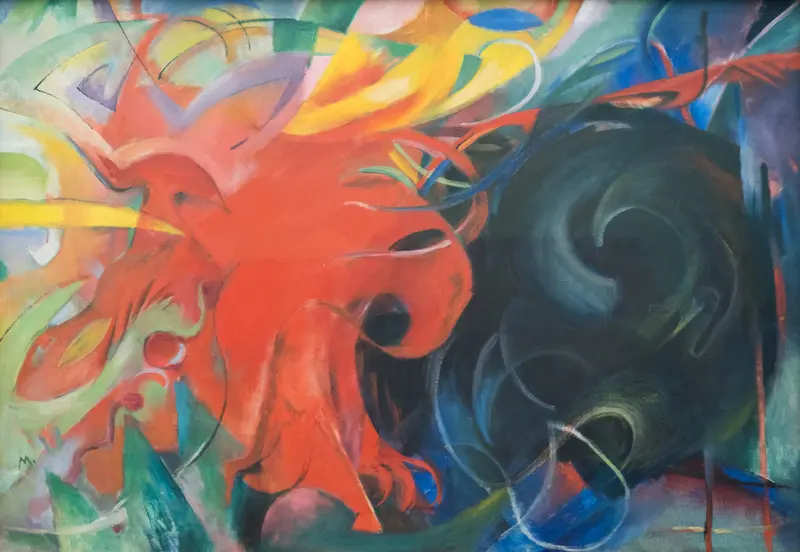
In Aviatic Evolution, Paul Klee uses a vibrant palette of blues, yellows, and reds to depict abstract forms that suggest flight. The composition is dynamic, with shapes that seem to soar and twist in the air. The figures are not representational but evoke the essence of movement and transformation.
The background is a blend of soft colors, enhancing the sense of depth and space. This painting is executed in oil on canvas, showcasing Klee's characteristic style of simplified forms and bold colors. The brushwork is fluid, allowing the colors to blend seamlessly into one another. Viewers can appreciate the layering of hues, which adds complexity to the overall composition.
The dimensions are approximately 60 x 80 cm, making it a medium-sized work that invites closer inspection. Paul Klee was a Swiss painter associated with the Expressionist movement and later the Bauhaus. Aviatic Evolution reflects his fascination with flight and the natural world, themes he often explored in his work. An interesting fact about this painting is that it was created during a period when Klee was influenced by his travels and the advancements in aviation.
This piece exemplifies his ability to merge abstraction with personal experience.