Badersee — History & Facts
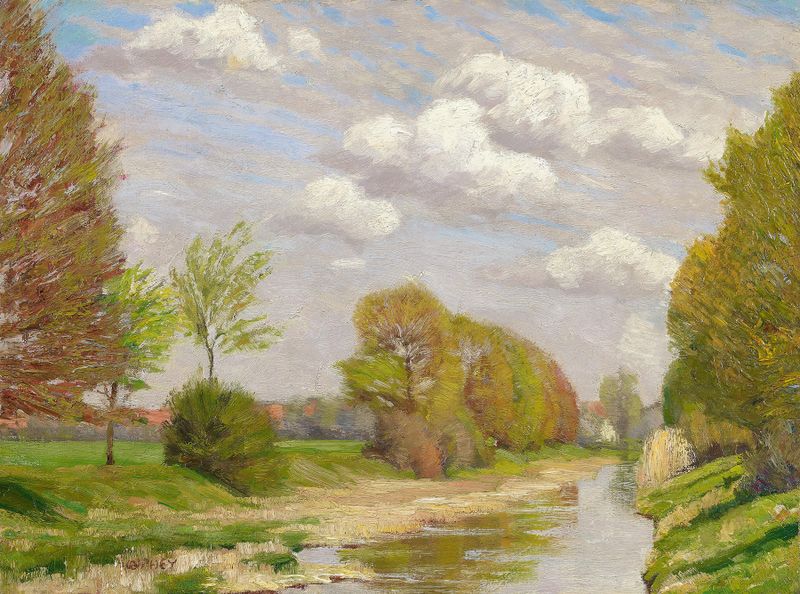
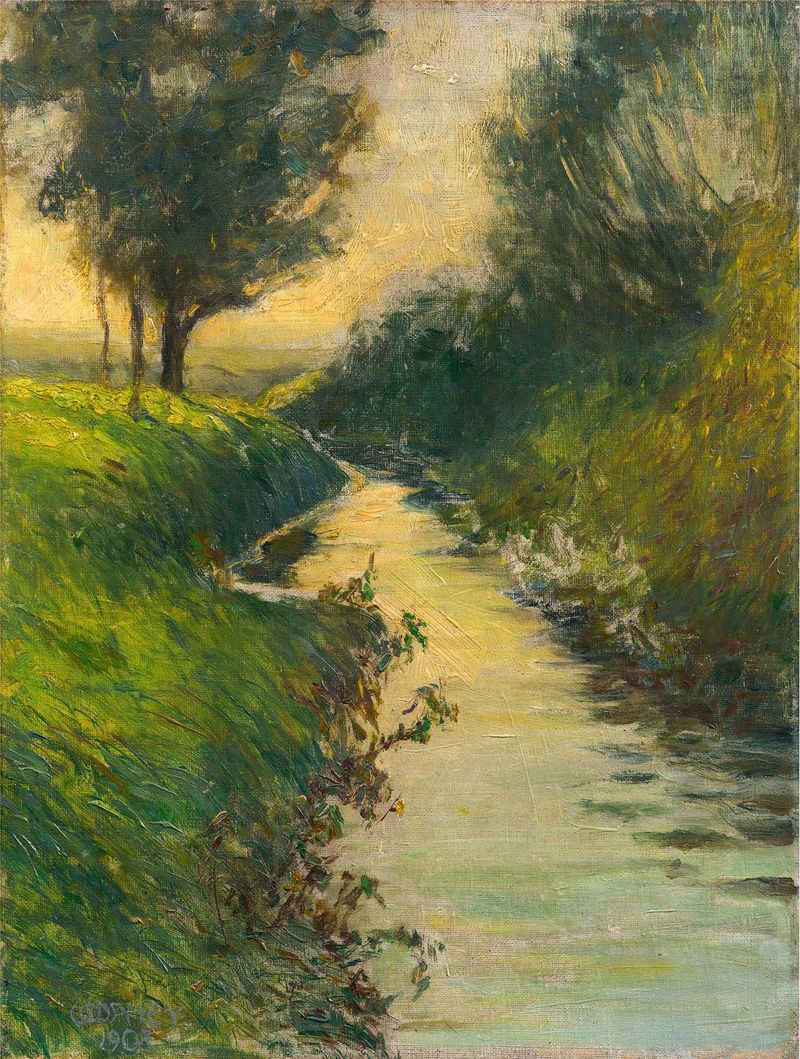
When did color learn to lie? In the vibrant depths of Badersee, hues of blue and green dance with an unsettling beauty, beckoning the viewer to delve deeper into its serene surface. Focus on the center of the canvas, where the tranquil lake reflects a kaleidoscope of foliage and sky. The artist's brushwork creates a shimmering quality, as if the water itself is breathing, mirroring the exuberant greens that dominate the foreground. Notice how the delicate interplay of light and shadow reveals a hidden tension—a contrast between the idyllic scenery and the darker undertones lurking beneath the surface. As the colors vie for attention, they evoke hope wrapped in uncertainty.
The bright patches suggest life and vitality, while the darker shades whisper of underlying sorrow. This juxtaposition resonates with the human experience, reminding us that beauty can be both a refuge and a veil for deeper truths. The way the forest fringes the water hints at boundaries, both inviting and constricting, suggesting that even in beauty, there are hidden complexities. Walter Ophey painted Badersee in 1929 during a time that marked a shift in the art world, as the modernist movement began to challenge traditional notions of representation.
Living in Germany, he was influenced by the expressionist movement, exploring color and emotion while grappling with the societal tensions of his era. This artwork captures not only a moment in nature but also reflects the broader artistic dialogue about identity and perception that was emerging at the time.