Erftlandschaft — History & Facts
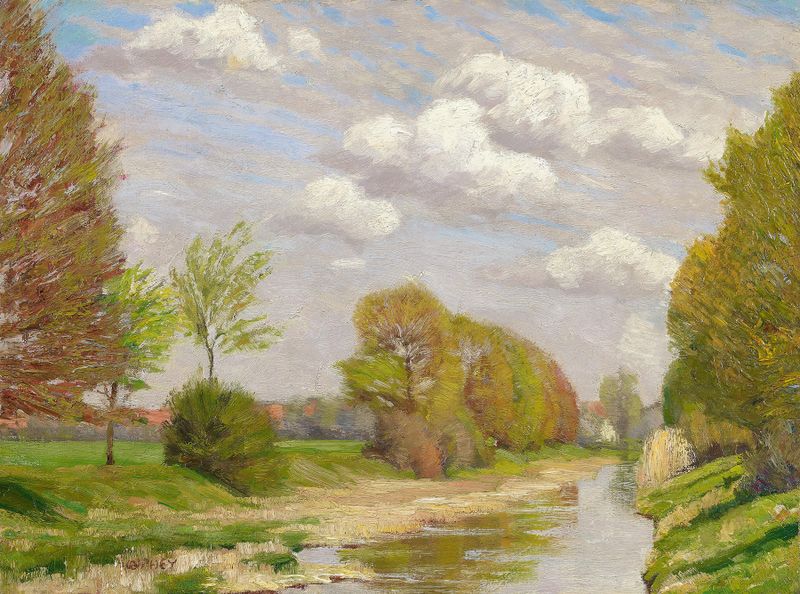
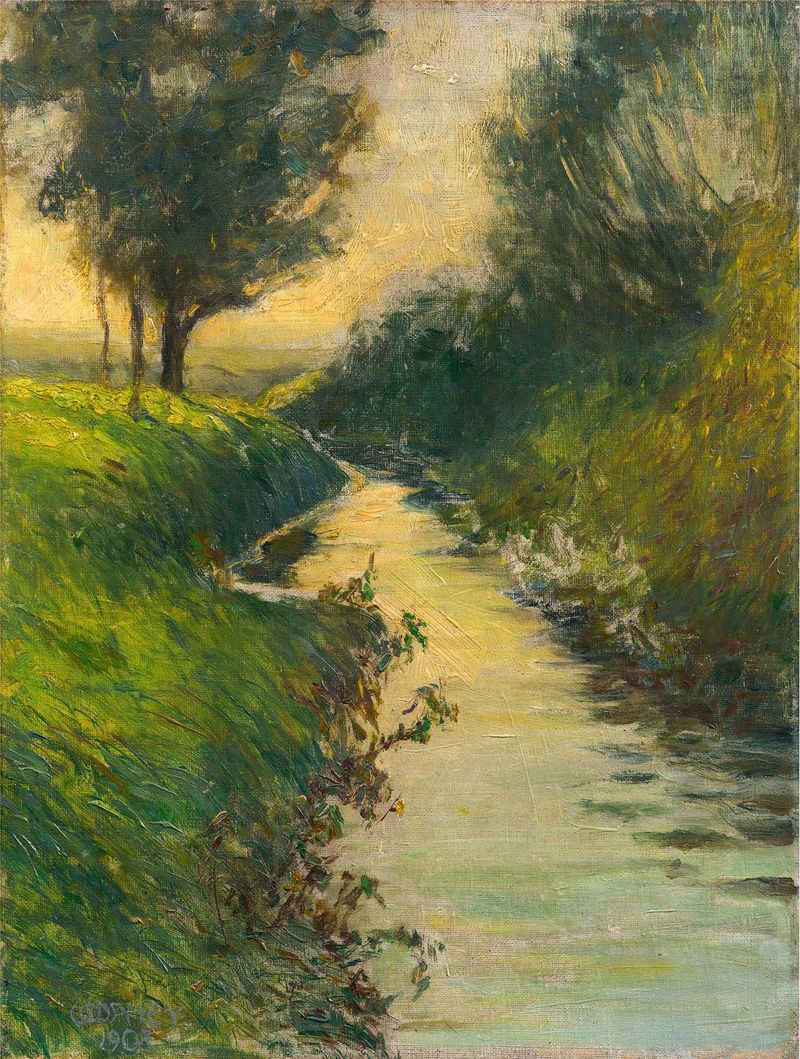
This profound reflection invites us into the delicate balance between memory and transformation, where the ephemeral meets the eternal. As the world rushes forward, art becomes a sacred space for transcendence. Look to the sunlit horizon in Erftlandschaft, where soft blues and greens meld together, creating an exquisite landscape that invites the viewer to linger. Notice how the gentle brushstrokes convey the whispering movement of grasses swaying in the breeze, while the river’s surface glistens with fleeting reflections of light.
The composition is balanced, drawing the eye into the serene depth of the water, where subtle gradations of color suggest a world both familiar and dreamlike. Beneath the tranquil exterior, emotional tensions simmer. The flowing river, a symbol of time’s relentless passage, contrasts with the stillness of the trees, suggesting a yearning for permanence amid inevitable change. Furthermore, the absence of human figures allows nature itself to reclaim the narrative, evoking feelings of solitude and introspection.
In capturing this harmony and contrast, the painting transcends mere representation, becoming a meditation on existence itself. In 1906, during a time of rapid industrialization and societal shifts in Germany, Erftlandschaft emerged as a reflection of Walter Ophey’s desire to find solace in nature. Working in the small town of Erftstadt, he sought to depict the beauty of the landscape as a counterpoint to the tumultuous changes around him. This artwork encapsulates the artist's quest for peace and permanence, a quiet rebellion against the chaos of modern life.