Weiße Häuser — History & Facts
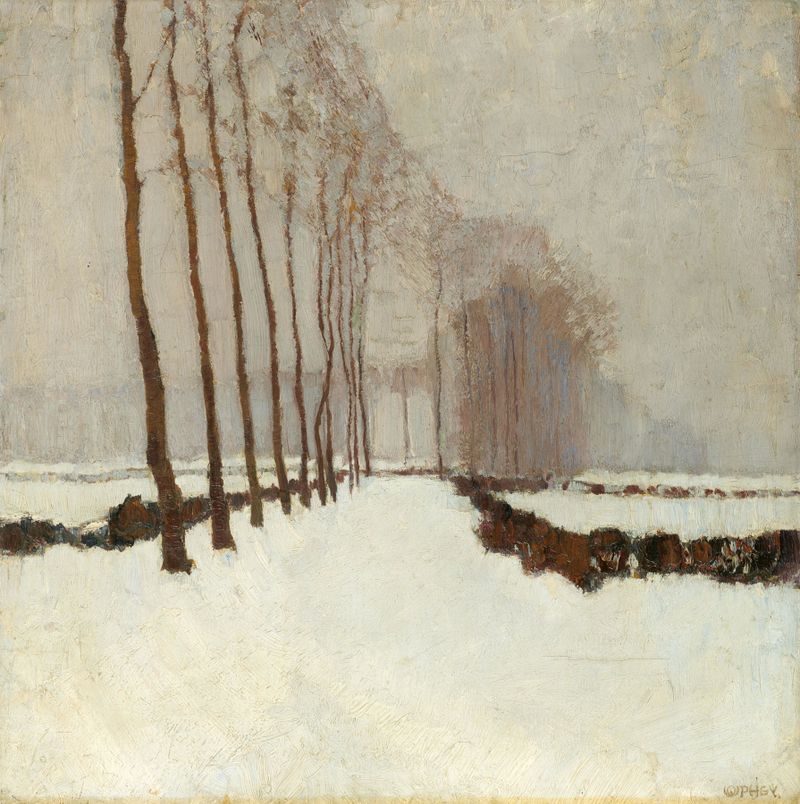
Where does light end, and longing begin? In its soft embrace, we find the fragile border between existence and the fading echoes of what once was. Look closely at the left side of the canvas, where the spectral white houses emerge from a haze, their forms standing eerily still against the backdrop of a dusky sky. The palette is a serene blend of cool grays and warm whites, evoking an otherworldly tranquility that invites contemplation. The geometric precision of the architecture contrasts sharply with the organic flow of the surrounding landscape, while the light casts long shadows, suggesting the passage of time and the inevitable approach of dusk. In this quiet scene, Ophey imbues the houses with a sense of isolation and fragility.
The ethereal light transforms them into spectral beings, mere phantoms of life as they seem to hover between the realms of the living and the memories left behind. This duality speaks to a deeper contemplation of mortality—how structures, like memories, can outlast those who inhabit them, yet remain steeped in a profound silence. The tension between light and shadow serves as a metaphor for the human experience: bright moments dimmed by the weight of inevitability. Walter Ophey painted Weiße Häuser in 1904 during a period of personal struggle and artistic refinement in Berlin.
The onset of modernism shifted the art world, challenging traditional perceptions of reality. As he navigated these changes, the stark beauty and haunting quality of this piece reflect both his internal conflicts and the broader existential inquiries that defined the era.