Straße in Zons — History & Facts
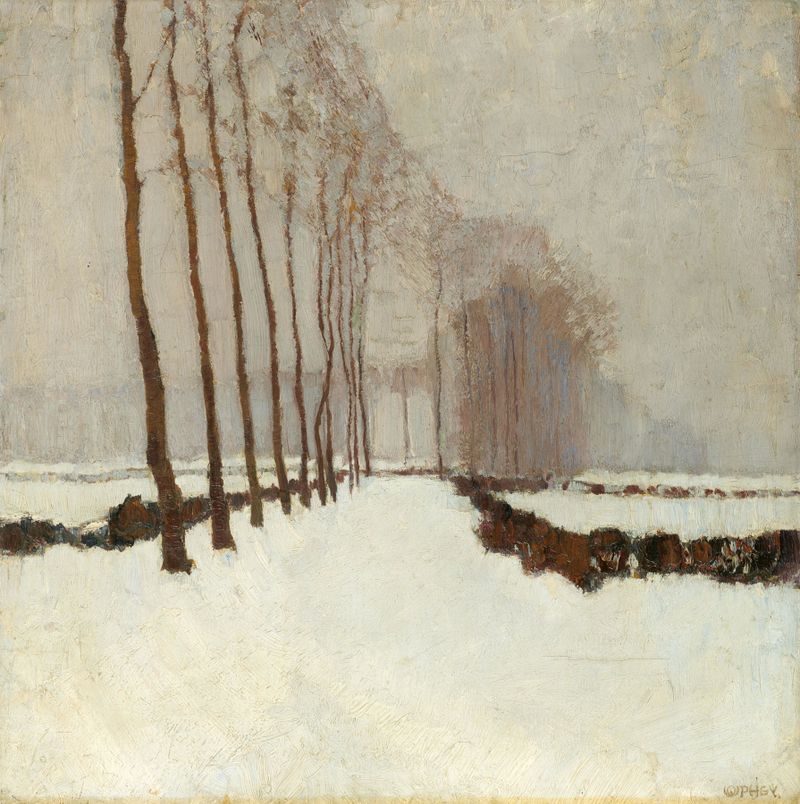
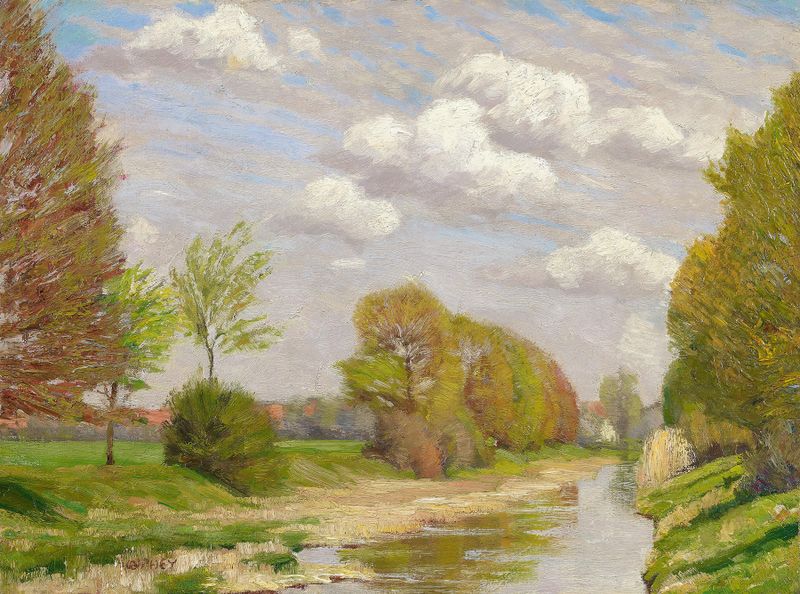
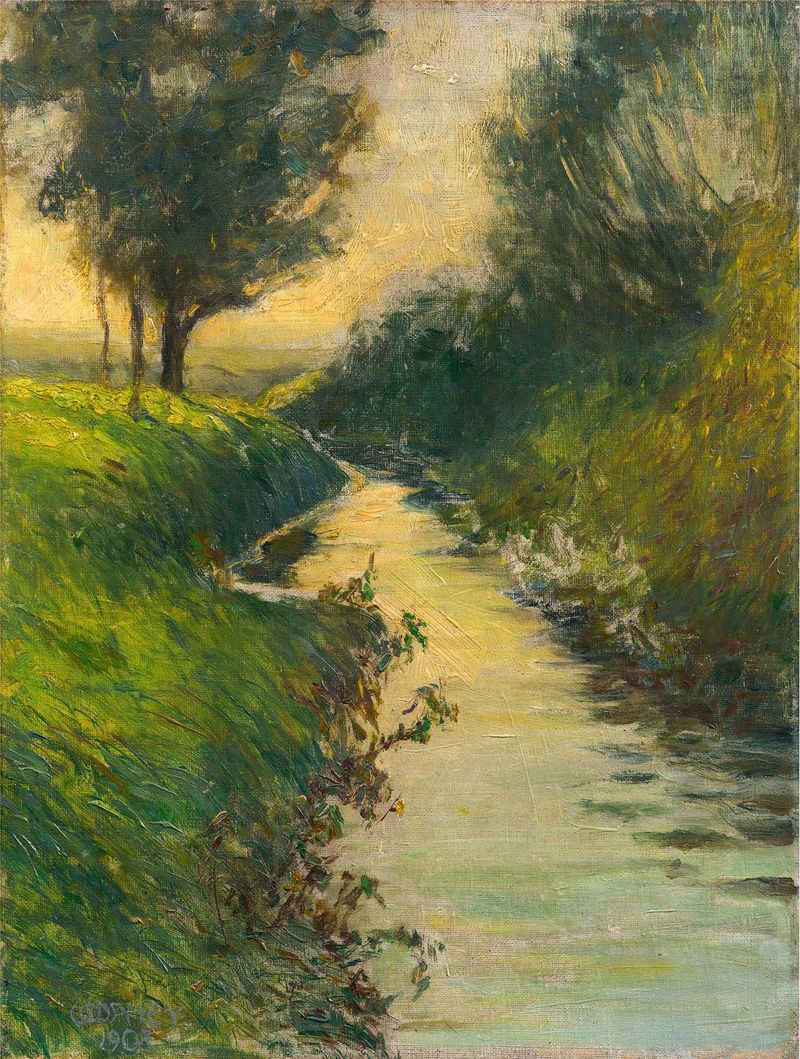
Who listens when art speaks of silence? In Straße in Zons, a quiet street winds through the heart of an ancient town, evoking awe in every brushstroke. Look to the right at the cobblestone path, where the uneven stones seem to beckon with unspoken stories. Notice how the muted colors blend seamlessly: the soft browns of the buildings, the gentle grays of the sky, and the lush greens of the foliage, all bathed in a diffused light that creates an intimate atmosphere. The composition draws your gaze along the street, inviting you to explore the juxtaposition of the calm architecture against the looming shadows of the trees. As you delve deeper, consider the emotional tension in the stillness captured here.
The street appears deserted, evoking a sense of solitude, yet the lush greenery hints at life just beyond the frame. This balance between absence and presence fosters an unsettling yet serene experience, suggesting that the quiet holds its own stories, waiting to be revealed. The interplay of light and shadow adds a layer of complexity, inviting contemplation on what is left unsaid. In 1908, Walter Ophey painted Straße in Zons during a period of artistic exploration in Germany, where the transition from Impressionism to modernism was taking root.
Living in a world bustling with change, he sought solace in capturing the beauty and tranquility of everyday scenes, reflecting both his inner contemplation and the evolving landscape of contemporary art.