Flusslandschaft — History & Facts
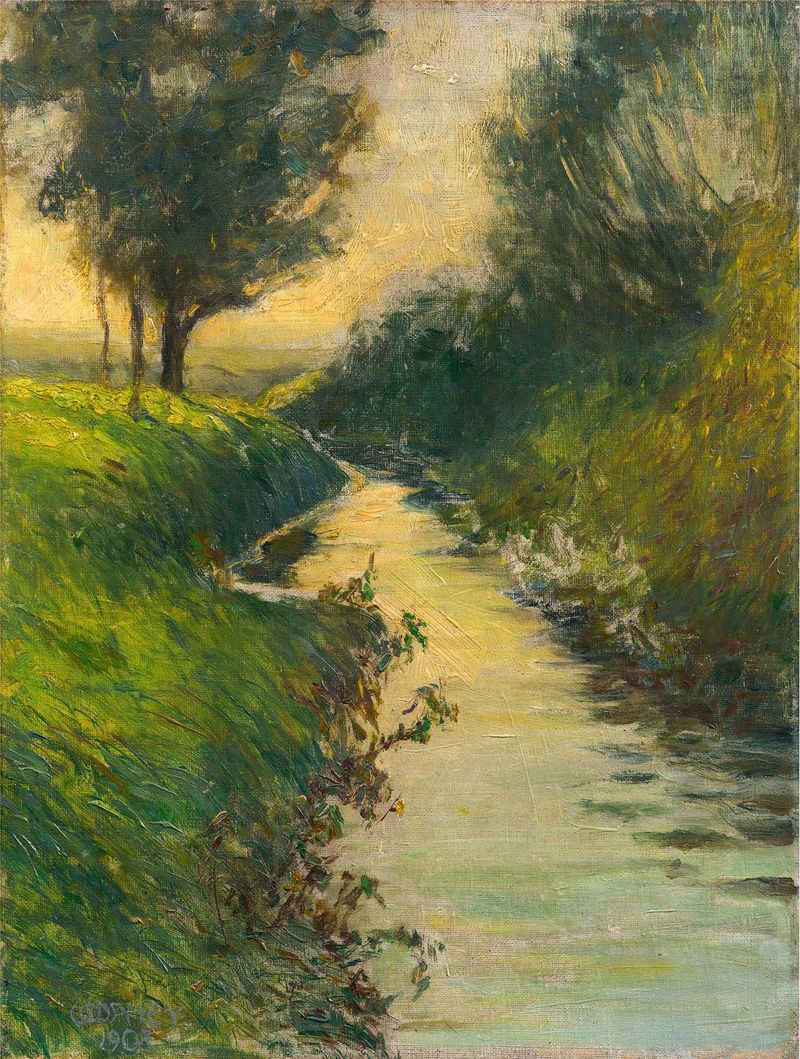
What if silence could speak through light? In the stillness of Flusslandschaft, the gaze follows the gentle flow of a river, where the absence of sound invites contemplation and introspection. Look to the left at the lush greenery that cradles the water, its vibrant greens contrasting beautifully against the soft blues of the river. The artist’s brush strokes evoke a sense of tranquility, suggesting a moment frozen in time. Notice how the light filters through the trees, creating dappled patterns on the water’s surface, each glimmer adding depth and life to the otherwise serene scene. Delve deeper into the painting, and you’ll uncover the emotional tension between nature’s vibrancy and the quiet emptiness of the landscape.
The flowing river symbolizes the passage of time, while the stillness around it speaks to a profound solitude. Perhaps the artist is inviting viewers to reflect on their own moments of silence, encouraging an exploration of both inner peace and the yearning for connection. In 1905, Walter Ophey painted Flusslandschaft during a time when the art world was embracing modernism and shifting away from traditional forms. Living in Germany, he was influenced by the evolving landscapes of his surroundings and the growing emphasis on emotional expression within art.
His work captured the essence of nature while reflecting the subtle complexities of human experience, a juxtaposition that resonates powerfully in this composition.