
Battle of the Pyramids — History & Facts
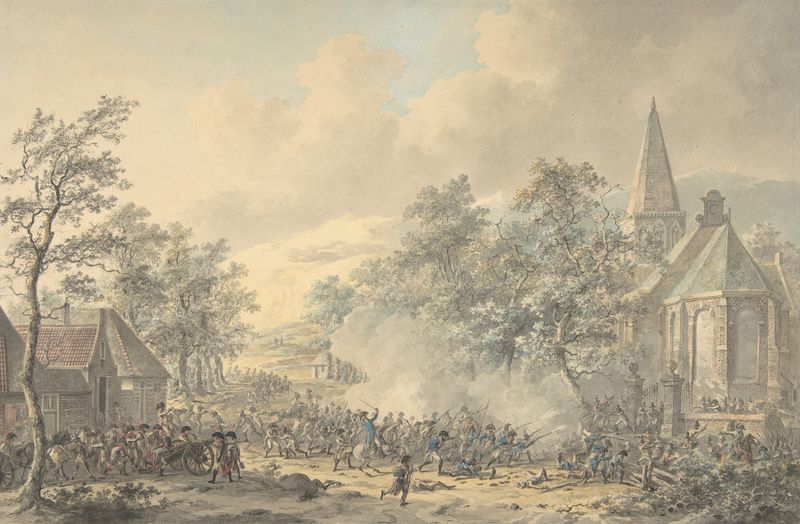
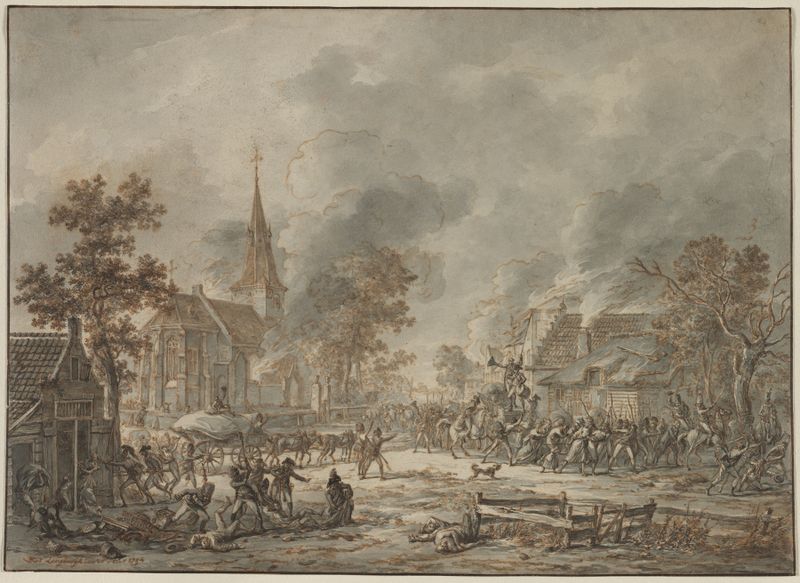
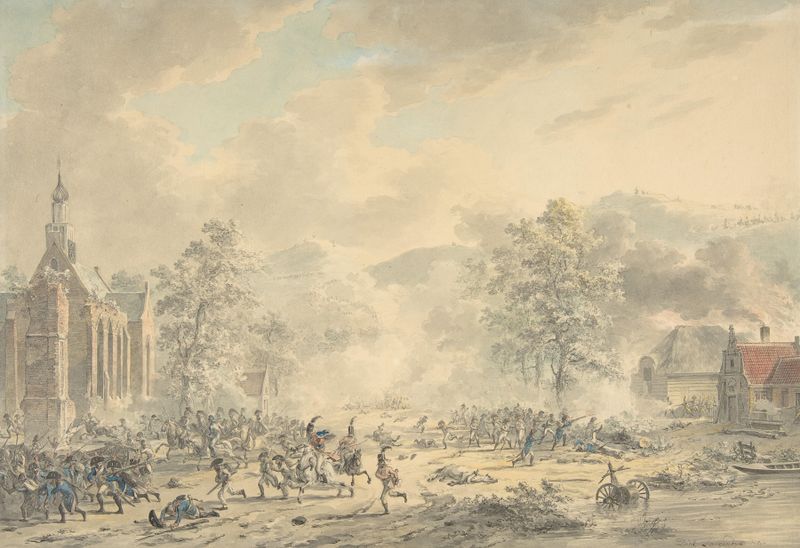
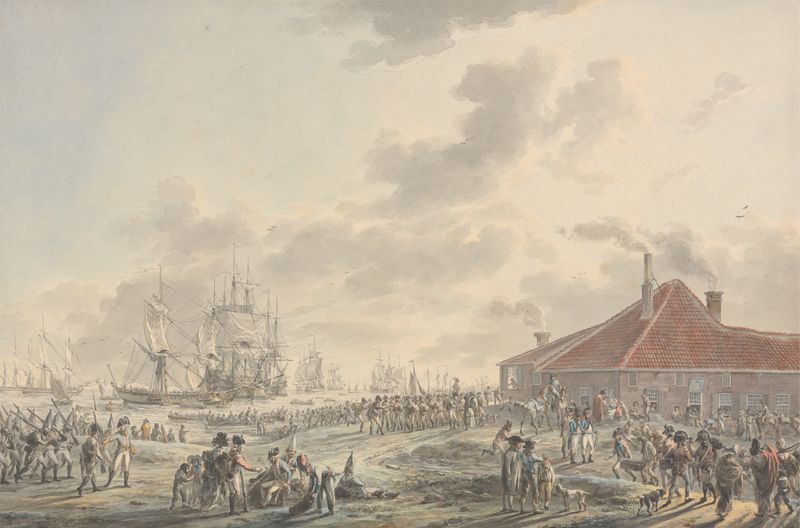
A clamor of clashing swords and the thunderous gallop of hooves fill the air as soldiers storm the arid landscape. Amidst the swirling dust, the silhouette of the pyramids looms large, a testament to timelessness amidst the chaos of battle. Sunlight pierces through the haze, illuminating the fierce expressions on the combatants’ faces, moments away from triumph or defeat. Look to the center where two warriors grapple fiercely, their forms a study in tension and movement.
Notice how the light glints off their armor, casting sharp shadows that heighten the drama of the scene. The palette of earthy browns and harsh grays contrasts with splashes of vibrant red, signifying both the bloodshed of war and the urgency of their struggle. The pyramids, though monumental and looming in the background, seem to pull focus, grounding the chaos in a broader historical context. Within this tumult lies a narrative of conflict, ambition, and the eternal struggle for power.
The soldiers' expressions convey desperation and resolve, as if time itself has paused at this pivotal moment. The juxtaposition of the grandeur of the ancient pyramids against the vivid chaos of the battle speaks to the fleeting nature of human endeavor in the face of history's relentless march. It invites contemplation on what is truly lasting and what will be washed away by time. Dirk Langendijk created this work in 1803, during a period when Europe was rife with revolutionary fervor and the Napoleonic Wars were reshaping political landscapes.
As an artist, he was deeply influenced by the neoclassical movement, which emphasized historical themes and dramatic narratives. This painting underscores the artist's intention to capture not just a moment in time, but the tumultuous spirit of an era defined by conflict and ambition.
More Artworks by Dirk Langendijk
Browse all →

More Historical Art
Browse all →
The Night Watch Militia Company of District II under the Command of Captain Frans Banninck Cocq
Rembrandt van Rijn

Lincoln Memorial
Henry Bacon

The Third of May 1808
Francisco de Goya

Isaac and Rebecca, Known as ‘The Jewish Bride’
Rembrandt van Rijn

The Charge of the Mamelukes (1814)
Francisco de Goya

De vier ruiters van de apocalyps
Albrecht Dürer