
Pillaging Soldiers — History & Facts
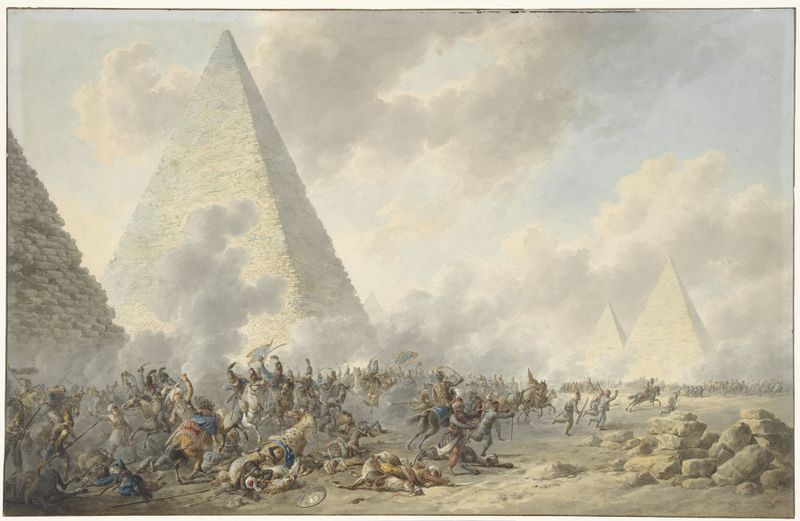
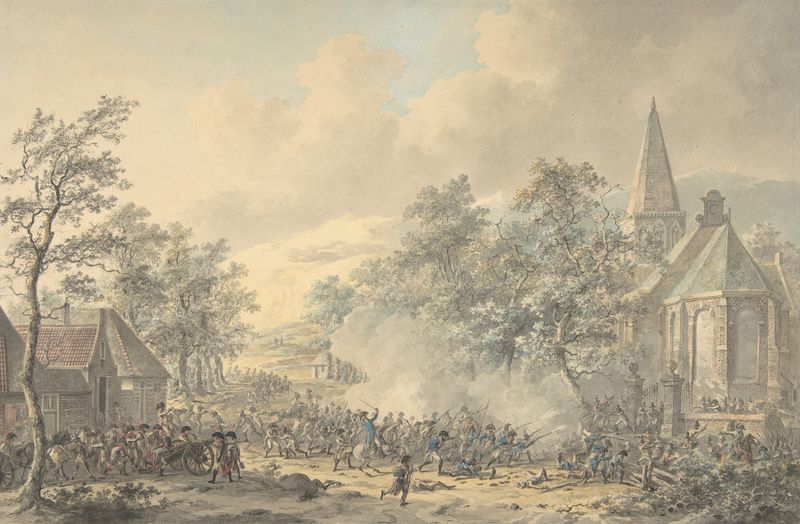
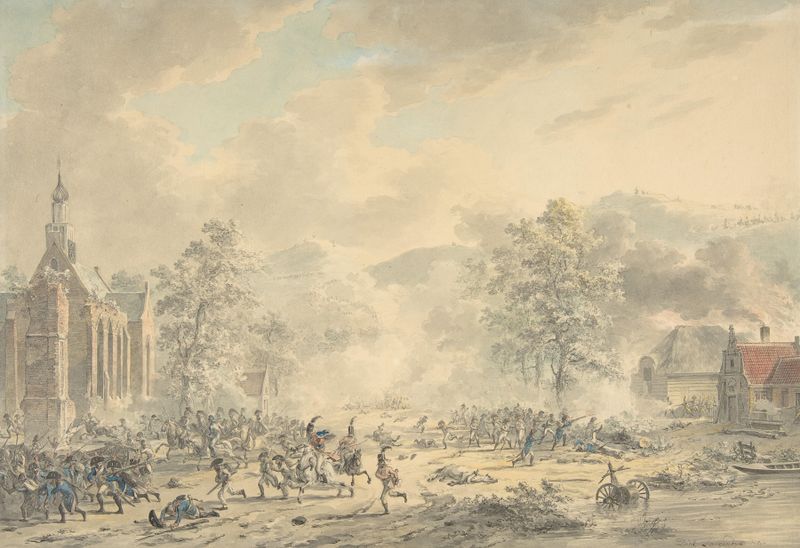
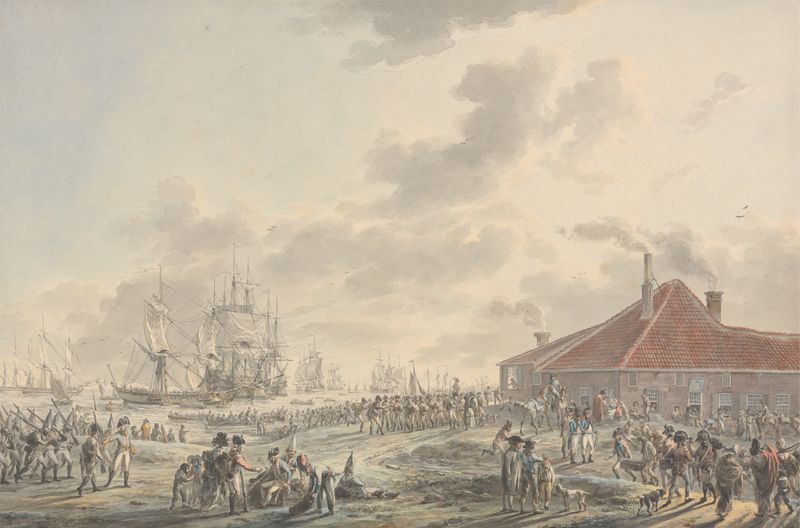
Could a single brushstroke hold eternity? In the chaos of war, madness can erupt in the most unexpected moments, leaving behind shadows of both despair and revelation. Look closely at the chaotic composition. The eye is immediately drawn to the soldiers on the left, clad in tattered uniforms, their faces etched with deep lines of weariness and aggression. Notice how the painter employs a turbulent palette of dark greens and browns, invoking a sense of foreboding that seems to ripple through the canvas.
The brushstrokes are emphatic, with sharp angles and erratic lines that convey the tumult of battle. The figures appear almost ghostly, blending into the background, suggesting that their humanity is being consumed by the frenzy of conflict. As you explore further, consider the haunting contrast between the soldiers' madness and the gentle, almost serene landscape surrounding them. The distant hills, painted in soft blues and muted earth tones, contrast sharply with the violent actions in the foreground.
This juxtaposition reveals a deeper commentary on how violence disrupts the natural order, creating a dissonance that resonates with the viewer. In the soldier's eyes, one can sense the conflict not just with their enemies, but within themselves — a reflection of the madness that war inflicts upon the soul. In 1794, during a time of turmoil in Europe, the artist found himself surrounded by the fervor of the French Revolutionary Wars. In the Netherlands, where he painted Pillaging Soldiers, the sweeping changes in society and the chaos of political strife provided a fertile ground for creativity.
Langendijk's focus on the human condition amidst such chaos captures the essence of an era defined by conflict, serving as a stark reminder of the madness that can arise in times of war.
More Artworks by Dirk Langendijk
Browse all →

More Historical Art
Browse all →
The Night Watch Militia Company of District II under the Command of Captain Frans Banninck Cocq
Rembrandt van Rijn

Lincoln Memorial
Henry Bacon

The Third of May 1808
Francisco de Goya

Isaac and Rebecca, Known as ‘The Jewish Bride’
Rembrandt van Rijn

The Charge of the Mamelukes (1814)
Francisco de Goya

De vier ruiters van de apocalyps
Albrecht Dürer