
Bauernbub in der Vorratskammer — History & Facts
Can beauty exist without sorrow? In Bauernbub in der Vorratskammer, the essence of balance dances delicately between joy and melancholy. Look to the left, where sunlight spills through a window, illuminating the young boy's face, a radiant bloom of innocence amidst a rustic setting. The room is filled with jars and baskets, each brimming with the harvest’s bounty, yet the child stands in a moment of stillness. Notice how the warm hues of browns and yellows contrast with the cool shadows that gather in the corners, suggesting both abundance and the fleeting nature of childhood itself.
The composition draws the eye to the boy’s expression—a combination of wonder and contemplation that beckons the viewer to pause. Delve deeper into the painting’s emotional undercurrents. The boy, perched among the provisions, embodies the tension of impending responsibilities and the carefree spirit of youth. The jars overflowing with food symbolize the prosperity that surrounds him, yet his gaze seems to seek something beyond material wealth—a connection to dreams, perhaps overshadowed by the duties that await him.
This juxtaposition of abundance and introspection creates a poignant narrative about the balance one must navigate between childhood and the adult world. Ignaz Raffalt painted this piece in 1837 while living in Austria, a time when the Romantic movement was influencing artists to explore themes of nature and human emotion. The agricultural backdrop reflects the realities of rural life, with many artists drawing inspiration from the simplicity and beauty found within it. Raffalt's work captures both the idyllic innocence of youth and the subtle weight of expectation, revealing a moment that resonates deeply amidst the societal changes of his time.
More Artworks by Ignaz Raffalt
Browse all →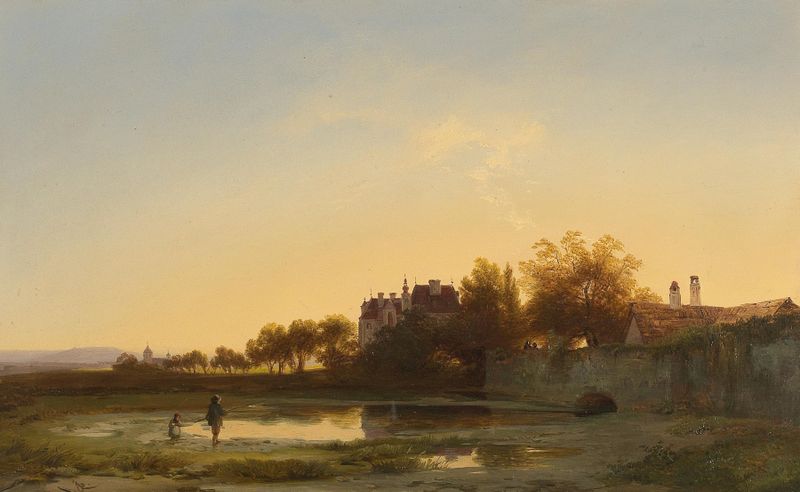
Angler in the evening light by the castle pond
Ignaz Raffalt
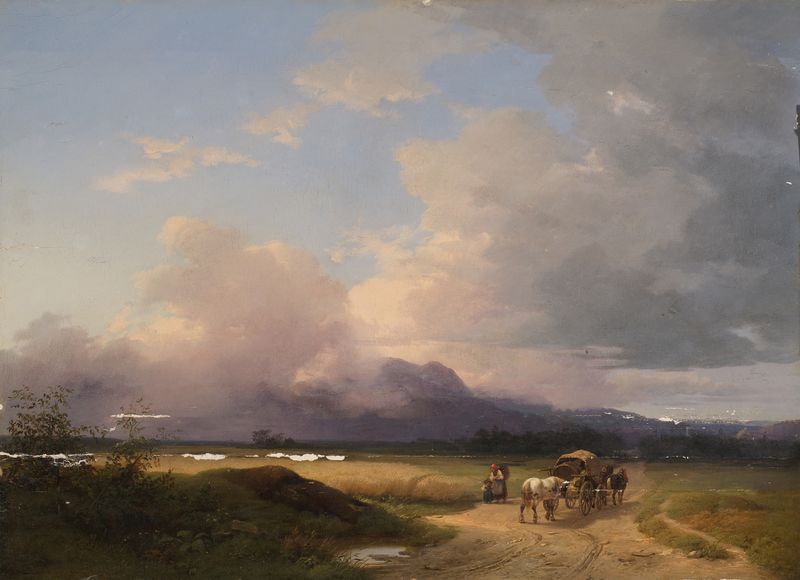
Voralpenlandschaft mit Fuhrwerk auf der Straße
Ignaz Raffalt

Hainbach near Vienna
Ignaz Raffalt

Resting in front of the Inn
Ignaz Raffalt

Stormy Landscape
Ignaz Raffalt
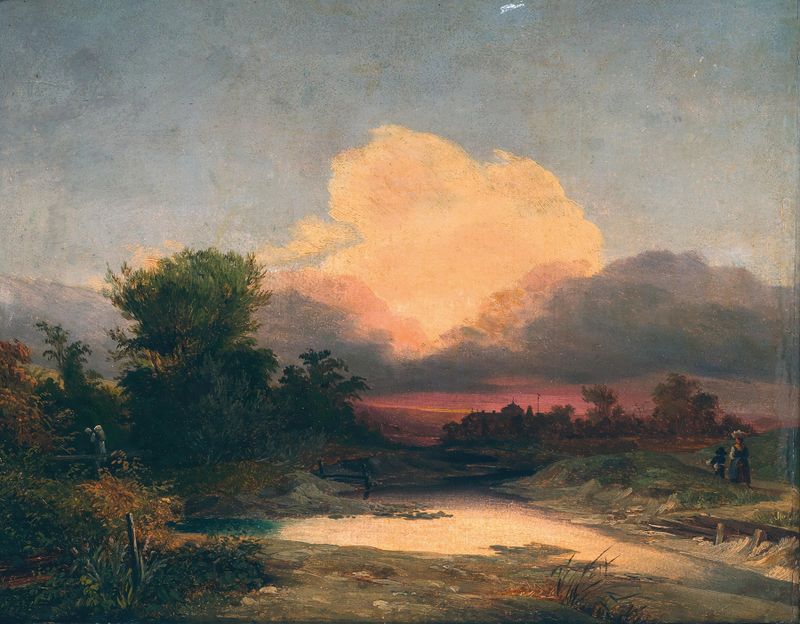
A Landscape at Sunset
Ignaz Raffalt
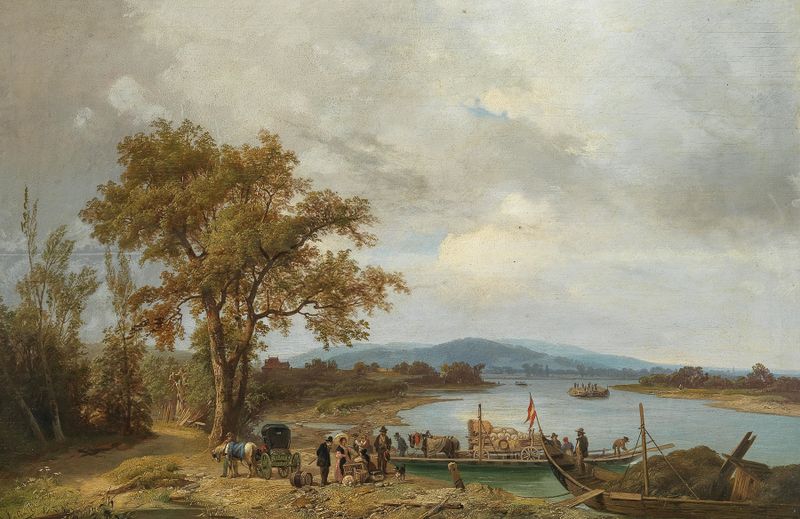
A Danube Landscape with Ferries
Ignaz Raffalt
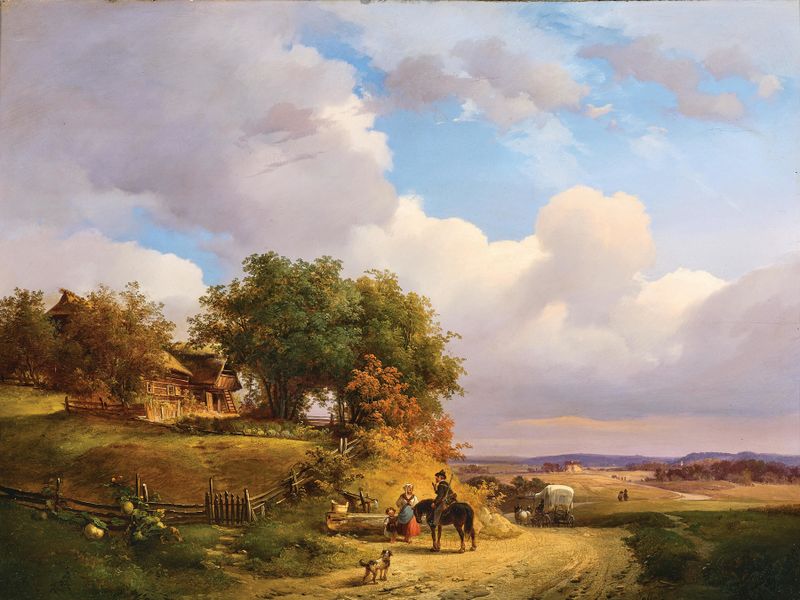
A Hunter Resting on a Country Road
Ignaz Raffalt
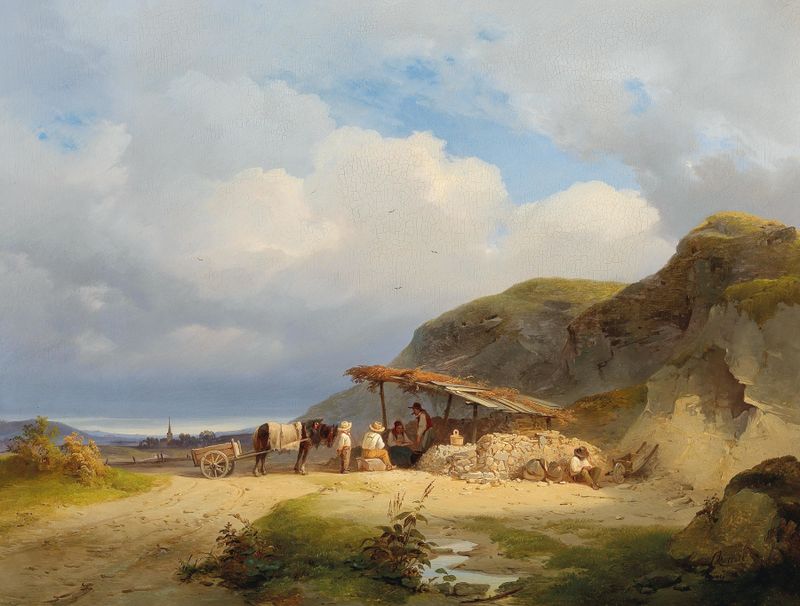
Resting at noon
Ignaz Raffalt
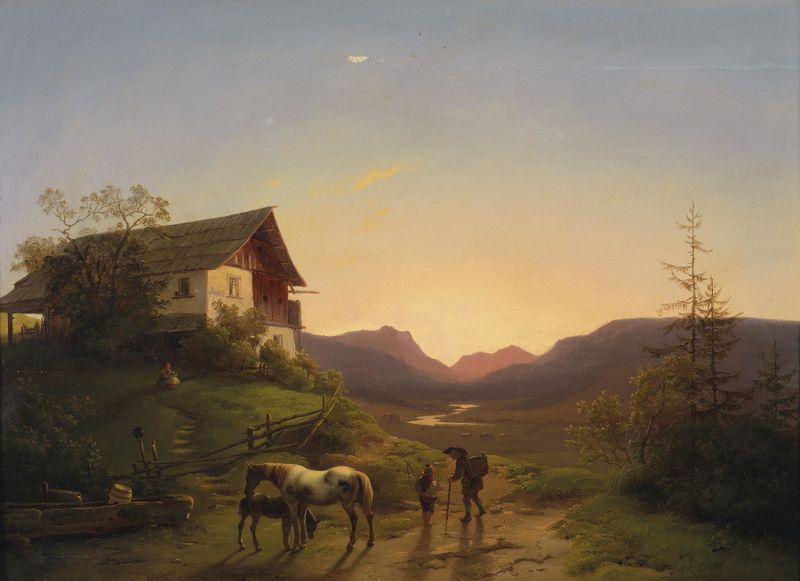
Abendstimmung
Ignaz Raffalt





