Bauernhof im Hochgebirge — History & Facts
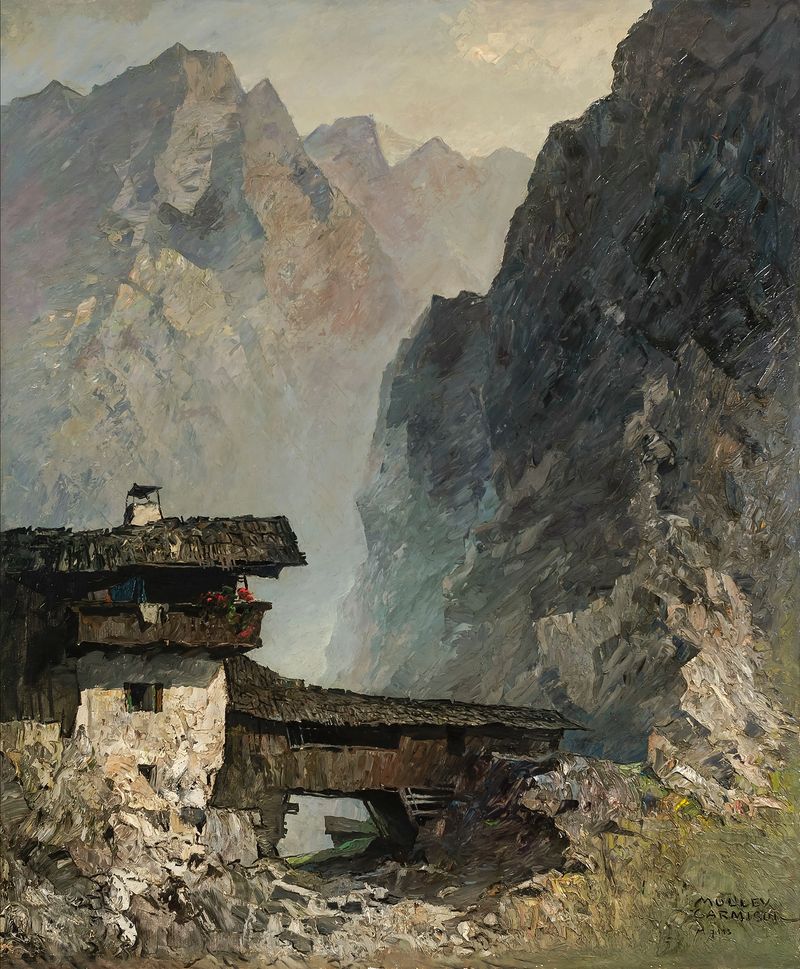
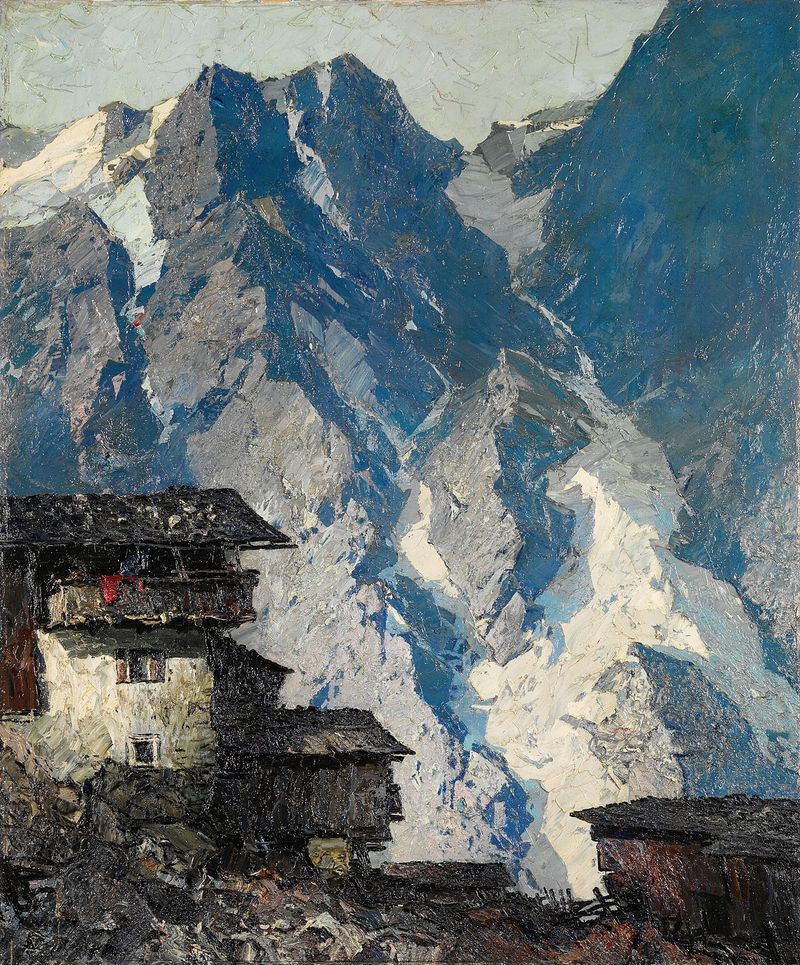
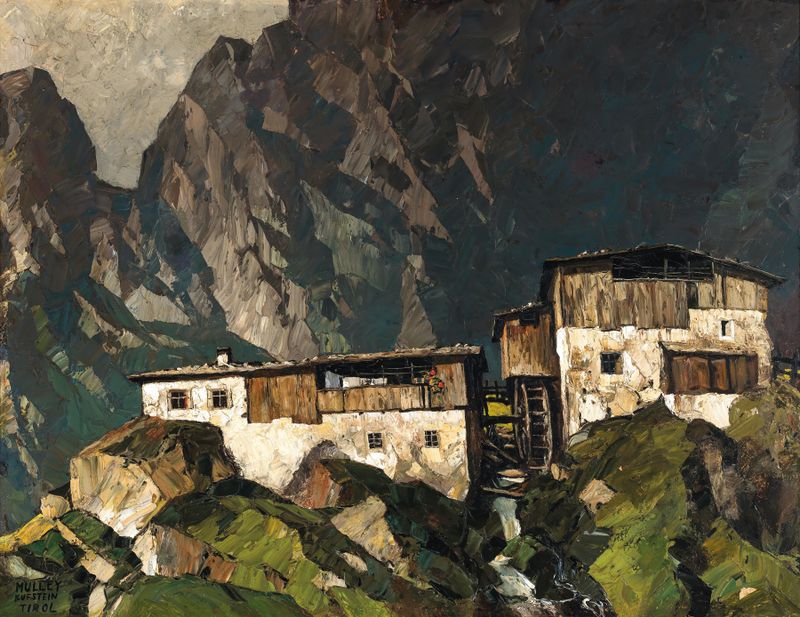
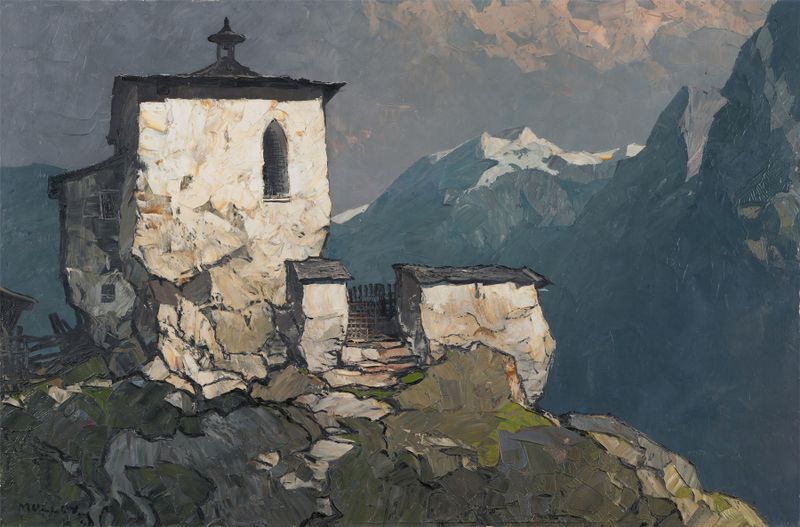
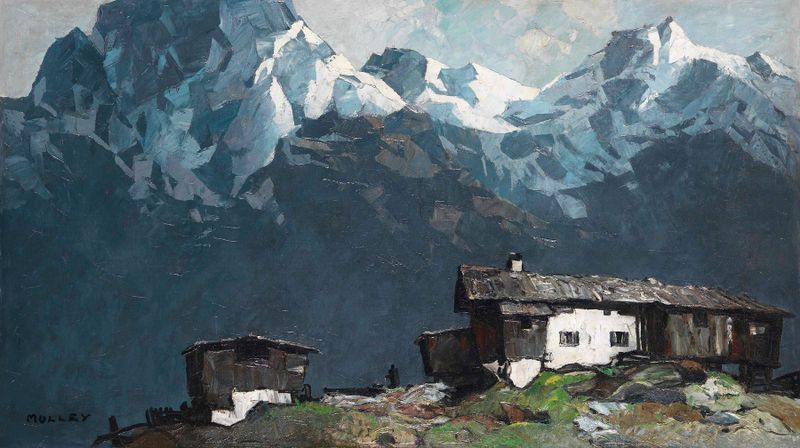
What if beauty was never meant to be finished? This question echoes through the valleys and peaks of Oskar Mulley’s Bauernhof im Hochgebirge, inviting contemplation on the transient nature of art and life itself. Look to the left at the rustic farmhouse, its weathered wooden beams standing resilient against the encroaching mountains. The delicate play of light illuminates the roof, tracing the contours of its aged structure while casting gentle shadows on the worn earth below. Notice how the artist employs a palette of muted greens and browns, evoking a sense of harmony within nature, yet hinting at the silent struggles of those who inhabit this landscape. Within the scene lies a tension between permanence and impermanence.
The towering mountains symbolize the enduring power of nature, standing as witnesses to the fleeting existence of the farmhouse — a reminder of human legacy amid the vastness of time. The soft clouds hovering above suggest both promise and uncertainty, reflecting the duality of aspiration and reality that defines rural life. Each brushstroke captures a story of resilience, encapsulating the essence of striving for beauty even in the face of inevitable change. Creating Bauernhof im Hochgebirge around 1930, Mulley found himself deeply influenced by the surrounding landscapes of his homeland during a turbulent period in Europe.
The artist's focus on rural themes mirrored a broader cultural movement that sought solace in simple, pastoral life amidst the rapid urbanization and discord of the time. This piece stands not only as an artifact of his talent but also as a poignant commentary on the persistence of beauty within the human experience.