
Materl im Hochgebirge — History & Facts
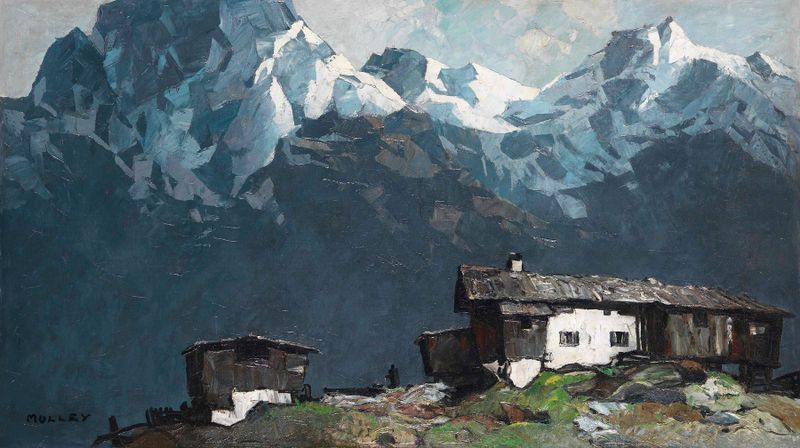
This sentiment lingers in the air like a soft breath, evoking the longing that resides within the human heart. Look to the center of the canvas, where majestic peaks rise, their craggy faces etched in deep blues and grays, contrasting with strokes of golden light that dance along their edges. The careful layering of paint creates a textured surface, giving life to the mountain range, while a gentle haze envelops the background, suggesting both distance and mystery. Notice how the subtle interplay of light and shadow breathes a sense of depth into the composition, drawing the viewer into a world that feels both inviting and isolating. As you explore further, consider how the artist captures the duality of nature—a breathtaking beauty that also evokes a sense of solitude.
The luminous highlights against the rough mountain surfaces symbolize the allure of adventure and the accompanying heartache of unfulfilled dreams. The cold, sharp peaks stand tall, almost mocking the warmth that glimmers against them, reflecting a profound tension between aspiration and reality. In 1928, Oskar Mulley painted this work during a time of significant change in the art world, situated in the aftermath of World War I and amidst the rise of modernism. Living in Germany, he confronted the shifting landscapes of his homeland, where traditional values were crumbling, and new artistic horizons were emerging.
His experiences informed the emotive quality of his landscapes, capturing the complexities of human longing amidst the vastness of nature.
More Artworks by Oskar Mulley
Browse all →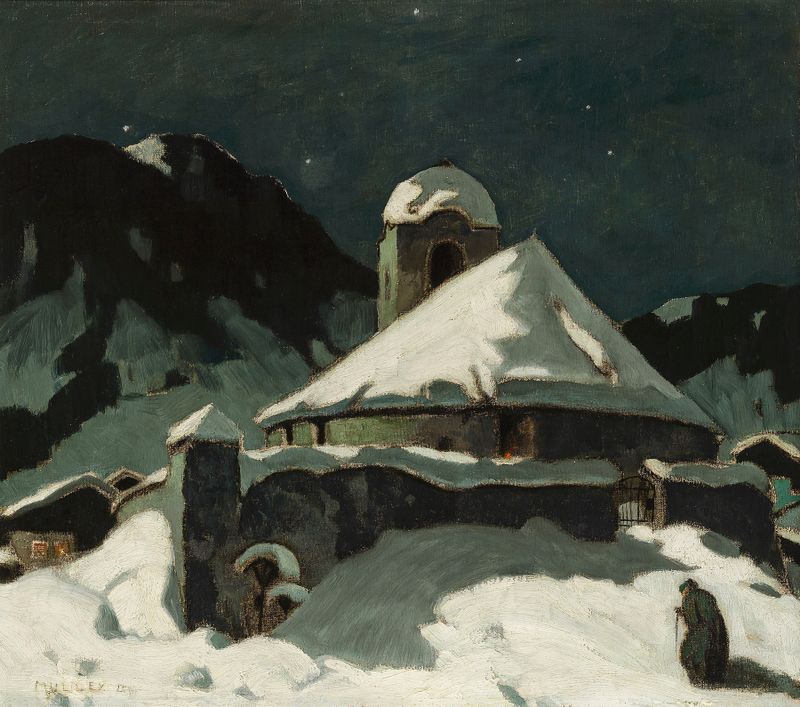
Winternacht im Bergdorf
Oskar Mulley
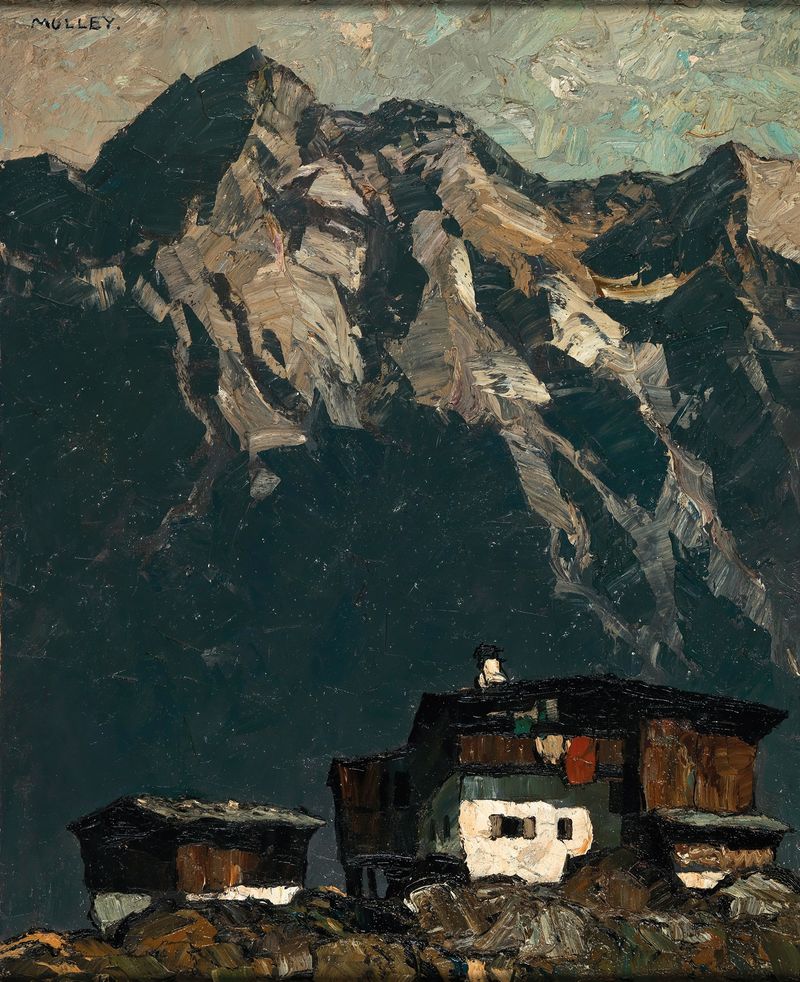
Bauernhof im Hochgebirge
Oskar Mulley
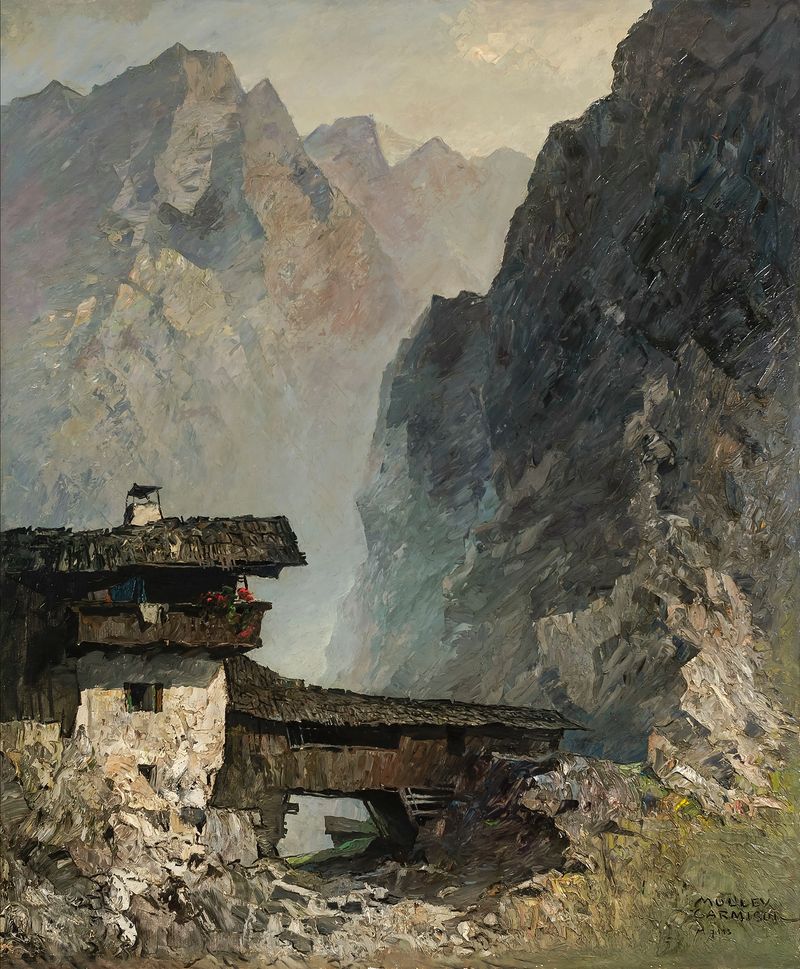
Im Hochtal
Oskar Mulley
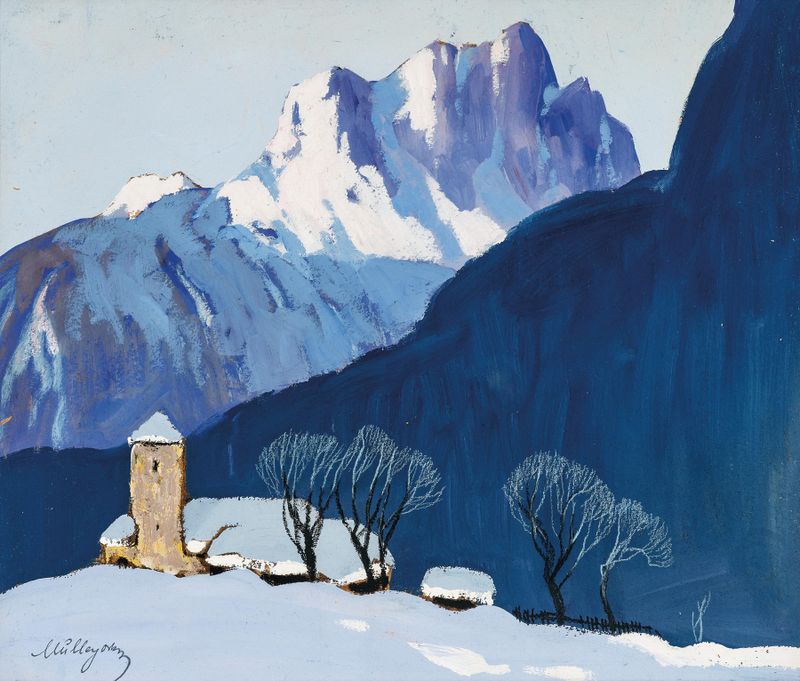
Winterlandschaft vor Bergkulisse
Oskar Mulley
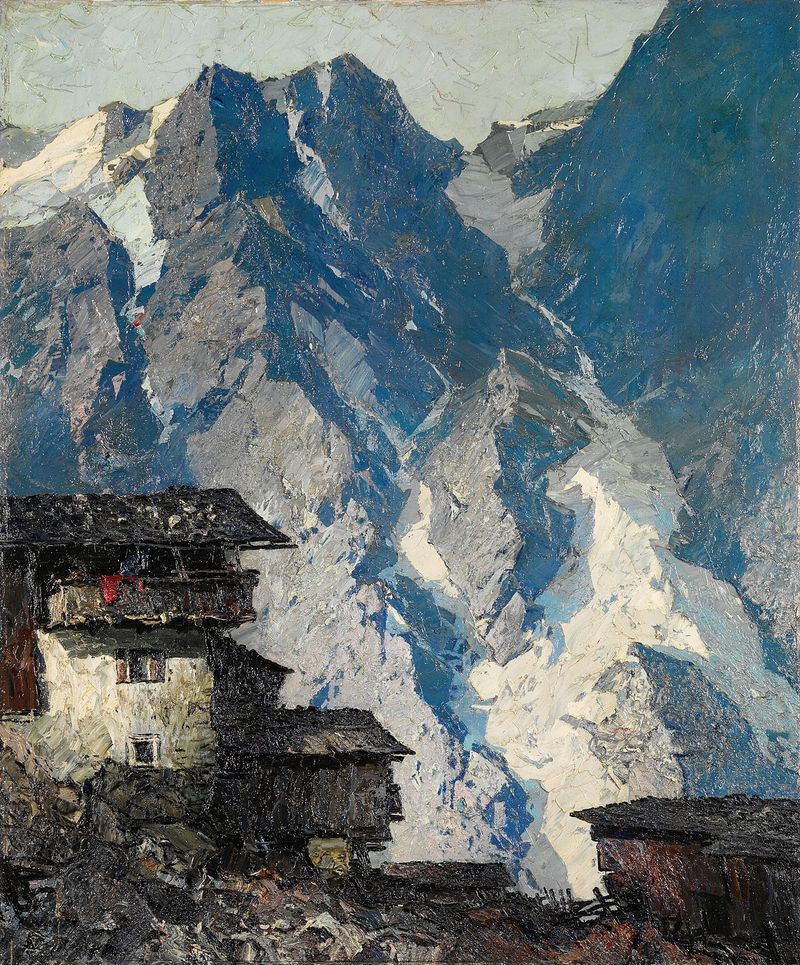
Berghof vor Gletscherlandschaft
Oskar Mulley
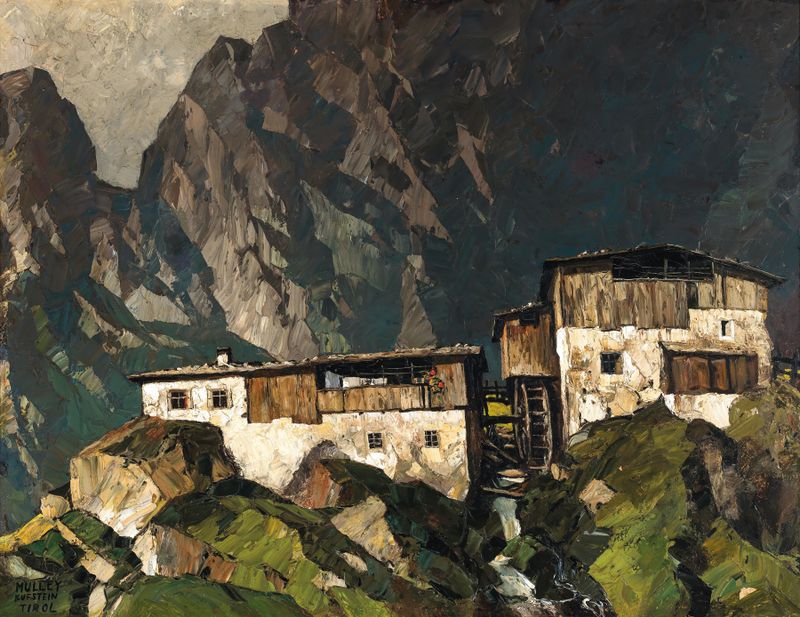
Farmhouse with mill
Oskar Mulley
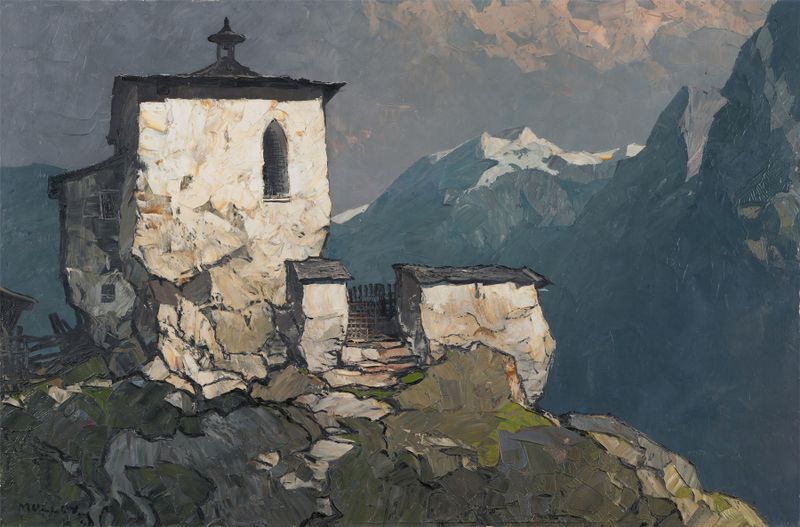
Bergkapelle
Oskar Mulley
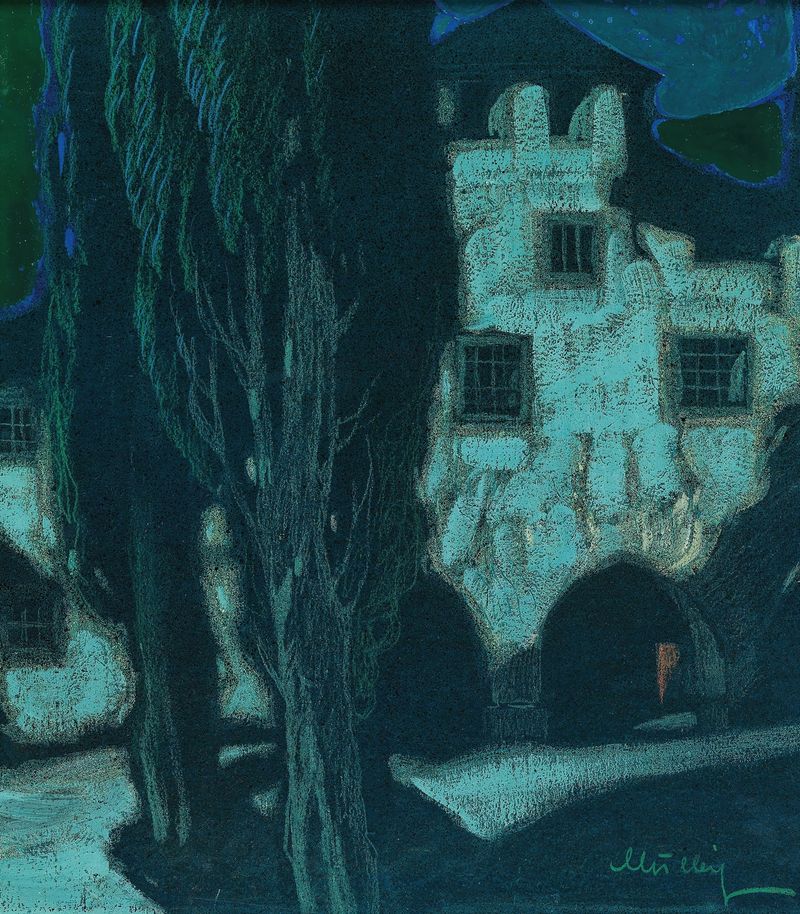
Mondnacht
Oskar Mulley
Bergbauernhof
Oskar Mulley
Innenhof
Oskar Mulley





