
Baum im Frühling — History & Facts
In the solitude of spring, vibrant blooms whisper their secrets, yet a lingering melancholy pervades the air. A solitary tree stands as a sentinel of time, its branches reaching out, yearning for connection. Look to the center of the canvas, where the lush greens of spring emerge, brushing against the edges of soft, muted browns. Notice how the delicate petals dance in the gentle breeze, each hue captured with tender strokes that reveal the artist's deep reverence for nature.
The light bathes the tree, casting dappled shadows that hint at both warmth and sorrow, creating an atmosphere heavy with unspoken narratives. Within these vibrant colors lies an elegy, a celebration of life tinged with the inevitability of change. The juxtaposition of the lively blossoms against the starkness of the branches evokes a poignant reminder of fleeting beauty. The tree, steadfast yet fragile, symbolizes resilience in the face of the transient nature of existence, inviting the viewer to reflect on their own moments of joy and loss. In 1935, Oskar Laske painted this work during a time of introspection and uncertainty in Europe, as the looming clouds of conflict began to gather.
Living in Germany during a turbulent era, Laske turned to nature as a source of solace and inspiration. His exploration of color and form resonated with the emotional landscape of his time, capturing both the vibrancy and melancholy of a world on the brink of change.
More Artworks by Oskar Laske
Browse all →
Faschingsumzug am Stock im Eisen Platz
Oskar Laske

Schönbrunn (Winter)
Oskar Laske
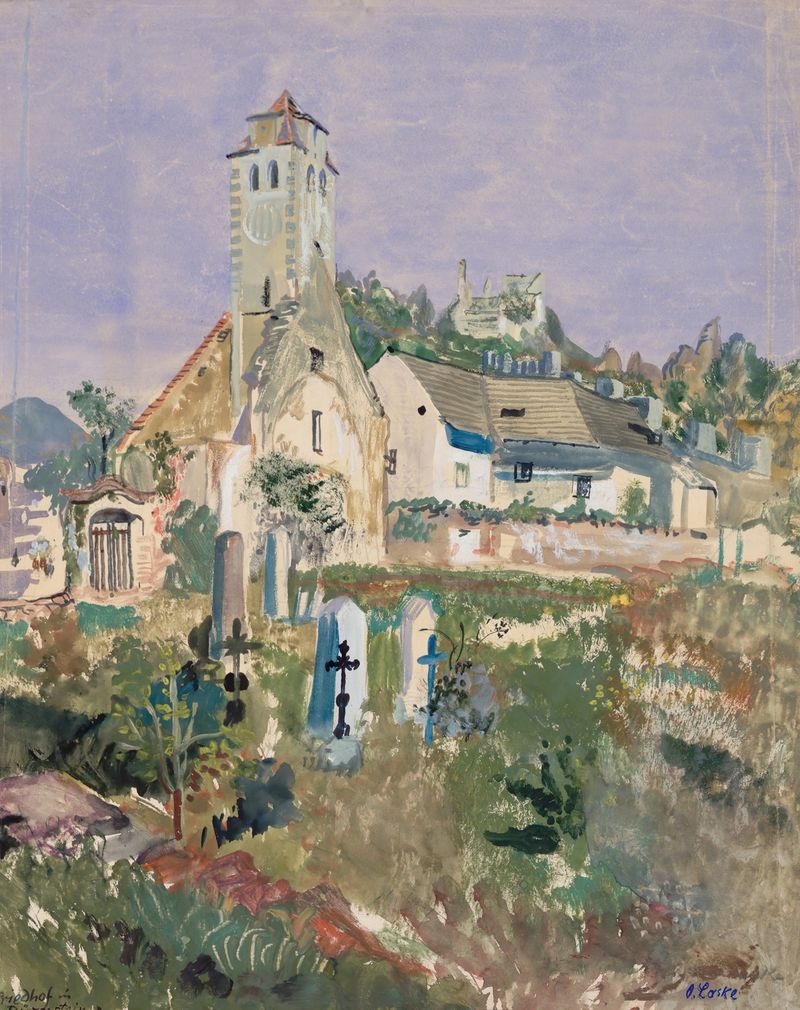
Friedhof in Dürnstein
Oskar Laske

Pratermotiv an der alten Donau
Oskar Laske

Frühjahrsnebel in Niederösterreich
Oskar Laske

Begräbnis des Wiener Bürgermeisters Dr. Karl Lueger
Oskar Laske

Maria Theresien-Denkmal mit Blick gegen das Burgtor
Oskar Laske
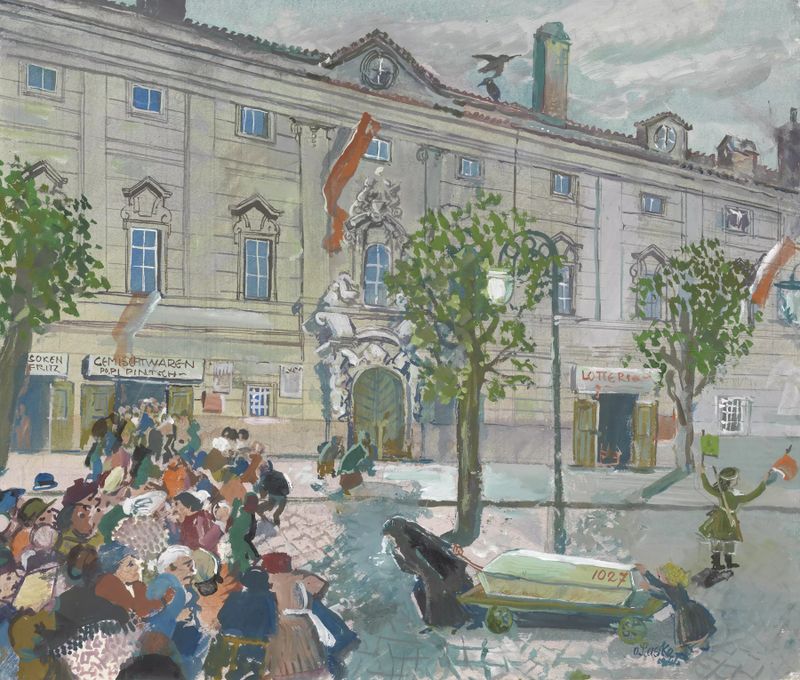
Wiener Straßenbild vom Mai 1945
Oskar Laske

Winterlandschaft in Pressbaum
Oskar Laske

Ansicht von Positano
Oskar Laske





