Beach — History & Facts
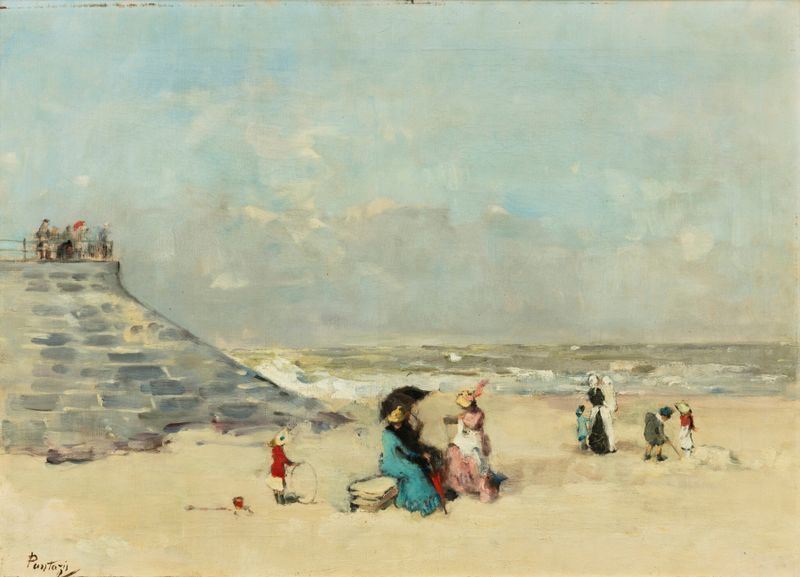
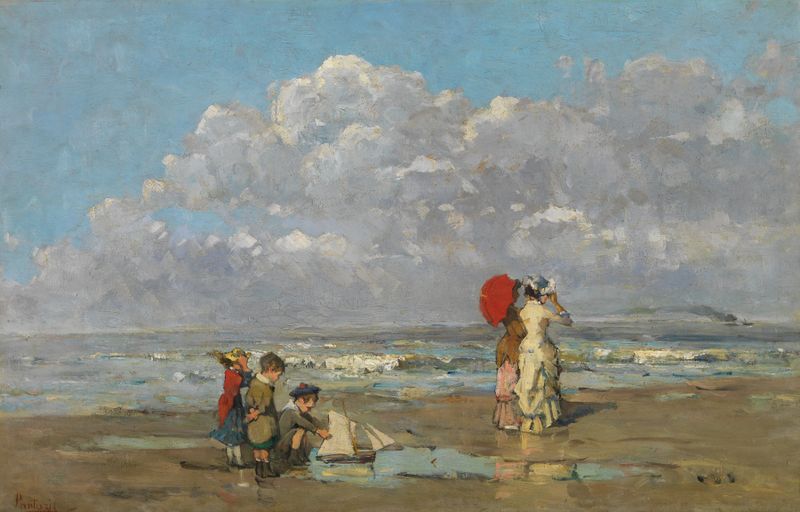
Can paint confess what words never could? In the gentle embrace of color and form, Beach captures the fleeting essence of fragility, where the ephemeral meets the eternal. First, look to the lower right corner, where the delicate strokes of sand blend seamlessly with the vibrant hues of the sea. Notice how the artist employs a soft palette, with gentle blues and warm yellows harmonizing to evoke a serene atmosphere. The brushwork, fluid and unrestrained, invites the viewer to linger on the subtle variations in texture, as if each wave carries a whisper from the shore. As you explore further, observe the contrast between the stillness of the beach and the dynamic energy of the water.
The figures, almost ghost-like in their translucent quality, represent the transient nature of human existence amid nature's endless cycle. Shadows dance on the sand, suggesting both presence and absence, a delicate tension that speaks to the fragility of life itself. Each element harmonizes to create a moment suspended in time, where joy and melancholy intertwine. Painted during a period of introspection, Beach reflects the artist's search for beauty amid life’s uncertainties.
While the exact date remains unknown, it is believed to have been created in the late 19th century, a time when Pantazis was exploring his identity amidst the broader currents of the Impressionist movement in Europe. This backdrop of artistic evolution informs the work, revealing a dialogue between nature's resilience and humanity's fleeting moments.