Before the Performance — History & Facts
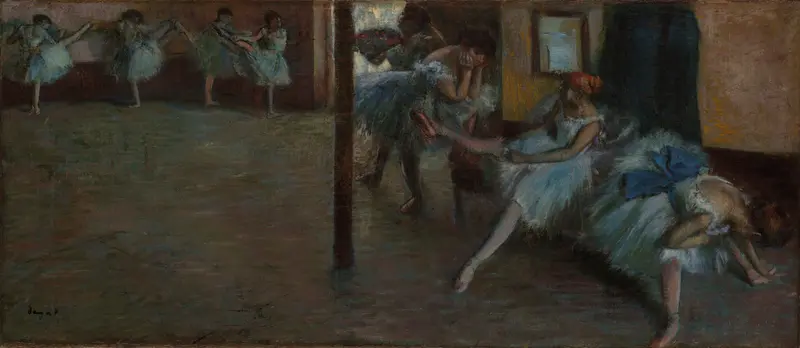
When Edgar Degas painted Before the Performance in 1896, he was already nearly blind, working by memory and touch as much as by sight. This late work belongs to a period when Degas, long fascinated by the world of ballet, returned obsessively to the backstage rituals of dancers—yet here, the medium itself remains a mystery, with scholars debating whether it is pastel, oil, or a blend of both. The uncertainty about its technique only adds to its intrigue: Degas was known for experimenting, pushing the boundaries of traditional materials, especially in his final years. A hush fills the air as young dancers gather in the wings, their bodies tense with anticipation.
Degas chooses the moment just before the curtain rises, when the performers, in tutus and ribbons, adjust their slippers and costumes—each gesture a mixture of nervousness and routine. The light falls obliquely, highlighting the powdery textures of skin and fabric, while the background dissolves into shadow, focusing our gaze on the fragile poise of the figures. Unlike the polished spectacle on stage, this scene is private, almost vulnerable, echoing the intimacy found in Mary Cassatt’s depictions of women preparing for social events, though Degas’s palette is more subdued, his lines more restless. The provenance of Before the Performance is not fully documented, but it is typical of Degas’s late ballet scenes, many of which remained in his studio until his death in 1917.
Works from this period were often acquired by dealers and collectors who prized the immediacy and innovation of his technique, even as critics debated whether these later pieces matched the finish of his earlier oils. Today, Before the Performance is held in a private collection, rarely exhibited, and its elusive medium and origin continue to invite questions. It stands as a testament to Degas’s relentless curiosity and his lifelong devotion to capturing the fleeting, unguarded moments of everyday life.
More Artworks by Edgar Degas

Two Dancers on a Stage
Edgar Degas
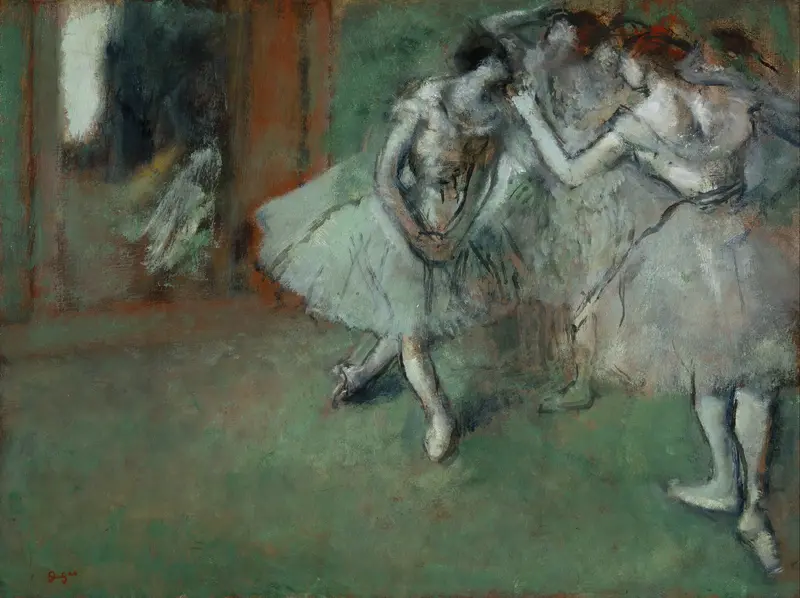
A Group of Dancers
Edgar Degas

The Dancing Class
Edgar Degas
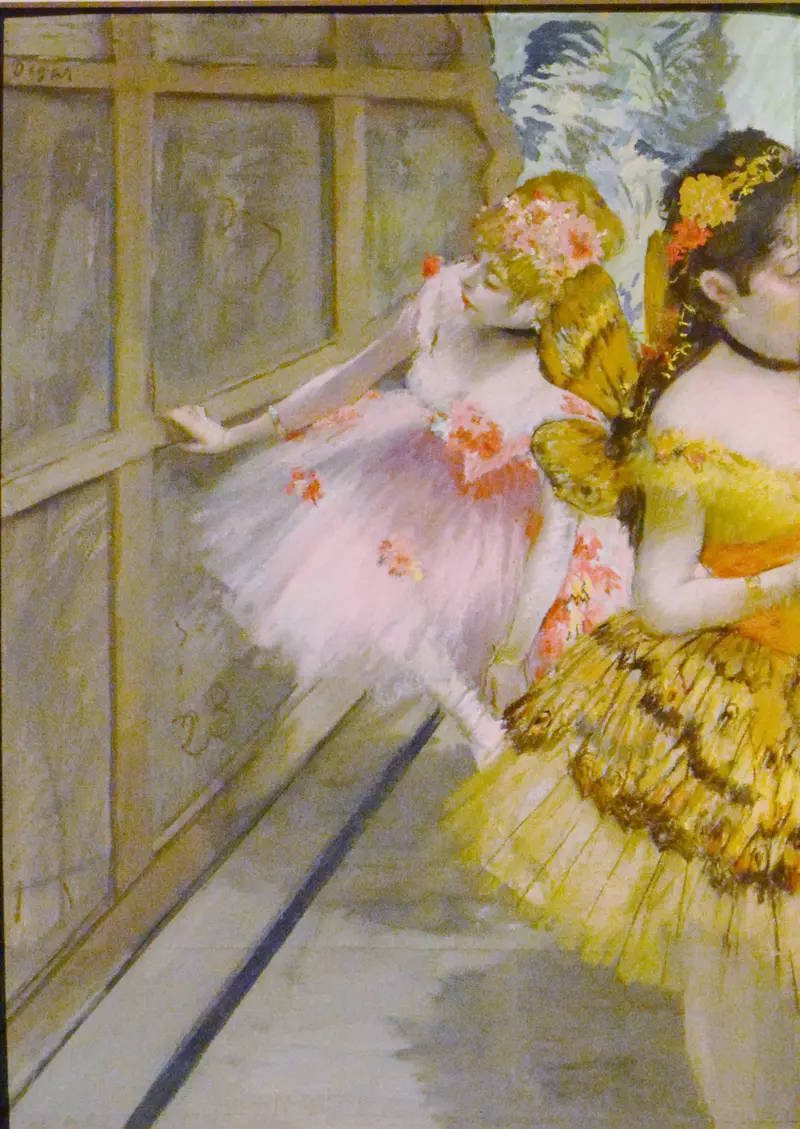
Dancers in the Wings
Edgar Degas
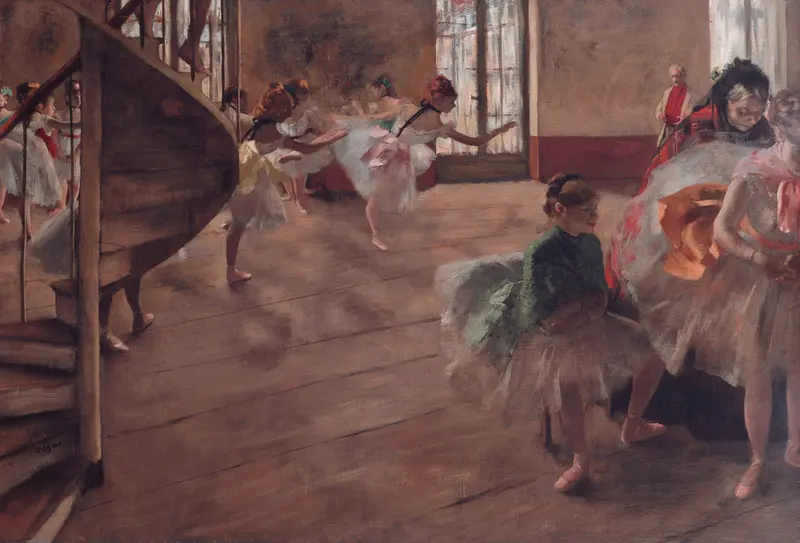
Ballet Rehearsal
Edgar Degas
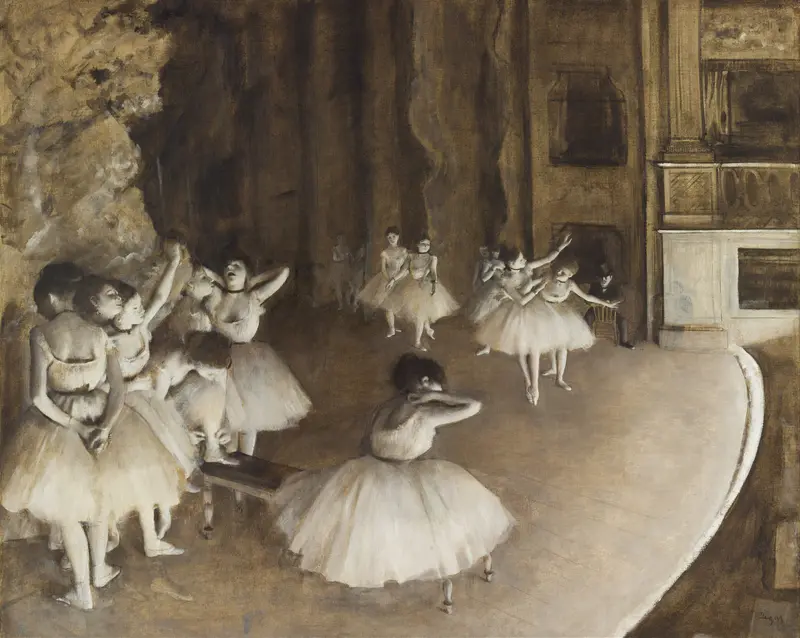
Edgar Degas - Rehearsal on Stage
Edgar Degas
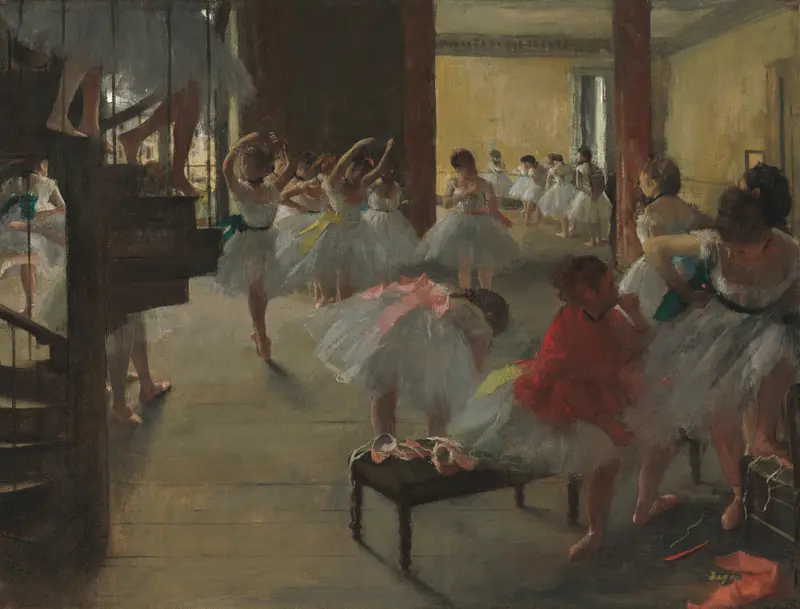
The Dance Class
Edgar Degas
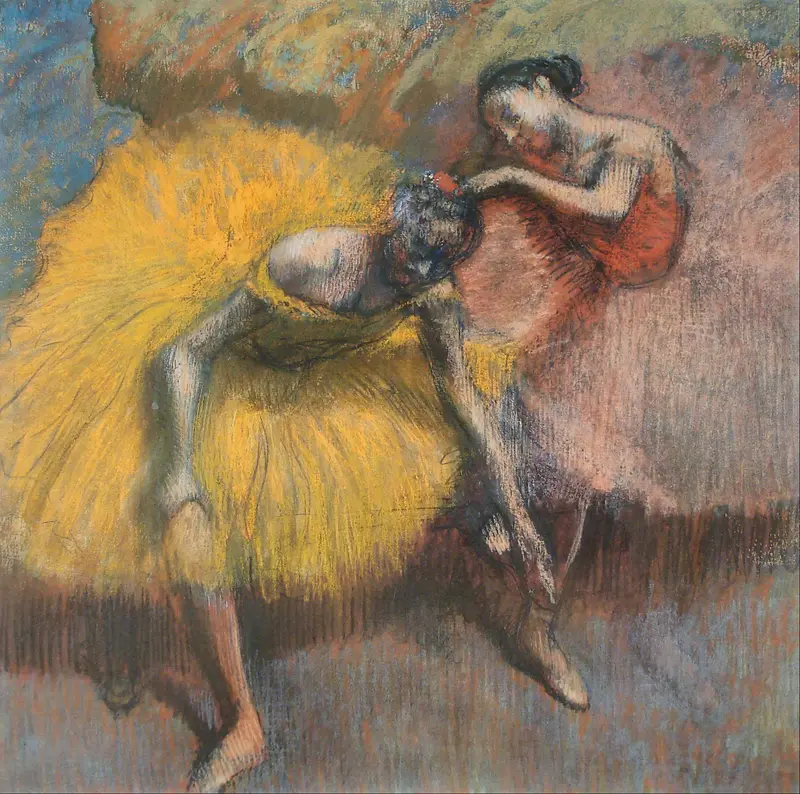
Two Dancers - Yellow and Rose
Edgar Degas
The Ballet Rehearsal
Edgar Degas
Count Lepic and His Daughters
Edgar Degas