
Bergauf — History & Facts
In the stillness of time, art becomes a mirror, reflecting not only the present but the potential of what could be. Look to the left at the gentle undulations of the hills, painted in rich, earthy greens that cradle the figures of a man and a woman ascending—each step a testament to their resolve. The brushwork is expressive yet refined, capturing the dynamic interplay of light and shadow that dances across the landscape. Notice how the sunlight breaks through the clouds, illuminating their path and contrasting with the darker shades, a visual metaphor for hope amidst struggle. Amidst the natural beauty, juxtaposition thrives; the couple’s laborious ascent against the tranquil backdrop reflects the relentless push for progress and personal evolution.
The man’s sturdy stance evokes strength, while the woman’s soft posture suggests both vulnerability and determination. This balance hints at the emotional tension between aspiration and reality, punctuated by the vibrant hues that symbolize both the challenges and joys encountered along the way. In 1886, while creating Bergauf, Hans Thoma was deeply immersed in the Symbolist movement, which was pushing against the conventions of the time. Living in Germany, he was influenced by burgeoning ideas about nature and humanity, reflecting a society on the brink of change.
The painting embodies this revolutionary spirit, capturing the essence of perseverance that characterizes humanity's journey towards enlightenment.
More Artworks by Hans Thoma

Fable – Knight
Hans Thoma

Self-Portrait from Munich
Hans Thoma

Landscape in the Black Forest
Hans Thoma
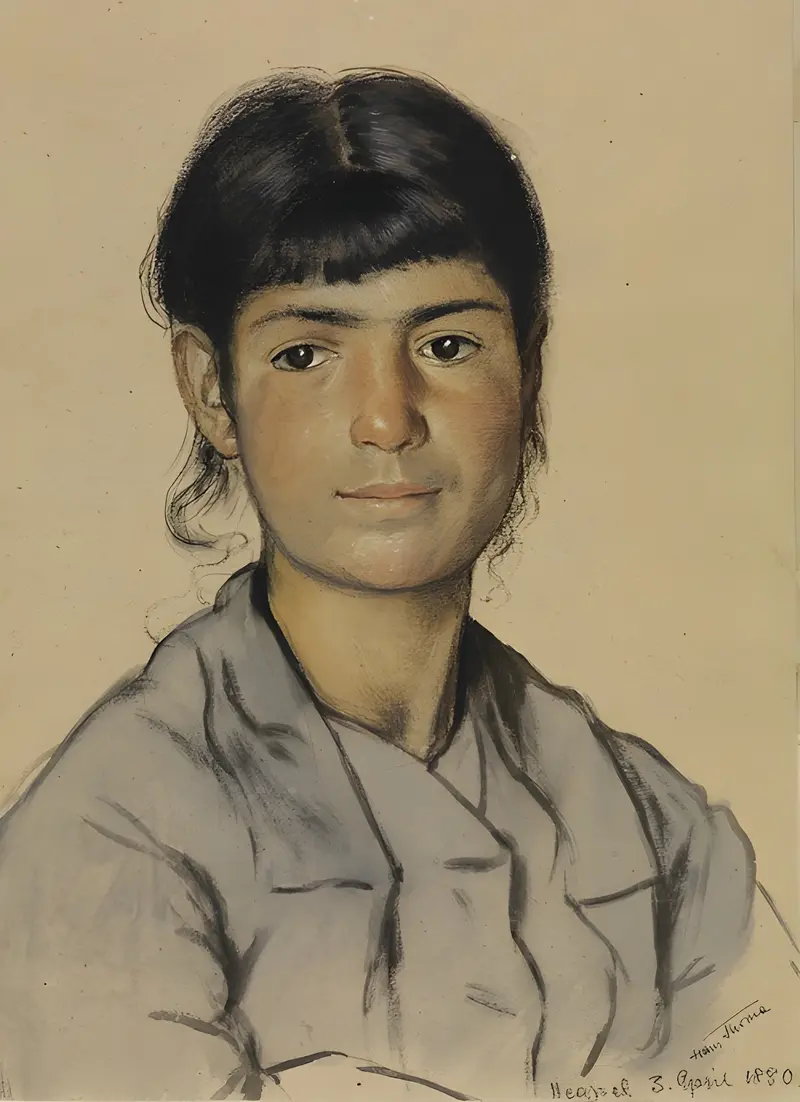
Portrait of a young Neapolitan woman
Hans Thoma
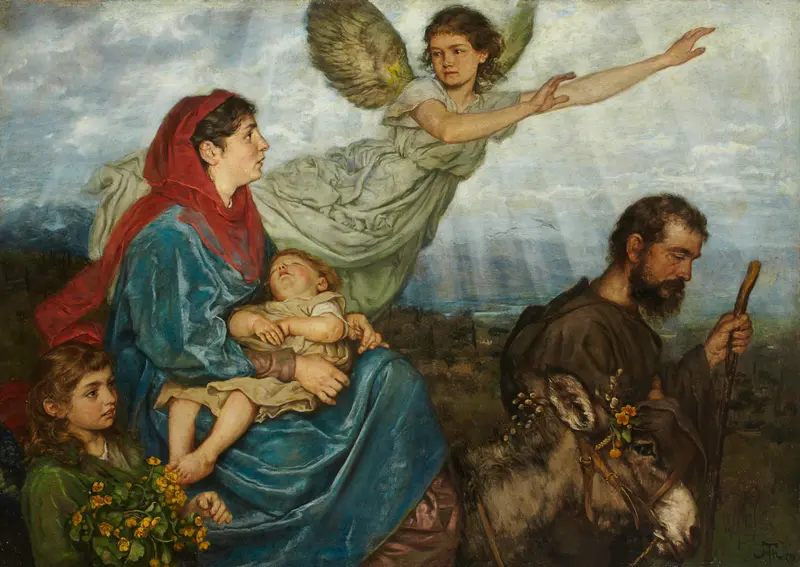
The Flight into Egypt
Hans Thoma
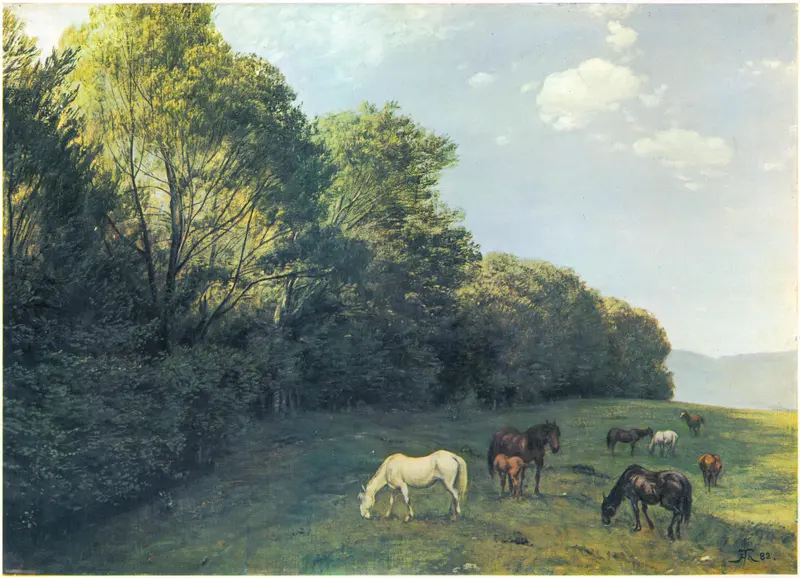
Landschaft mit weidenden Pferden
Hans Thoma
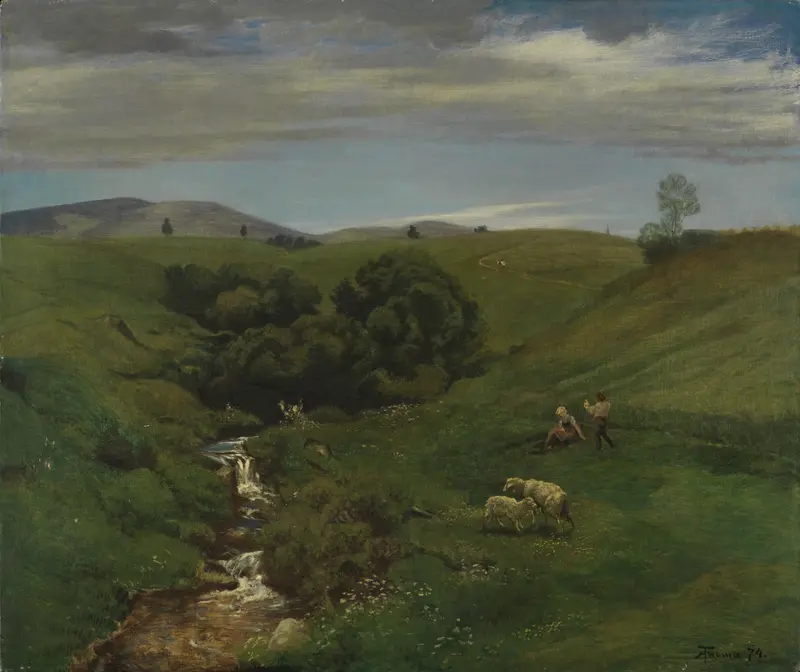
Black Forest Meadow near Bernau
Hans Thoma
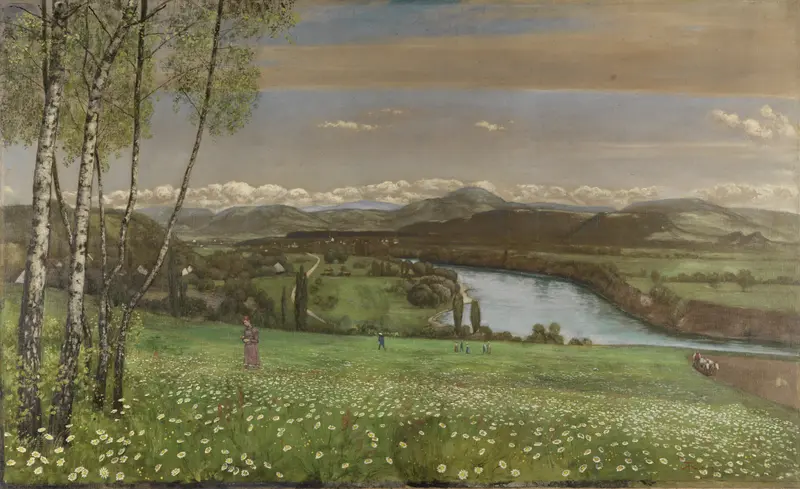
Das Rheintal bei Säckingen
Hans Thoma
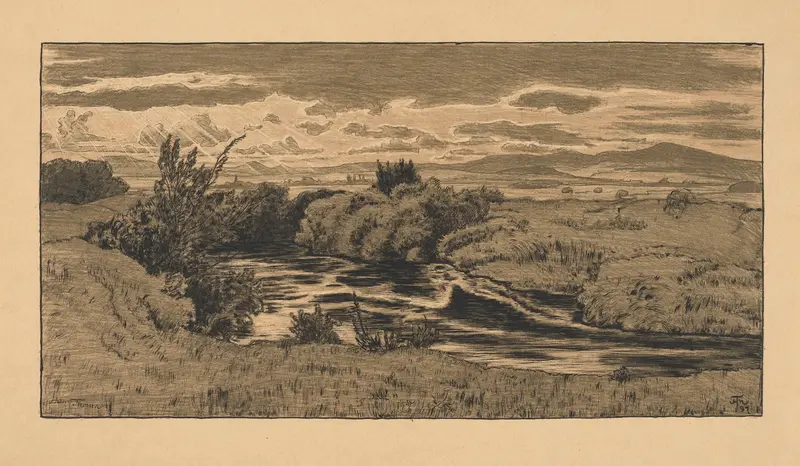
Evening by the Nidda River
Hans Thoma
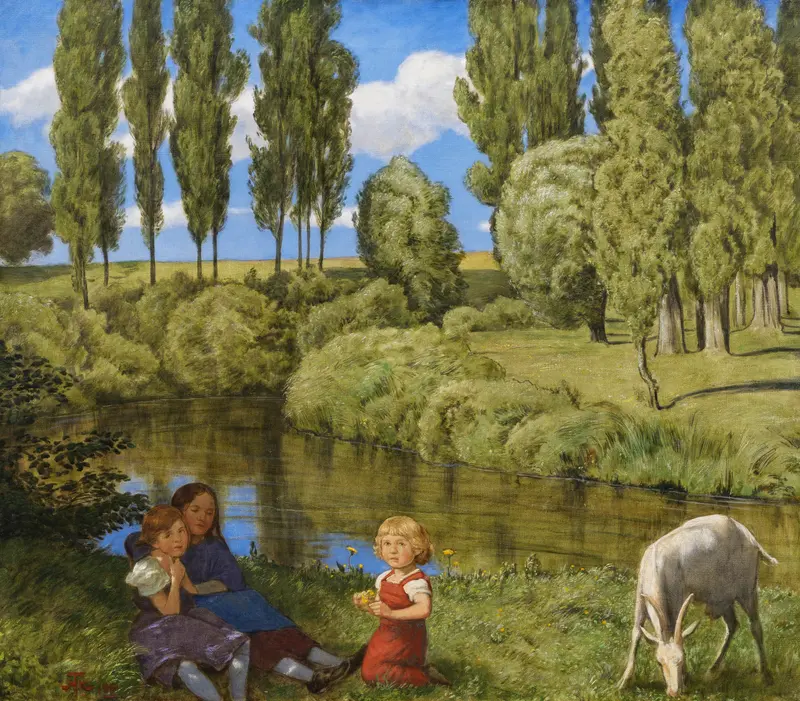
Am Stillen Bach
Hans Thoma
More Landscape Art

The Starry Night
Vincent van Gogh

View of Delft
Johannes Vermeer

Water Lilies
Claude Monet

The Grand Canal, Venice, looking north-west from the Ca' Corner to the Ca' Contarini degli Scrigni, with the campanile of Santa Maria della Carità
Canaletto

Windsor Castle
Canaletto

The Grand Canal looking North-East from the Palazzo Dolfin-Manin to the Rialto Bridge
Canaletto