
Bergmäher — History & Facts
What grips the viewer first in Bergmäher by Albin Egger Lienz is the sheer physicality of the figures, bent and straining in a rhythm that seems to pulse through the entire canvas. The men, their faces shadowed by broad hats, are locked in the act of mowing—a task that demands both strength and coordination. The low vantage point and the steeply rising hill thrust the workers into the foreground, their bodies almost monumental against the deep blue sky.
The stark contrast between the sunlit shirts and the dark earth tones of their trousers intensifies the sense of labor under a relentless sun. Every brushstroke seems to echo the sweep of the scythe, the artist’s hand moving in time with the workers’ own. Painted in 1907, this work belongs to a moment when artists across Europe were turning their gaze to the realities of rural life, capturing both its dignity and its hardship. Albin Egger Lienz was known for his focus on the Tyrolean peasantry, and here he distills the act of mowing to its essentials—muscle, tool, and land.
The painting’s broad, simplified forms and earthy palette speak to the influence of movements like Realism and Secessionism, which sought to honor everyday laborers. Now in the Leopold Museum, Bergmäher stands as a testament to a world on the edge of modernity, where the timeless cycle of work and harvest still shaped the rhythm of life. The viewer is left to wonder: what stories lie behind these weathered faces, and how many seasons have passed beneath that unyielding sky?
More Artworks by Albin Egger Lienz
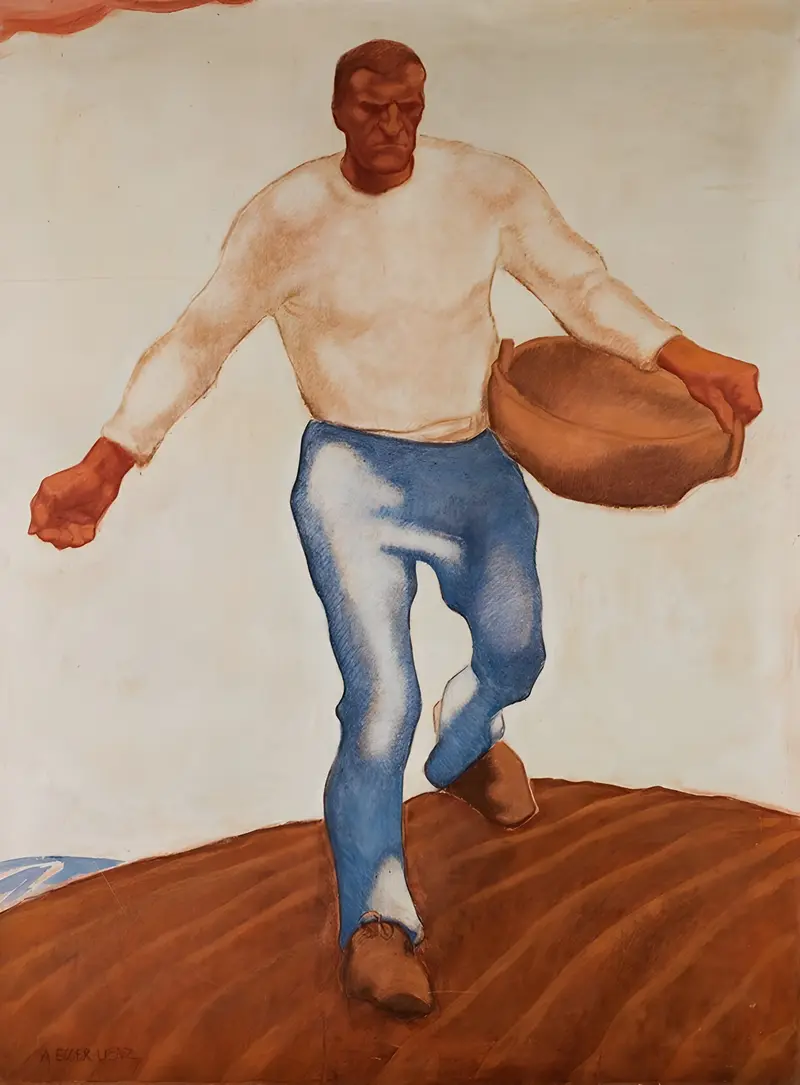
Der Sämann (The Sower)
Albin Egger Lienz
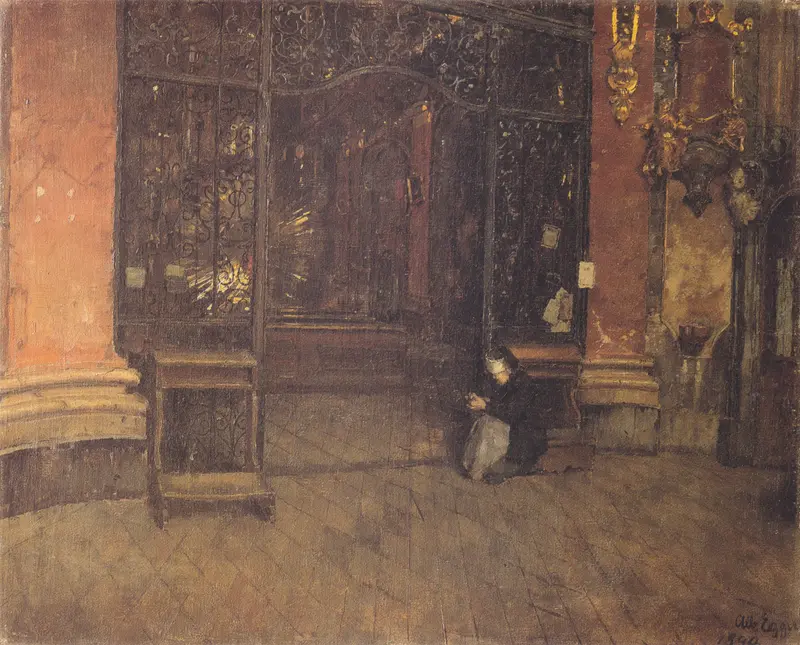
Inneres Der Johanneskirche In München
Albin Egger Lienz
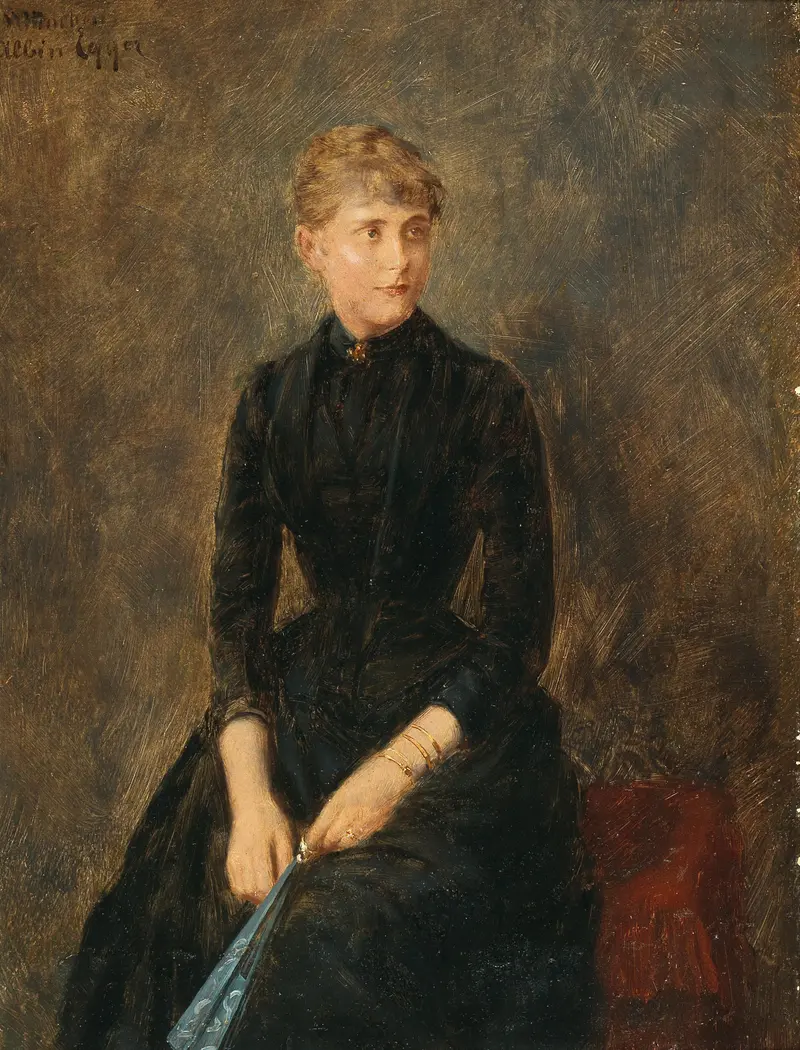
Portrait of the singer Hedwig Helbig
Albin Egger Lienz
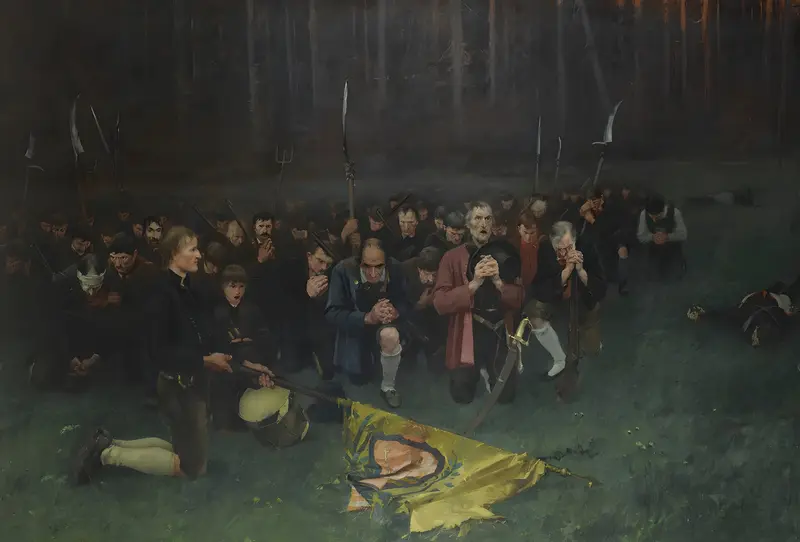
Prayer after the battle of Bergisel
Albin Egger Lienz
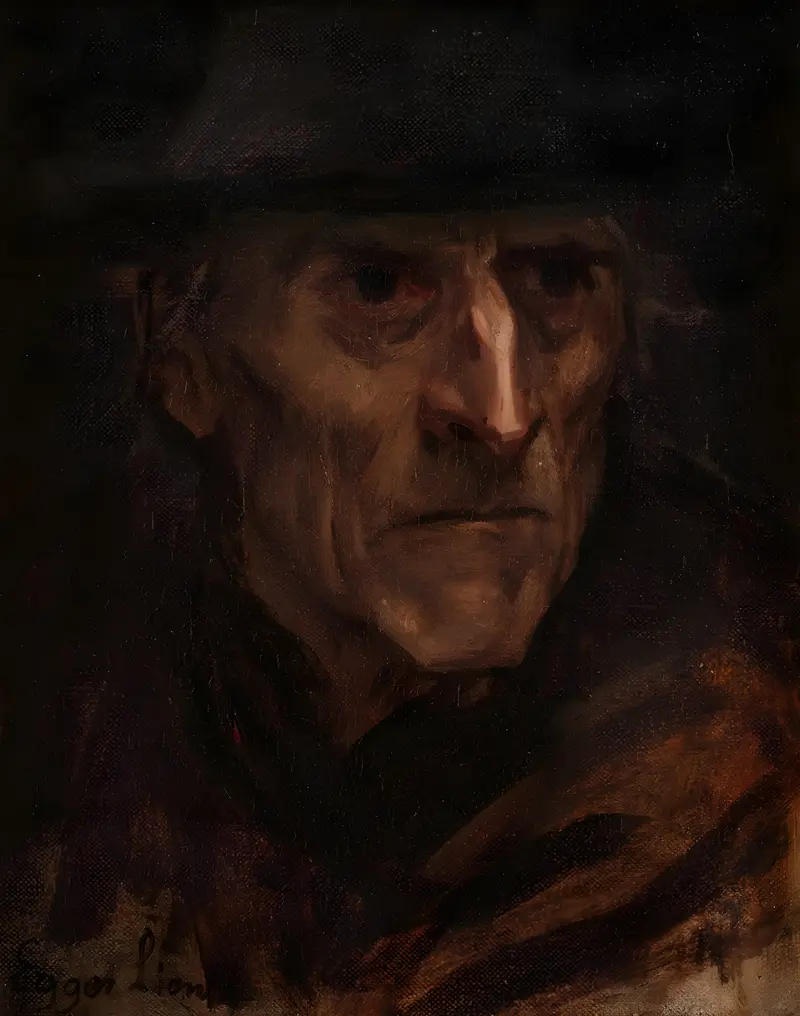
Study for the ‘Sensenmann’ in the ‘Das Kreuz’
Albin Egger Lienz
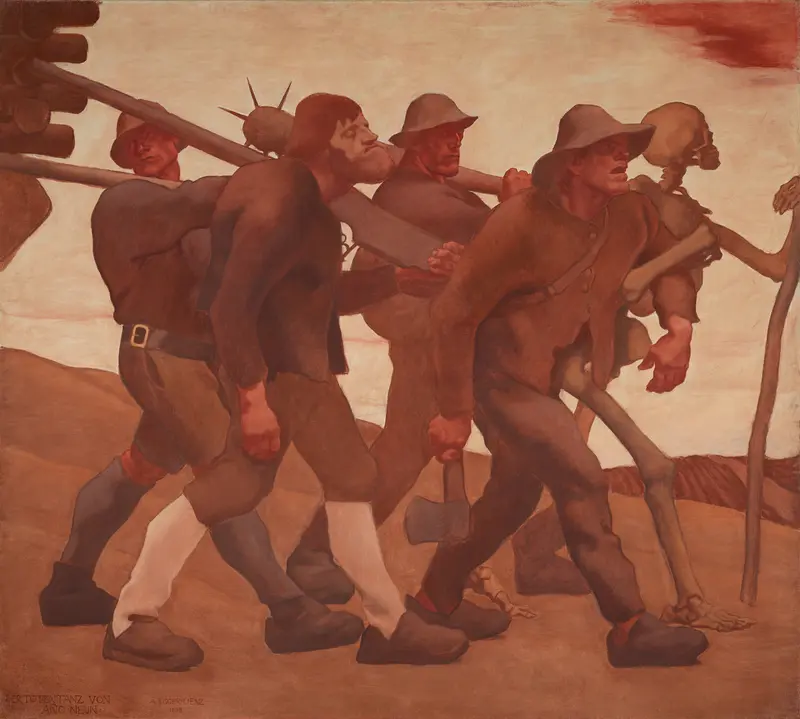
Der Totentanz Von Anno Neun
Albin Egger Lienz
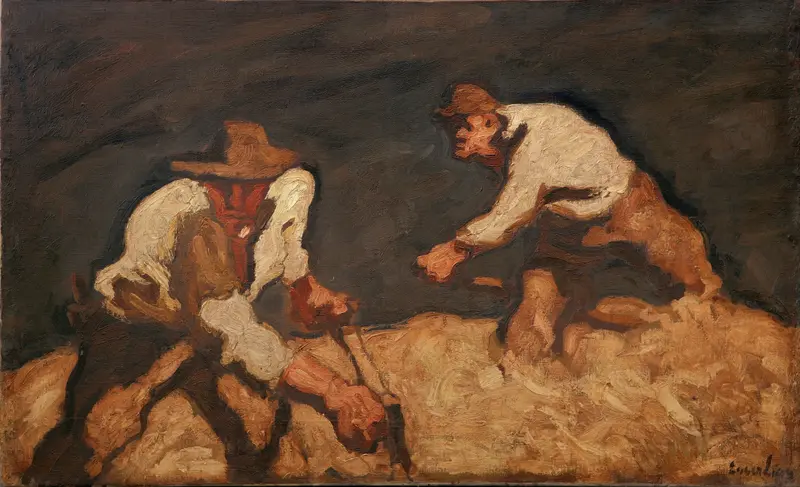
Reapers in a GatheringStorm
Albin Egger Lienz
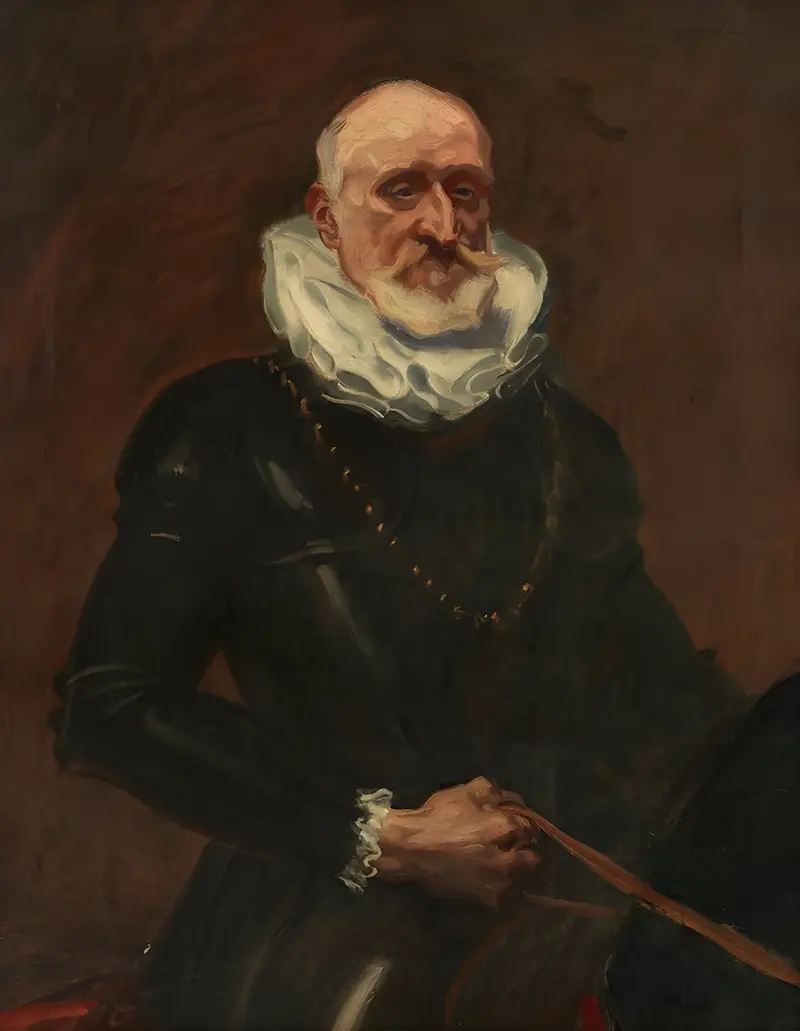
Carl Costenoble (Bildhauer und Stadtrat von Wien)
Albin Egger Lienz
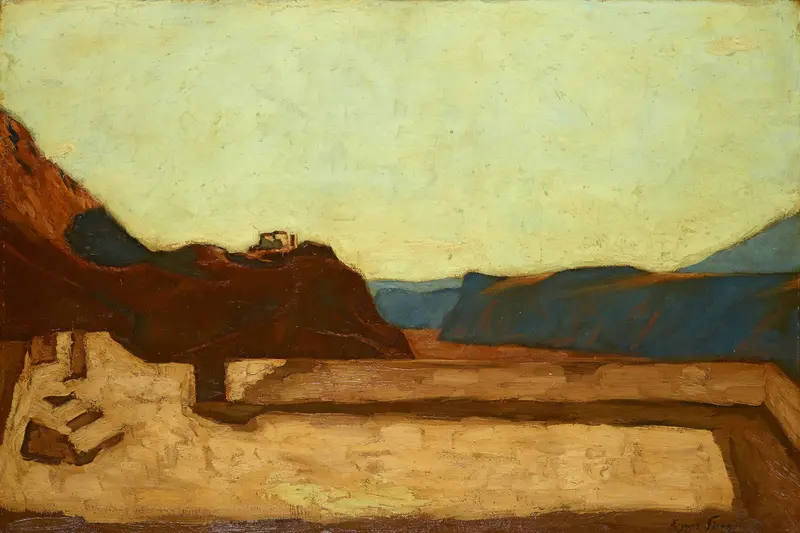
Am Kalvarienberg In Bozen
Albin Egger Lienz
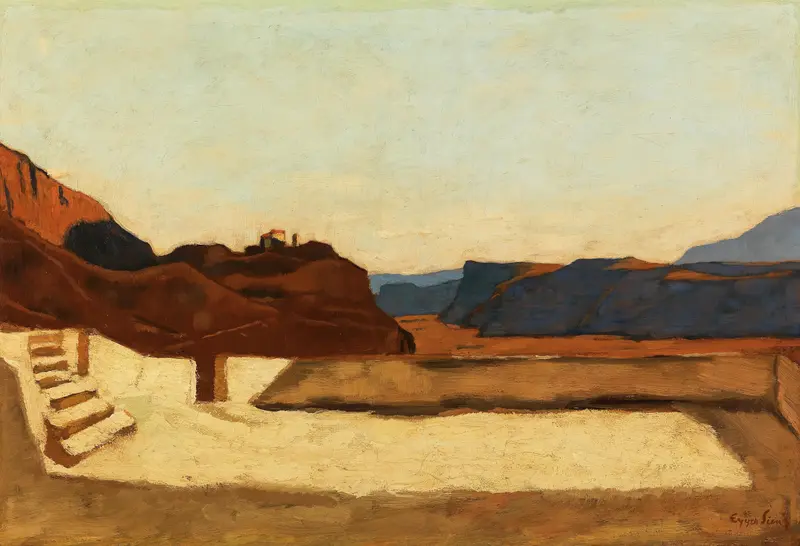
Kalvarienberg bei Bozen
Albin Egger Lienz
More Genre Scene Art

Banquet of the Officers of the St George Civic Guard
Frans Hals

Rembrandt and Saskia in the Scene of the Prodigal Son
Rembrandt van Rijn

Bal du moulin de la Galette
Pierre-Auguste Renoir

Quadrille at the Moulin Rouge
Henri de Toulouse-Lautrec

A Burial at Ornans
Gustave Courbet

When Will You Marry?
Paul Gauguin