Überschwemmte Salbeifelder in der Po – Ebene — History & Facts
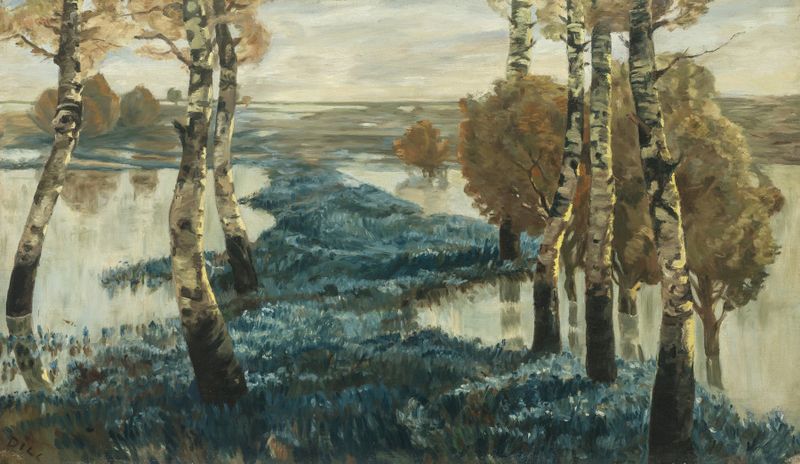
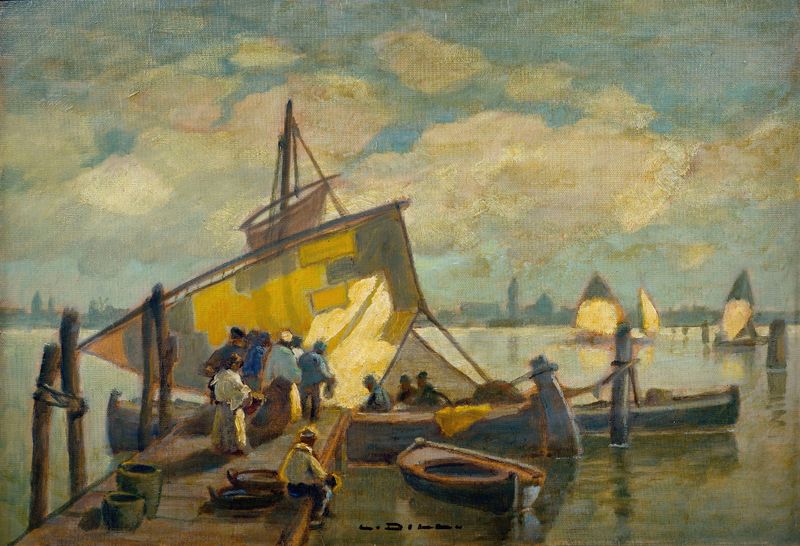
In Überschwemmte Salbeifelder in der Po – Ebene, the air hangs heavy with unspoken desires and the quiet embrace of nature's ebb and flow. One can almost hear the resonance of longing echoing from the canvas, a silent melody of the heart. Look to the center, where the lush green sage fields rise and fall like gentle waves, harmonizing with the tranquil waters of the Po. The color palette is rich and inviting, with deep greens contrasting against the soft blues of the flooded landscape.
Notice how the artist masterfully captures the reflections in the water, blending reality with a dreamlike quality that draws the viewer into a moment suspended in time. Delve deeper into the subtle interplay of light and shadow, where the sun glimmers on the water's surface, creating a sacred space that invites contemplation. The juxtaposition of the vibrant fields and the encroaching water speaks to a tension between life and stillness, growth and surrender. Here, the sage fields, once thriving, now stand in quiet resilience, embodying both beauty and fragility — a poignant reminder of nature's constant cycle of change. Ludwig Dill painted this work around 1900 during a time of significant transformation in the art world, as Impressionism was gaining momentum.
Living in Germany, he was influenced by the natural landscape and sought to convey emotional depth through his landscapes. The late 19th and early 20th centuries were marked by a search for new artistic expressions, and Dill's focus on light and atmosphere aligned with the broader movement toward more subjective interpretations of nature.