Überschwemmte Salbeifelder in der Poebene — History & Facts
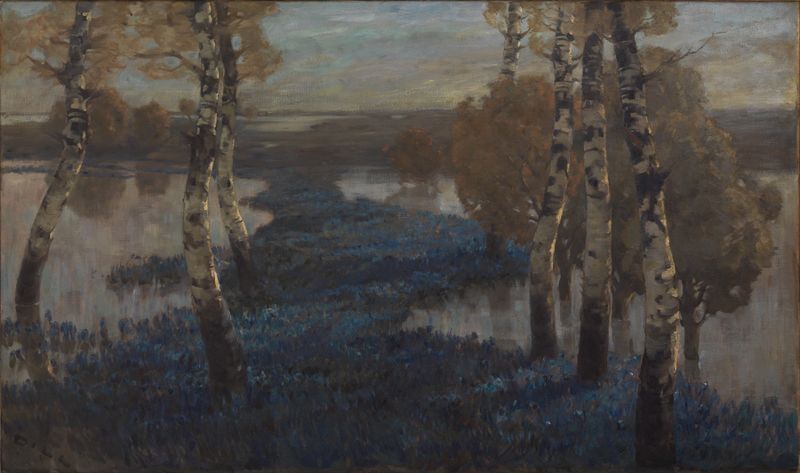
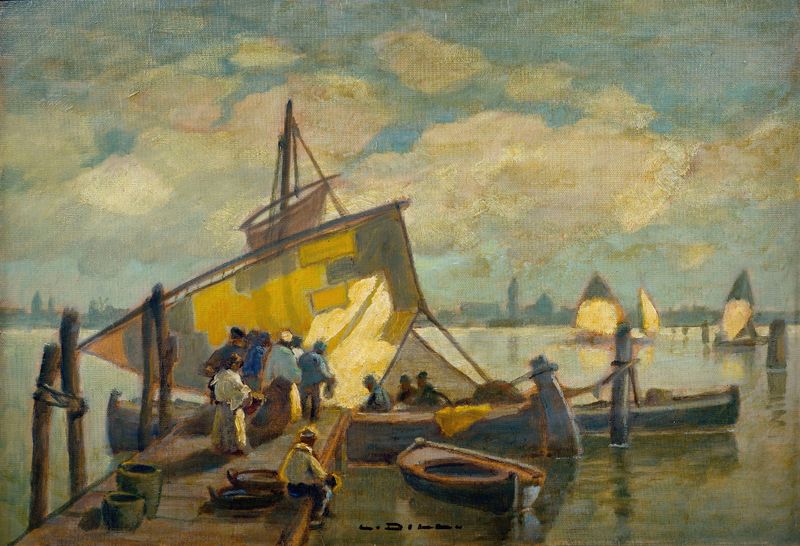
What if beauty was never meant to be finished? The ephemeral quality of nature flourishes in the brushstrokes of the artist, inviting us to ponder the delicate balance between chaos and serenity. Look to the center, where the lush, overflowing sage fields stretch towards the horizon, their vibrant greens punctuated by splashes of earthy browns and soft blues. The artist’s technique reveals a sense of immediacy, using quick, fluid strokes to suggest movement—perhaps a gentle breeze or the ripple of water mingling with the land. Notice how the light plays across the scene, casting shadows that dance among the foliage and hinting at the drama of an unseen flood, which imbues the painting with a dynamic tension. In this work, the contrast between the flourishing plants and the encroaching water subtly evokes a sense of madness, a struggle for dominance between life and the elements.
The sage fields, often a symbol of wisdom and tranquility, appear almost frantic, hinting at the chaos that lurks below the surface. This interplay invites viewers to reflect on the fragility of nature, where beauty dances precariously close to destruction. Created in 1893 while Ludwig Dill resided in Germany, Überschwemmte Salbeifelder in der Poebene captures a moment of personal and artistic exploration. At this time, Dill was gaining recognition for his ability to convey the essence of the natural landscape, reflecting the broader Impressionist movement that sought to express emotion through color and light.
The world was undergoing rapid industrial change, yet Dill remained rooted in the beauty of the natural world, channeling both madness and serenity through his brush.