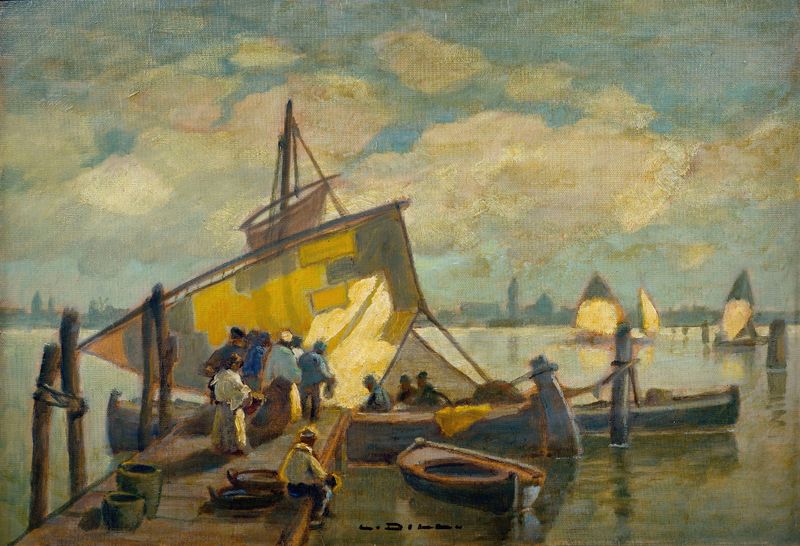
Venice, fisherboat in the lagoon — History & Facts
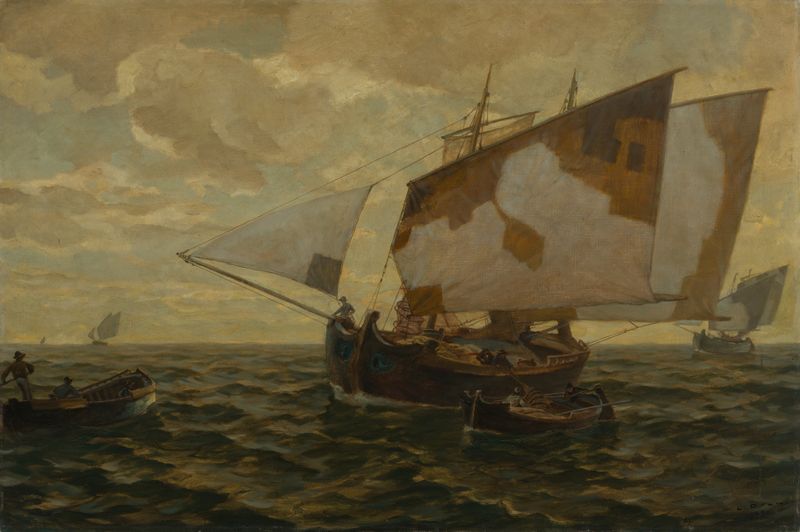
Can paint confess what words never could? In Venice, fisherboat in the lagoon, the essence of divinity whispers through the interplay of light and water, inviting the viewer to contemplate the spiritual connection between humanity and nature. Focus on the tranquil lagoon, where the soft, fluid blues and greens create a serene backdrop. Notice how the light gently dances upon the water's surface, illuminating the small fishing boat that rests delicately in this ethereal setting. The warm golden hues of the sky merge with the cool tones of the lagoon, evoking a sense of harmony that envelops the scene.
Dill's meticulous brushwork enhances textures, making the water appear both inviting and mysterious, while the subtle gradation of color breathes life into the composition. Hidden within this picturesque moment lies a poignant contrast between nature's beauty and the vulnerability of human endeavors. The lone fisherboat symbolizes both solitude and resilience; it is a reminder of the delicate balance we maintain with our environment. As the rippling reflections of the clouds blend seamlessly into the water, one can sense the interconnectedness of all things—a divine reminder of life's transient yet splendid nature. Ludwig Dill painted this captivating scene in 1889 while living in Germany, a period marked by artistic exploration and a growing interest in Impressionism.
Influenced by the enchanting landscapes of Venice, he sought to capture not just a moment but an experience, reflecting the evolving dynamics of light and color in art. At this time, Dill was solidifying his reputation as a painter who could infuse his works with emotional depth and lyrical beauty.