Arrival of the fishing boat — History & Facts
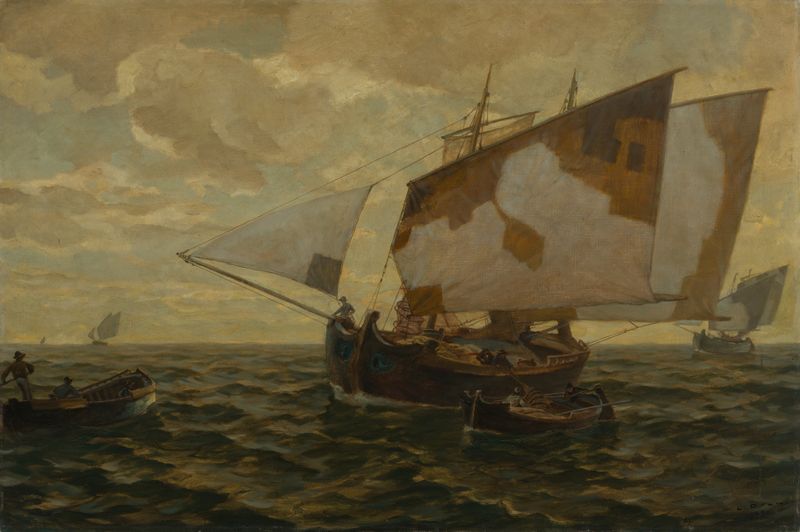
Who listens when art speaks of silence? In the stillness captured on canvas, the essence of creation unfolds, echoing the untold stories of both the sea and its weary travelers. Begin your exploration by gazing towards the left, where the gentle waves cradle a fishing boat, its weathered hull a testament to countless journeys. Notice how the soft hues of blue and green blend seamlessly, reflecting the tranquility of the water, while the warm golden light illuminates the scene, drawing your eye to the figures aboard. Each stroke reveals the artist’s deft hand, imbued with a sense of calm that envelops the viewer, urging them to linger in this moment of arrival. Delve deeper into the interplay of light and shadow, where the fishermen’s expressions reveal a quiet anticipation.
Their gestures speak volumes; the way one leans forward, as if eager to share tales of the ocean, contrasts with the stillness of the vessel—symbolizing the weight of nature’s bounty and the solitude it often brings. The distant horizon, painted with soft pastels, hints at the vastness of the world beyond, suggesting both hope and uncertainty, as one contemplates the future after a day at sea. In 1890, Ludwig Dill painted this scene during a time of burgeoning impressionism in Germany. Having settled in the tranquil coastal town of Fischland, he was profoundly inspired by the rhythm of maritime life and the quiet beauty of nature.
This work reflects a moment when the artist was exploring the profound connection between man and the sea, capturing not just a scene but the very essence of existence and the silent dialogue that art can evoke.