Besse-en-Chandesse — History & Facts
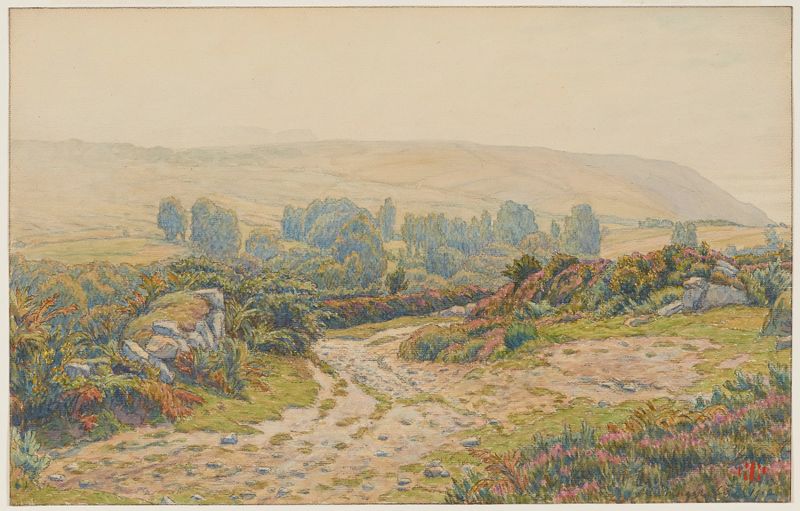
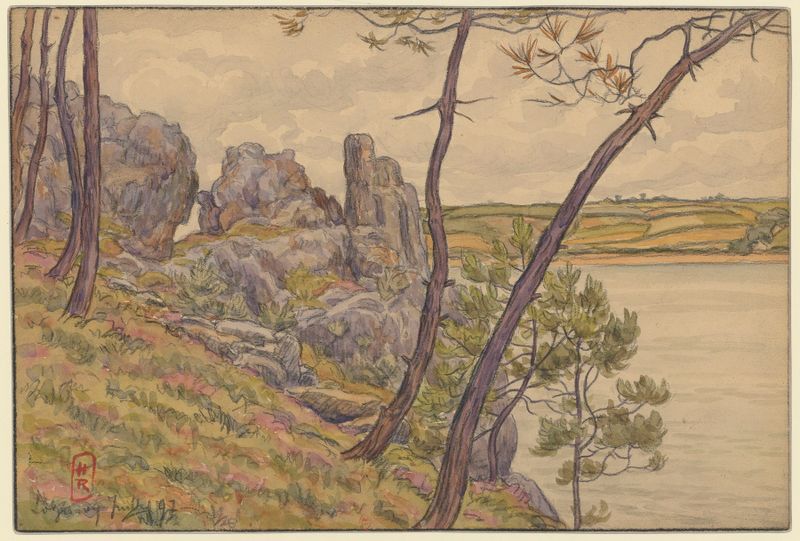
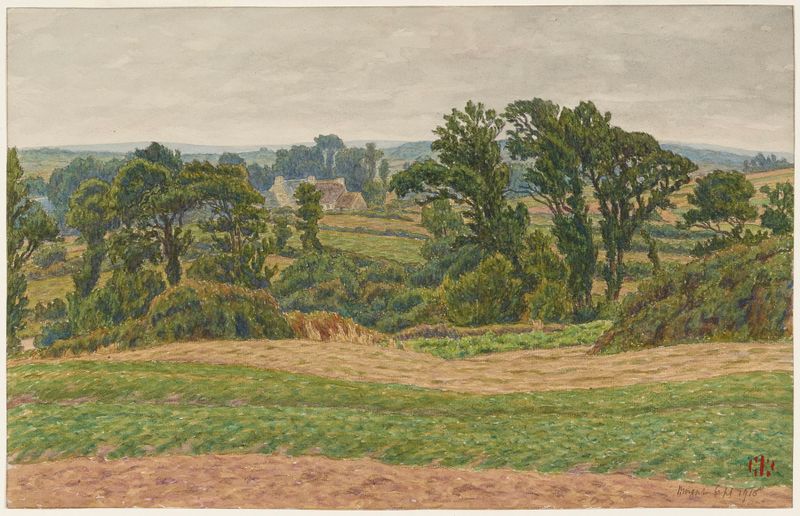
In the stillness of Besse-en-Chandesse, a profound void emerges, inviting contemplation of what exists beyond the visible. Each brushstroke holds a whisper of absence, compelling us to explore the emotional depth of a seemingly tranquil landscape. Look to the center where the gentle contours of the hills cradle a soft horizon, an invitation to trace the landscape's quiet embrace. The muted palette of greens and browns melds seamlessly, while the delicate interplay of light and shadow suggests the sun's fading warmth.
Rivière's technique of layering creates a textured surface that breathes life into the composition, allowing the viewer to feel the earth beneath and the sky above, both present yet elusive. Hidden within this tranquil scene lies a tension between the beauty of the natural world and the looming sense of emptiness. The distant mountains, though resilient in their form, evoke a feeling of isolation, reflecting the void that often accompanies serenity. The absence of figures amplifies this solitude, challenging us to confront the quiet spaces in our lives where reflection occurs, and where the presence of nature stirs the depths of our emotions. In 1921, Rivière painted Besse-en-Chandesse in France, during a period marked by the aftermath of World War I and a search for artistic identity.
The world of art was evolving, with movements like Impressionism giving way to new explorations of form and emotion. As a member of the Post-Impressionist movement, he sought to capture a palpable sense of place, a yearning for tranquility amidst societal upheaval and change.