
Birch Trees on a Rocky Incline: Fontainebleu — History & Facts
What first catches the eye in Birch Trees on a Rocky Incline: Fontainebleu is the quiet authority of the birches themselves, their pale trunks standing almost sentinel against the rugged, sunlit slope. The artist guides us upward, from the cool, shadowed earth at our feet to the bright, almost theatrical stage of rock and grass above. Notice how the light slices across the incline, picking out tufts of grass and the edges of stone, while the leafy canopy overhead casts a delicate, shifting lacework of shadow.
The composition draws the viewer into a moment of stillness, as if pausing mid-ascent to take in the clarity of the air and the intricate play of sunlight and shade. Every detail, from the roughness of the rocks to the subtle blue of the sky, is rendered with a careful attention that invites contemplation. Painted between 1821 and 1822, this work belongs to a period when artists were turning their attention to the natural world not just as backdrop, but as subject in its own right. The forest of Fontainebleau, long a haunt of painters seeking to escape the city, was becoming a laboratory for new ways of seeing and recording nature.
While little is recorded about the specific journey of this canvas, its presence today in the National Galleries Scotland is a testament to the enduring appeal of such scenes. In the early nineteenth century, landscapes like this were often made for collectors who prized both the freshness of direct observation and the quiet drama of untamed places. The painting asks us to linger, to look again at the ordinary miracle of trees and stone, and to imagine the world as Michallon saw it—alive with light and possibility.
More Artworks by Achille Etna Michallon

Forest interior
Achille Etna Michallon
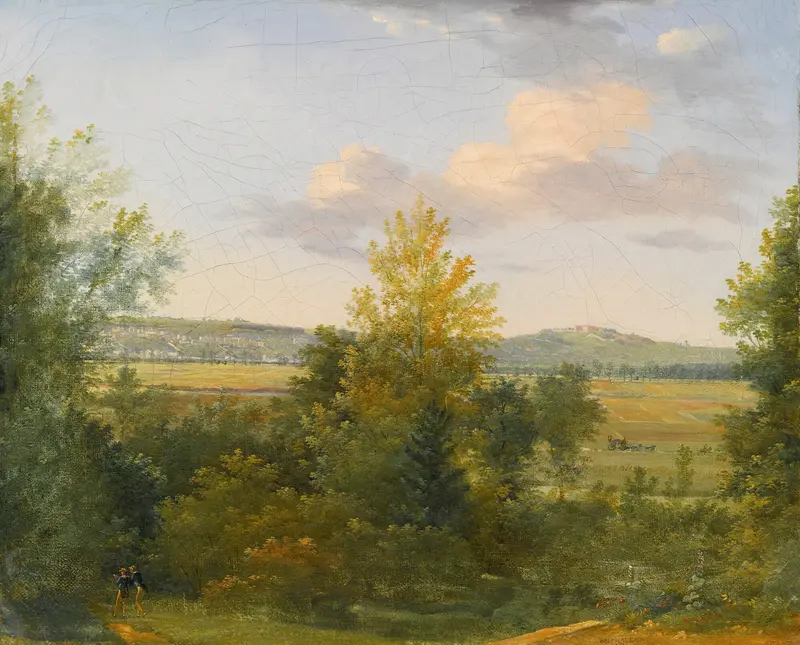
Pastoral landscape with two travellers
Achille Etna Michallon

Die Mündung der Rance bei Saint-Servan (Bretagne)
Achille Etna Michallon

View of a Waterfall through a Ravine
Achille Etna Michallon
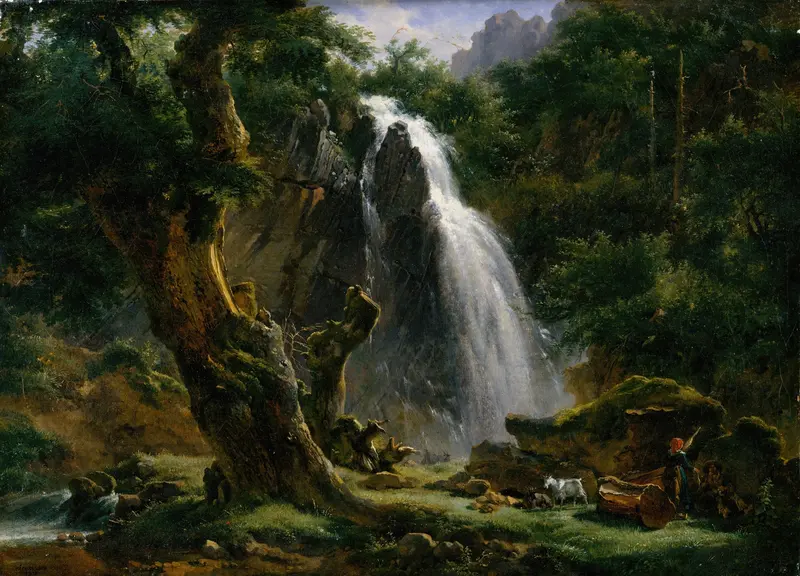
Waterfall at Mont-Dore
Achille Etna Michallon
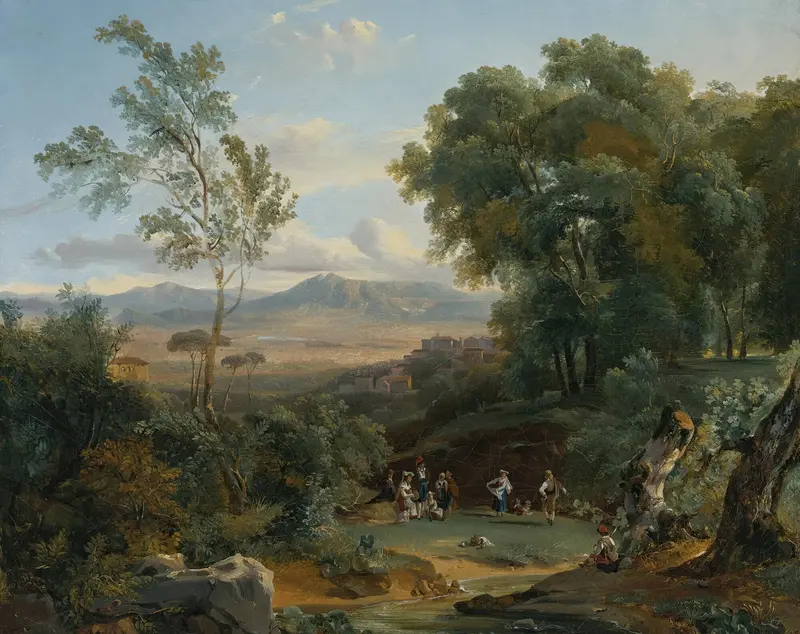
Landscape With A View Of Frascati
Achille Etna Michallon
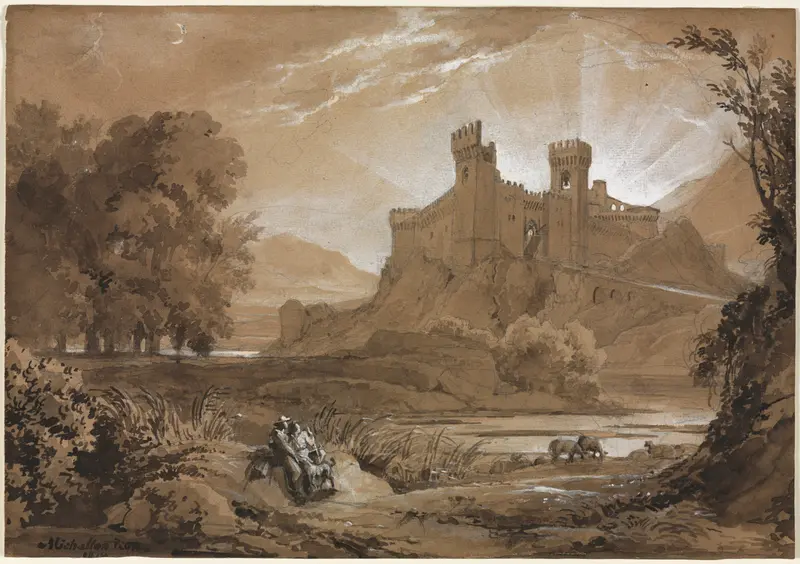
Landscape with Castle and Shepherds
Achille Etna Michallon
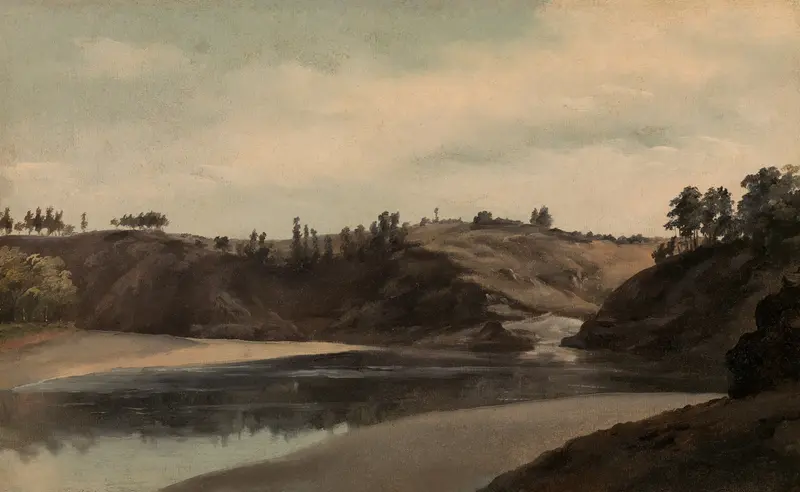
River landscape in Brittany
Achille Etna Michallon
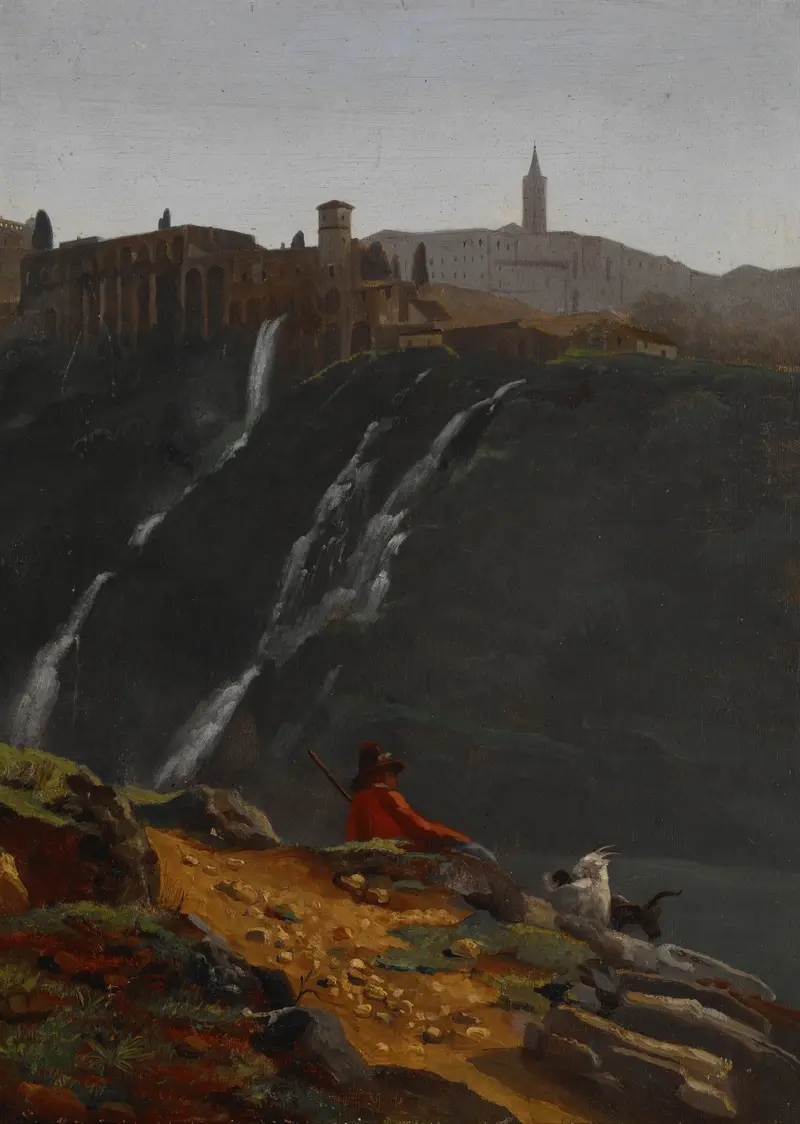
Goatherd Opposite the Falls of Tivoli
Achille Etna Michallon
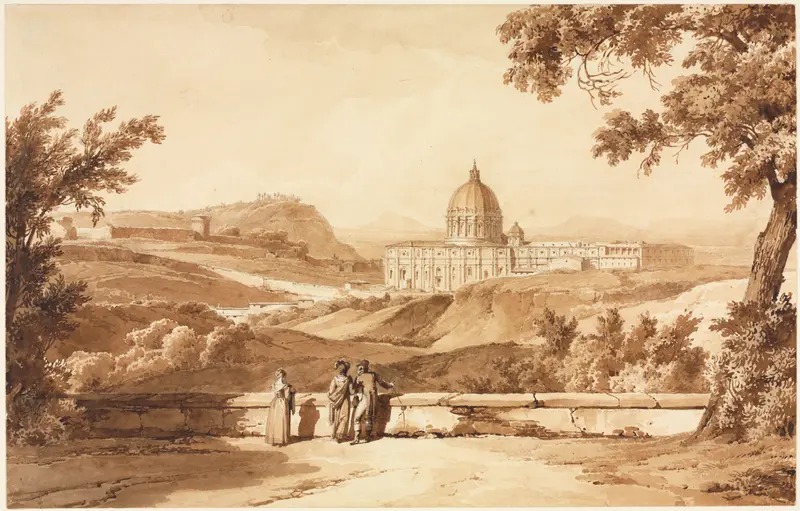
View of St. Peters, Rome
Achille Etna Michallon
More Landscape Art

The Starry Night
Vincent van Gogh

View of Delft
Johannes Vermeer

Water Lilies
Claude Monet

The Grand Canal, Venice, looking north-west from the Ca' Corner to the Ca' Contarini degli Scrigni, with the campanile of Santa Maria della Carità
Canaletto

Windsor Castle
Canaletto

The Grand Canal looking North-East from the Palazzo Dolfin-Manin to the Rialto Bridge
Canaletto