
Blick auf Felsen und Höhenzüge — History & Facts
Can paint confess what words never could? In Blick auf Felsen und Höhenzüge, the violence of nature emerges not through chaos, but in its silent, yet commanding presence. Look to the center where the jagged rocks rise sharply against a muted sky, their dark hues contrasting with the softer greens and browns of the surrounding landscape. Notice how the brushwork captures the rough texture of the stones, while dappled light reveals the contours of the terrain, creating a dance of shadow and illumination. The composition draws the eye upward, inviting contemplation of the vastness above, yet binding it to the raw earth below. Yet beneath this tranquil exterior lies an emotional tension.
The rugged rocks embody a primal force, suggesting both the beauty and brutality of the natural world. The serene valley cradled below seems almost fragile in comparison, a delicate reminder of life juxtaposed against the relentless, unyielding power of the mountains. This interplay invites viewers to ponder their own place within such a dynamic landscape, where tranquility can swiftly turn into turmoil. In 1861, Hans Thoma painted this piece during a time of personal exploration and artistic development in Germany.
The Romantic movement was flourishing, emphasizing nature's sublime aspects and emotional depth, and Thoma was deeply influenced by these ideals as he sought to capture the essence of the landscape around him. This work reflects his growing mastery of color and form, marking a significant moment in his evolution as an artist.
More Artworks by Hans Thoma
Browse all →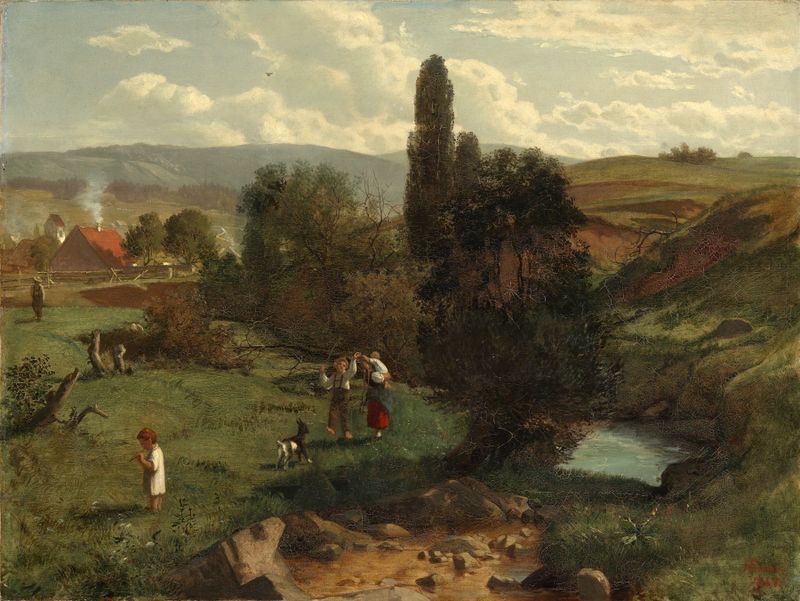
Schwarzwaldlandschaft
Hans Thoma
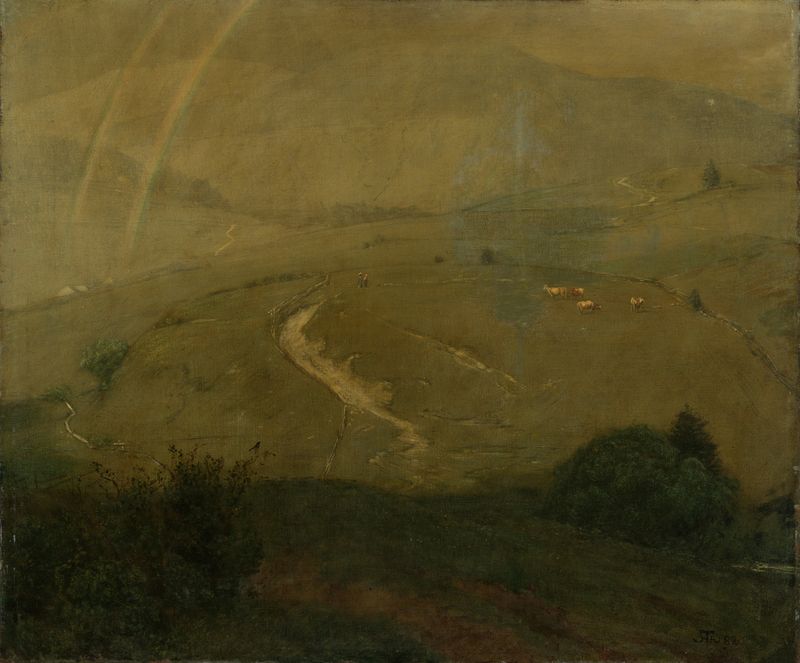
Regen im Schwarzwald
Hans Thoma
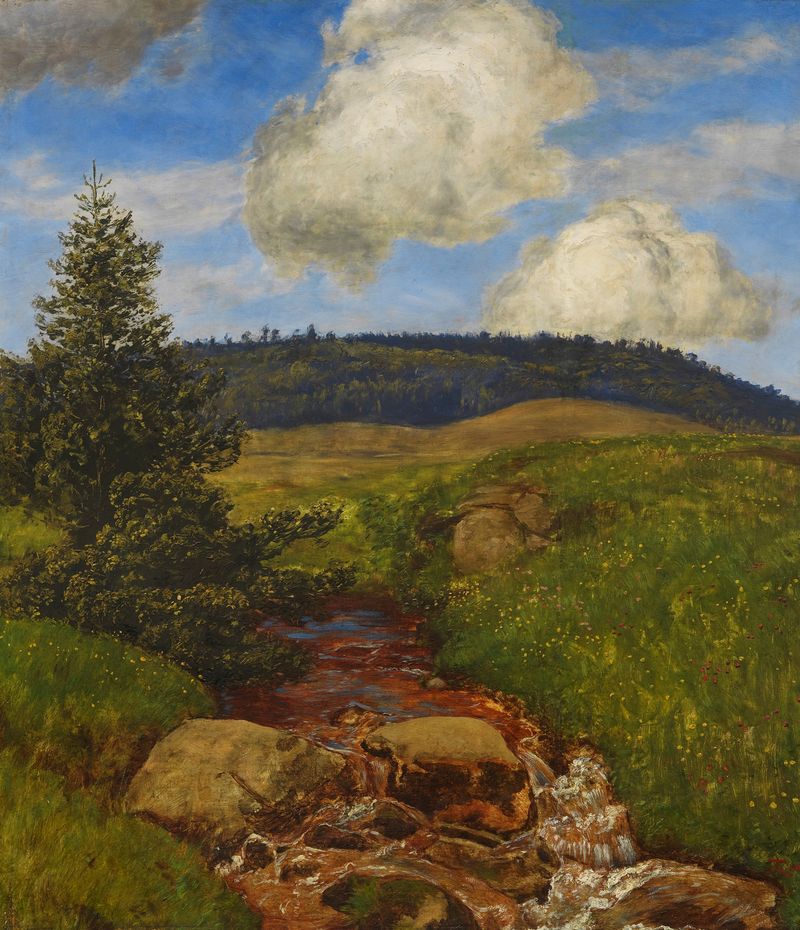
Schwarzwaldbach
Hans Thoma
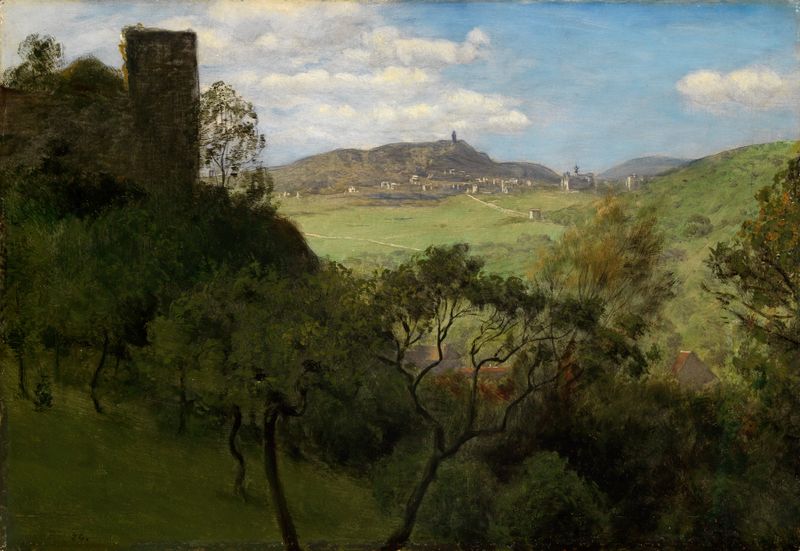
Blick auf Falkenstein im Taunus
Hans Thoma
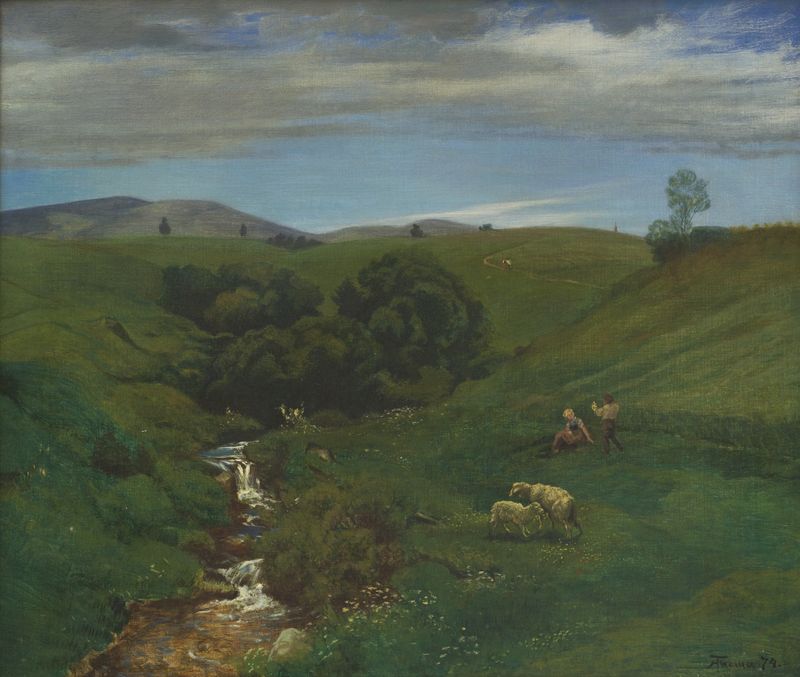
Black Forest Meadow near Bernau
Hans Thoma
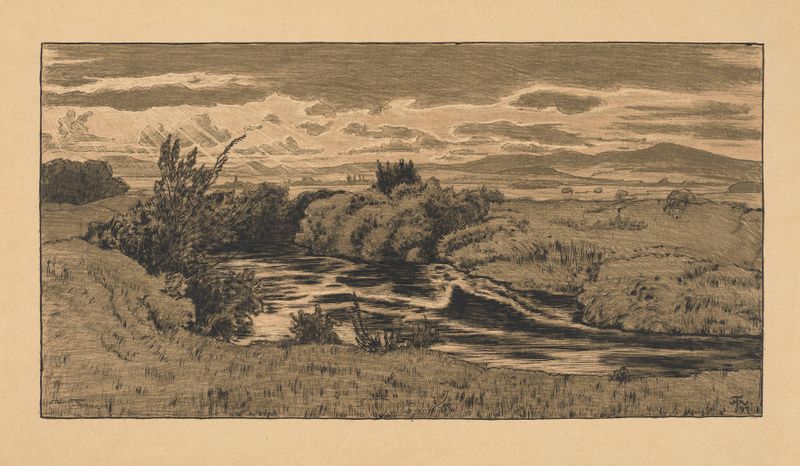
Evening by the Nidda River
Hans Thoma
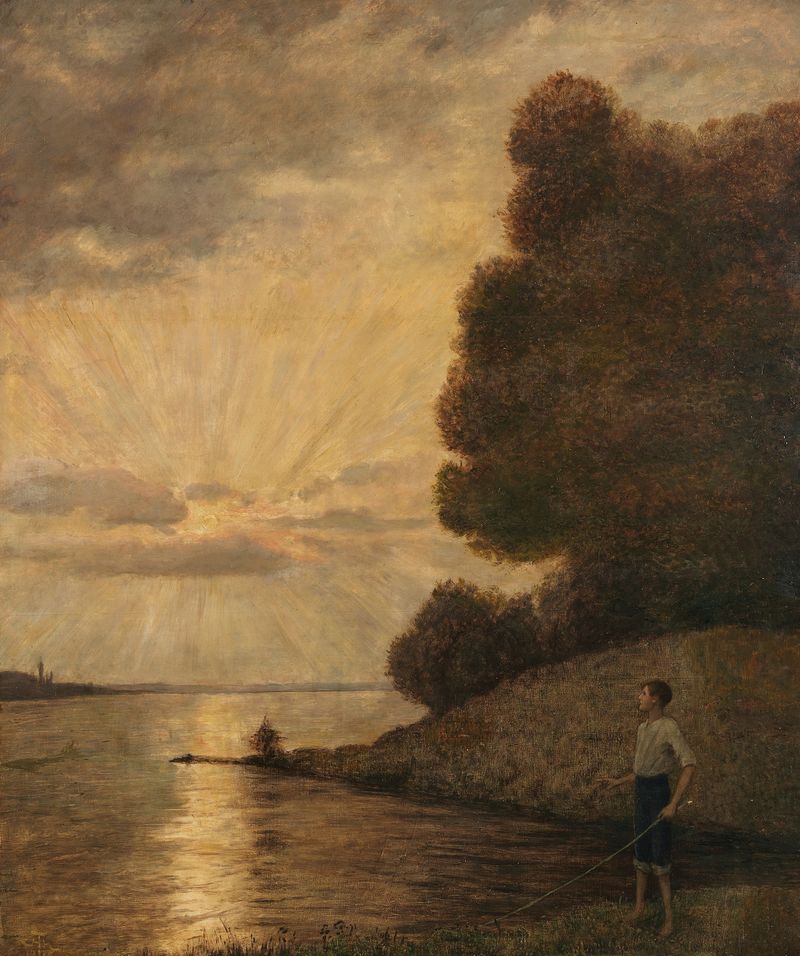
Sonnenuntergang am Oberrhein
Hans Thoma
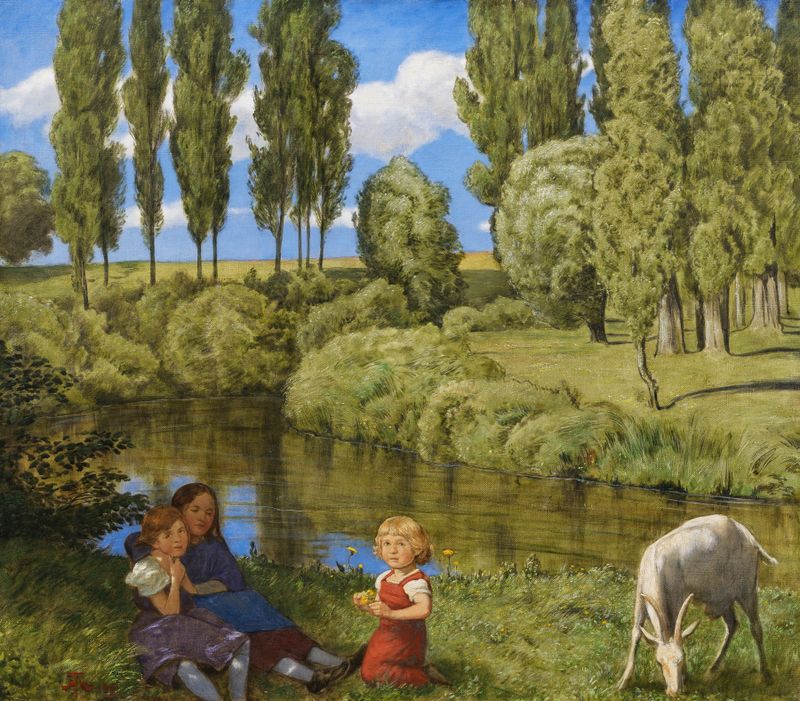
Am Stillen Bach
Hans Thoma
Der Abendstern
Hans Thoma
Das Rheintal bei Säckingen
Hans Thoma





