Blick von Mestre auf Venedig (Lagunenlandschaft) — History & Facts
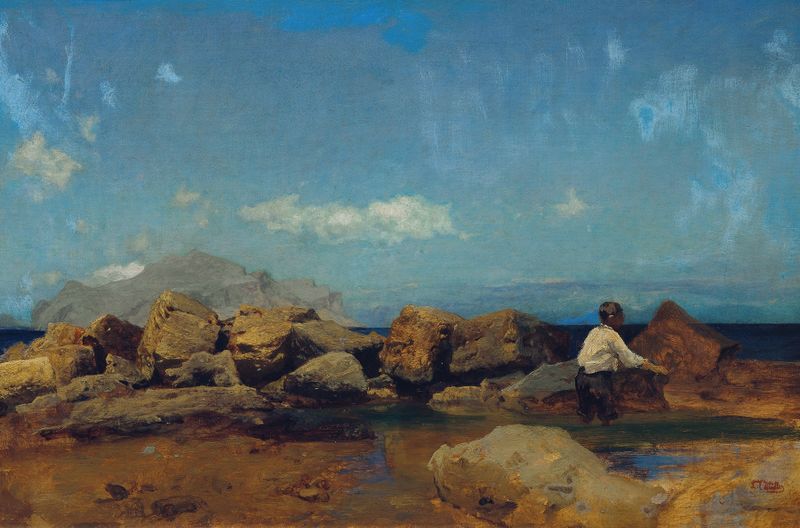
What secret hides in the quiet of the canvas? The play of light speaks in hushed tones, inviting us to explore a world suspended in tranquility. First, look to the foreground, where the soft undulations of the water beckon your gaze. Notice how the delicate brushstrokes create a shimmering surface, reflecting the subdued hues of the sky that melt into one another. The cool blues and gentle yellows harmonize to evoke a serene atmosphere, while the distant skyline of Venice rises like a dream from the lagoon, shrouded in a veil of mist.
The composition draws the viewer’s eye from the foreground into the ethereal background, creating a sense of depth and inviting exploration. Beneath the surface beauty lies a tension between the bustling city of Venice and the stillness of the lagoon. The artist captures the dichotomy of life: the soft, floating clouds mirroring the tranquility of the water contrasts with the silent, looming architecture of the city. Each element signifies both the serenity of nature and the ever-present human influence, evoking a contemplative reflection on the intersection of urban life and the natural world.
The light, subtly woven throughout the piece, serves as a bridge between these contrasting realms. In 1871, while residing in Vienna, Leopold Carl Müller created Blick von Mestre auf Venedig (Lagunenlandschaft) amidst a growing fascination with the beauty of landscapes. This period marked a shift in his artistry, as he increasingly focused on capturing the essence of light in nature. The painting reflects both his personal journey and broader trends in the art world, where the Impressionist movement was beginning to flourish, emphasizing the fleeting qualities of light and atmosphere.