Blue night — History & Facts
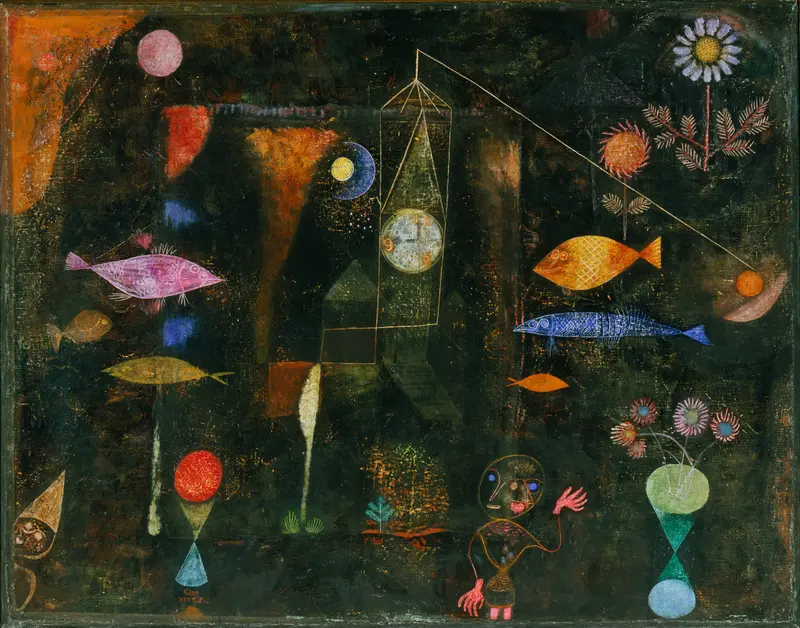
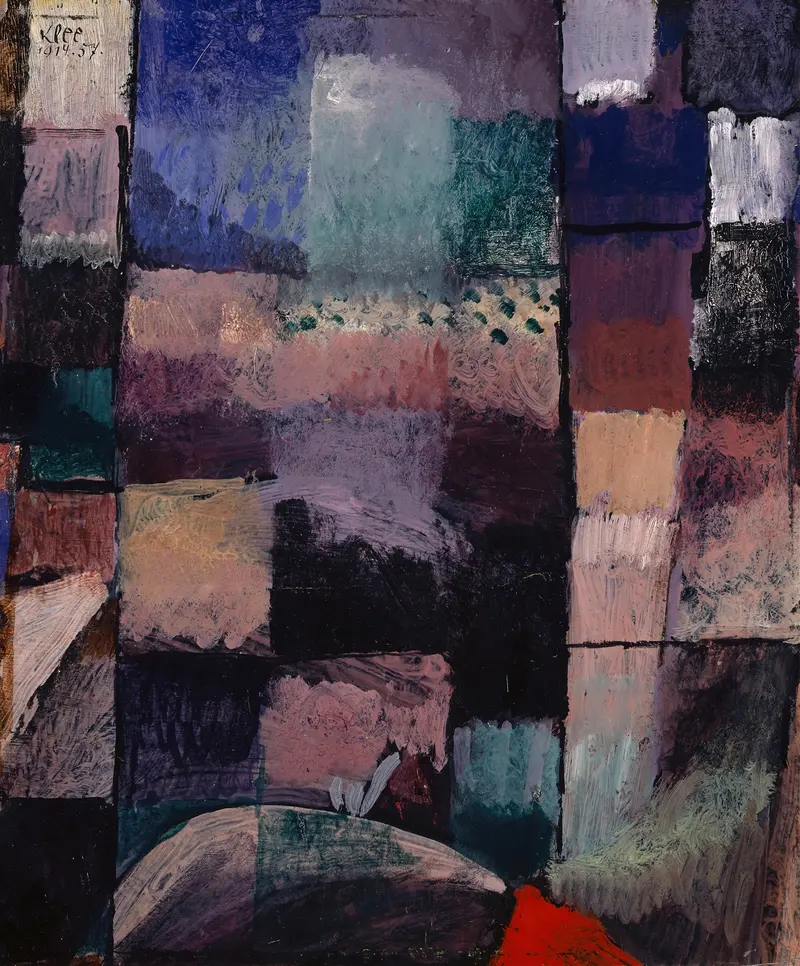
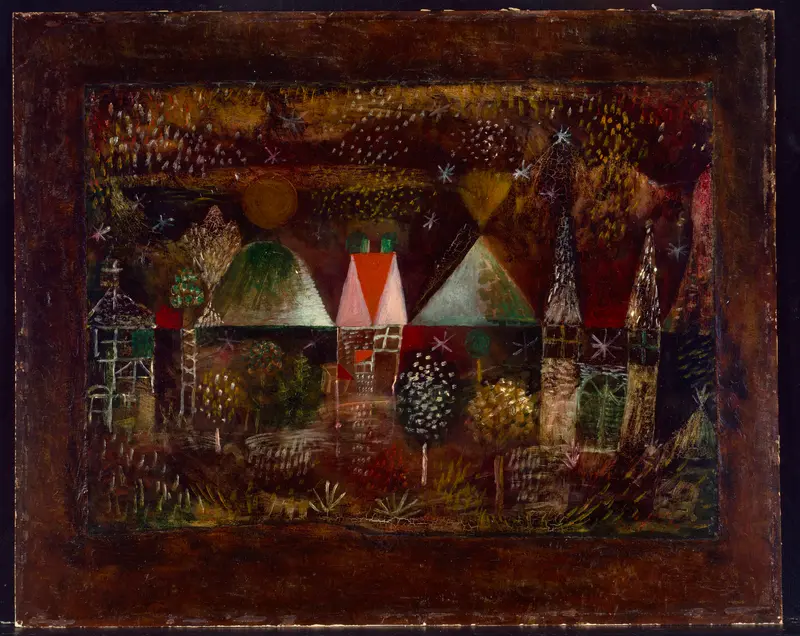
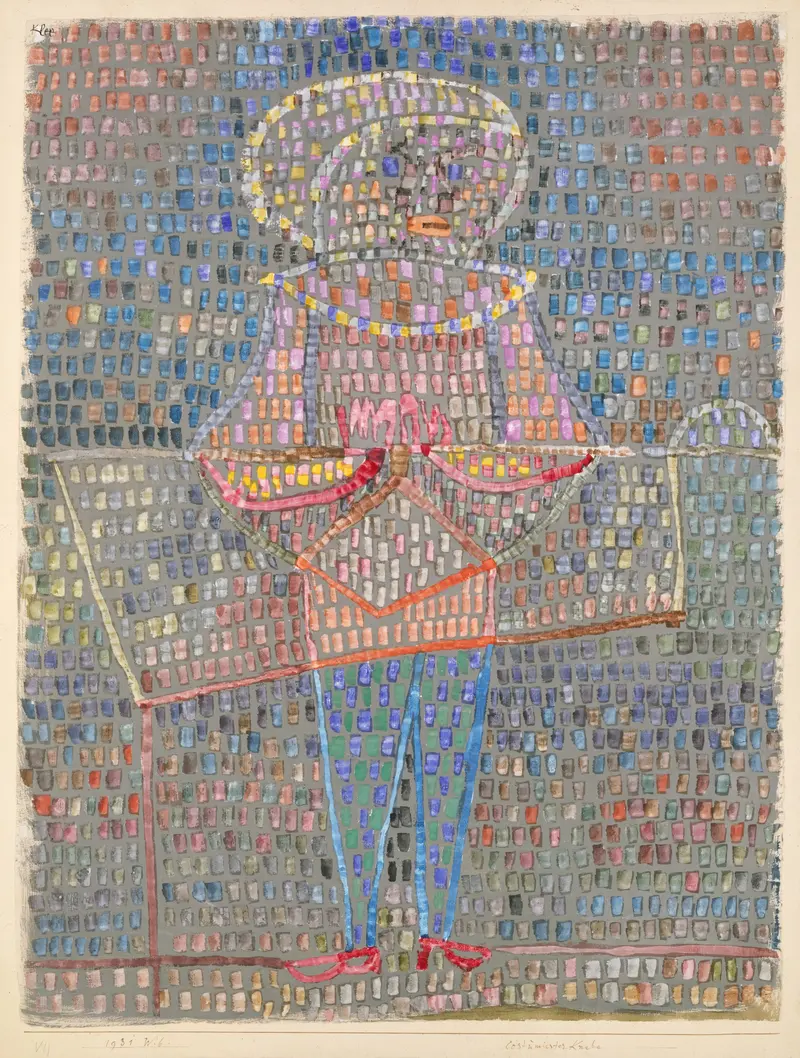
In Blue Night, Paul Klee uses a palette dominated by deep blues and blacks, creating a dreamlike atmosphere. The painting features abstract forms that suggest a landscape, with swirling shapes and lines. There are no distinct figures, but rather a sense of movement and fluidity throughout the composition.
The overall effect is both calming and mysterious, inviting viewers to interpret the scene in their own way. Klee's technique in Blue Night showcases his unique approach to color and form. The use of oil on canvas allows for rich textures and layered colors that enhance the depth of the work. The brushstrokes are visible, adding a dynamic quality to the painting.
Viewers can appreciate the interplay of light and shadow, which creates a sense of depth and dimension. Paul Klee was a key figure in the development of modern art, known for his innovative use of color and abstraction. Blue Night reflects his interest in the subconscious and dream imagery, a theme prevalent in many of his works. An interesting fact about this painting is that it exemplifies Klee's belief that art should be a reflection of the inner world rather than a mere representation of reality.
This work is part of the collection at Kunsthaus Zürich, where it continues to inspire visitors.