Blumen-Pfannen I (Flower-Pans I) — History & Facts
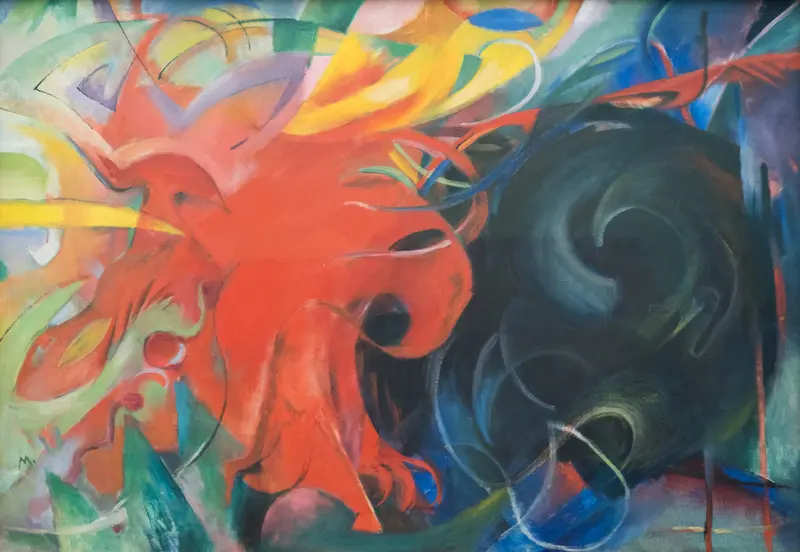
In Blumen-Pfannen I, Paul Klee presents a vibrant array of colors, primarily featuring shades of green, yellow, and red. The composition is filled with abstract floral forms that seem to dance across the canvas. Each flower-like shape is rendered in a playful manner, inviting the viewer to explore the intricate details.
The background is a soft blend of colors that enhances the lively figures in the foreground. The painting is characterized by Klee's unique use of line and color, which creates a sense of rhythm and movement. The brushwork is expressive, with bold strokes that define the shapes and add depth. Klee often employed a technique of layering colors to achieve a luminous quality, which is evident in this piece.
The overall effect is both whimsical and harmonious, typical of Klee's modernist style. Paul Klee was a Swiss artist associated with the early 20th-century movement known as Modernism. Blumen-Pfannen I reflects his fascination with nature and abstraction, merging the two in a playful yet sophisticated manner. An interesting fact about this work is that it showcases Klee's ability to convey emotion through color and form, making it a notable example of his artistic exploration.
Klee's works often draw from his experiences and observations, making them deeply personal and unique.