
Boomgaard bij Giessendam — History & Facts
This sentiment encapsulates the exquisite interplay of memory and nature in Arend Hendriks' work, inviting us to ponder the fragility of time and the permanence of art. Look towards the lush greenery that dominates the canvas, where vibrant greens and hints of gold weave an intricate tapestry of life. The orchard in the foreground draws the eye first, with trees standing proudly, their branches heavy with fruit, creating a sense of abundance and promise. As you move deeper into the painting, the subtle gradations of light reveal a tranquil sky, blending soft blues with whispers of white, suggesting a fleeting moment just before twilight. The juxtaposition of the blooming orchard with the tranquil landscape evokes a sense of nostalgia, a memory of simpler times.
Each brushstroke captures the essence of growth and decay, emphasizing how beauty can exist alongside impermanence. The gentle play of light across the fruit-laden branches serves as a reminder of life's transient moments, while the serene backdrop instills a sense of peace amidst the chaos of the world. In 1939, Hendriks painted this piece amidst rising tensions in Europe, as the world stood on the brink of war. Living in the Netherlands, he was influenced by the Dutch landscape tradition while grappling with the encroaching fears of conflict.
As he explored rural scenes, he captured not only the beauty of his surroundings but also a poignant reflection on the fleeting nature of life during a turbulent period.
More Artworks by Arend Hendriks
Browse all →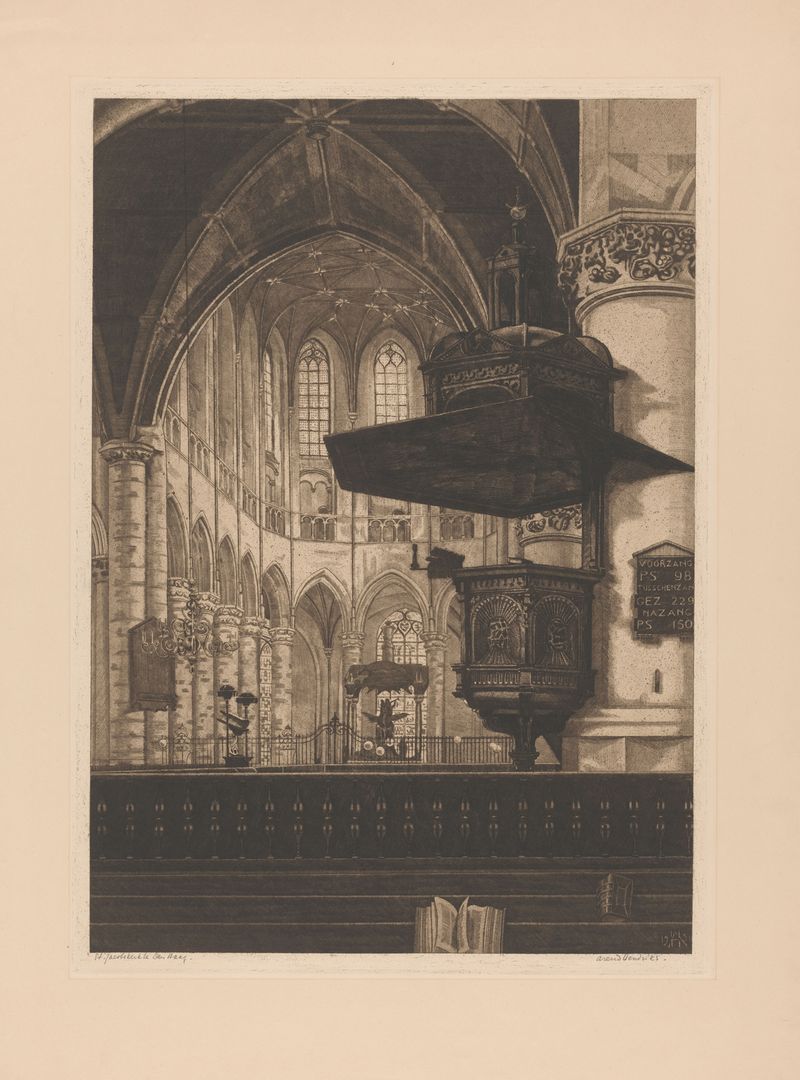
St. Jacobskerk te Den Haag
Arend Hendriks

Landschap met bloemen
Arend Hendriks
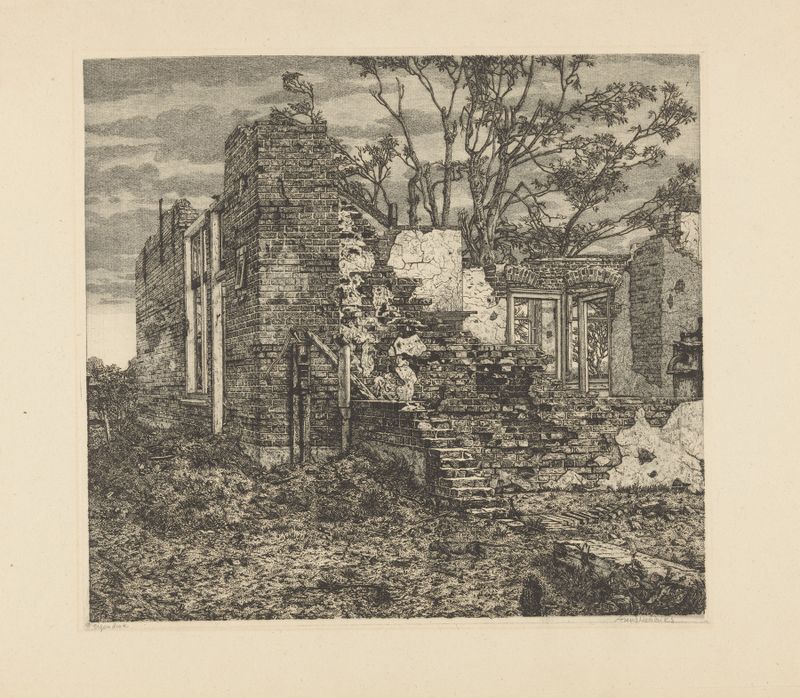
Ruïne van een huis
Arend Hendriks
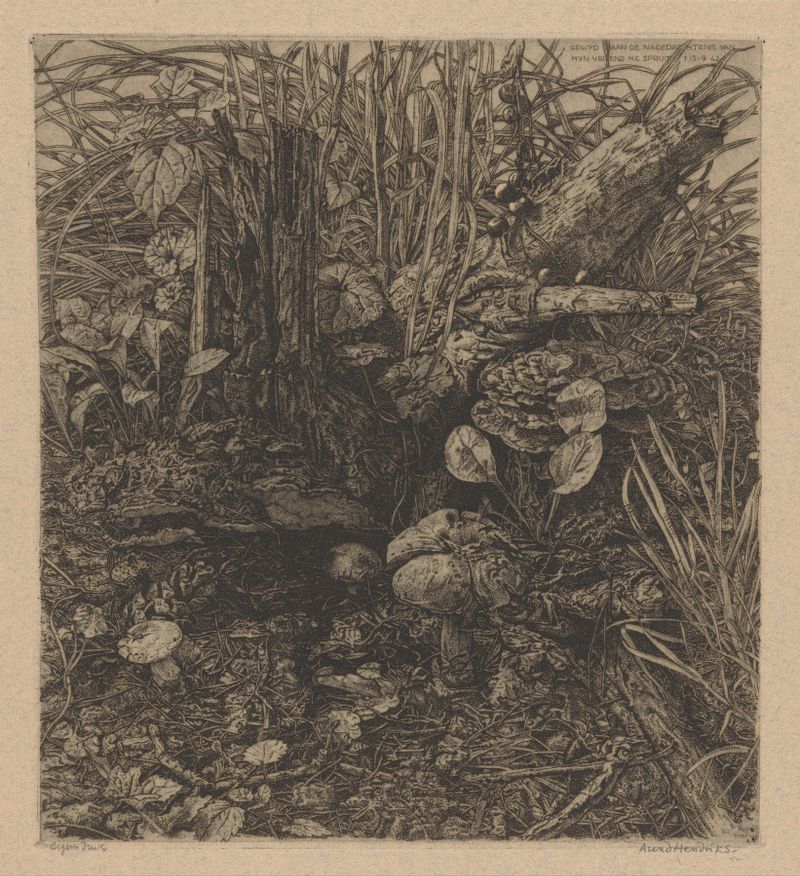
Paddenstoelen bij een boomstronk
Arend Hendriks

Gezicht op Huis ten Bosch, RP-P-2014-83-65
Arend Hendriks
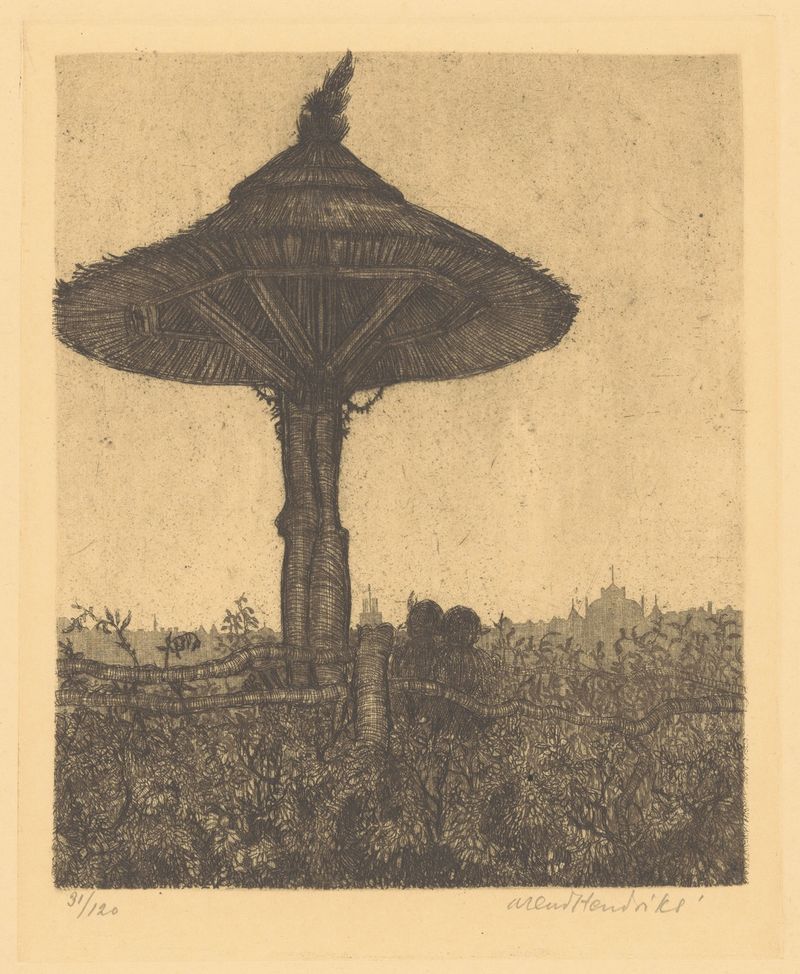
De paraplu
Arend Hendriks
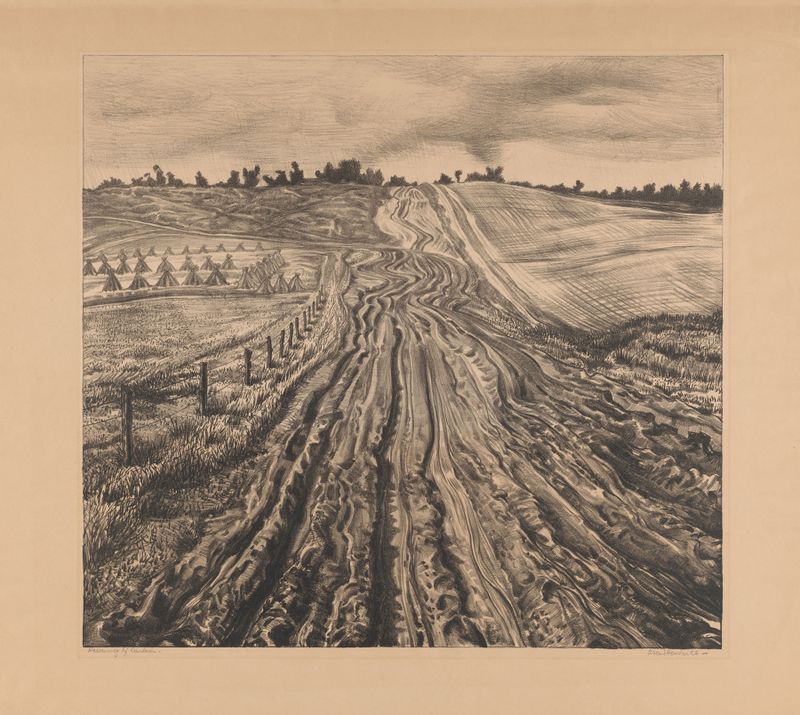
Hessenweg bij Lunteren
Arend Hendriks
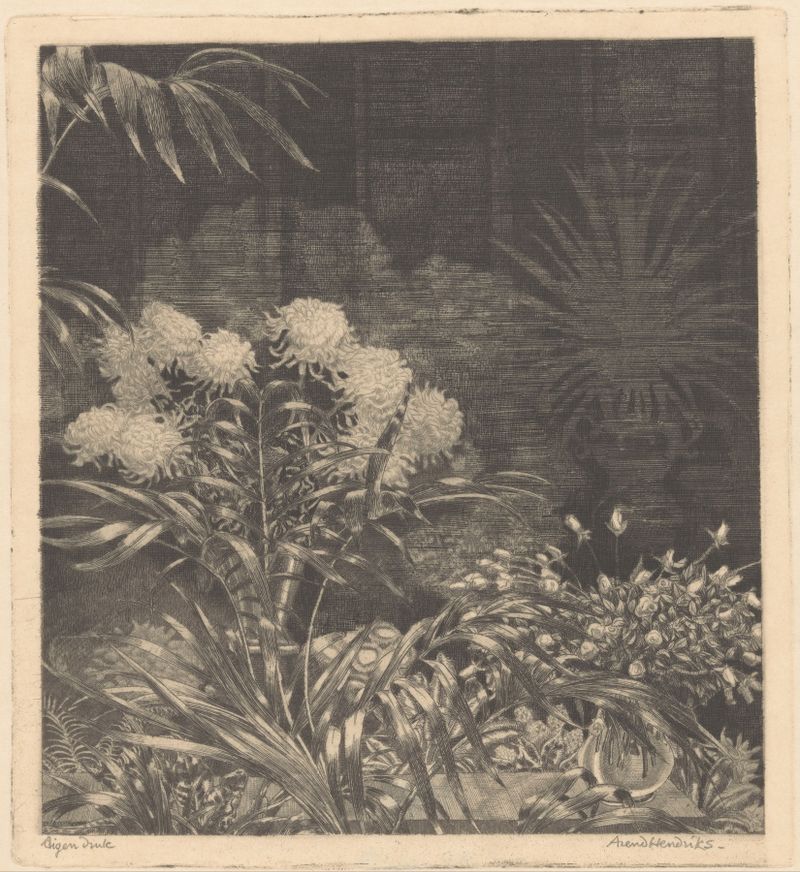
Interieur met bloemen in vazen en planten in potten
Arend Hendriks
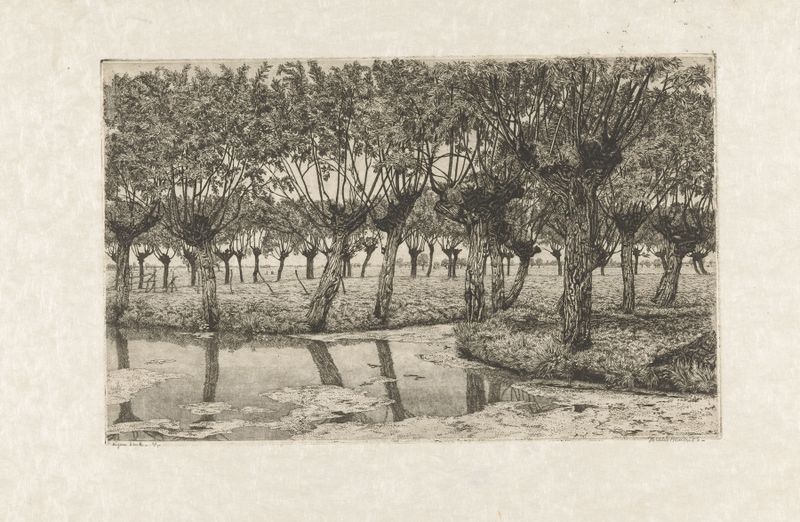
Polderlandschap met knotwilgen
Arend Hendriks

Bouwerij, Ieplaan, Den Haag
Arend Hendriks





