Bormes — History & Facts
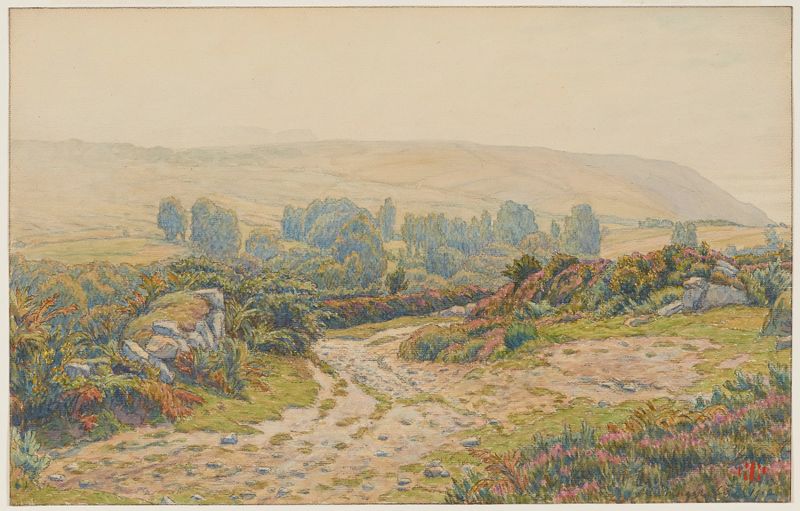
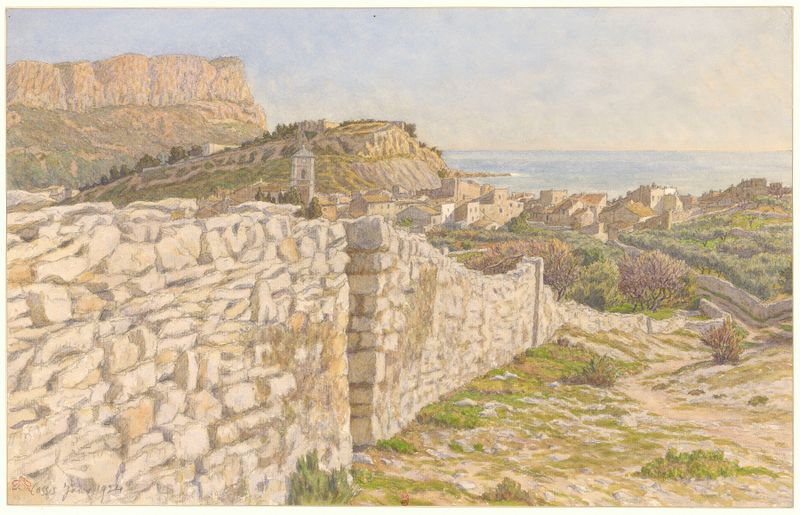
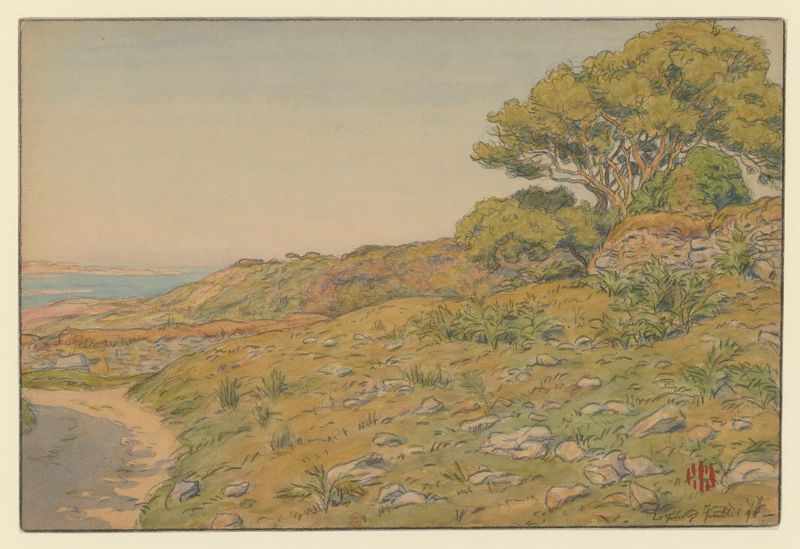
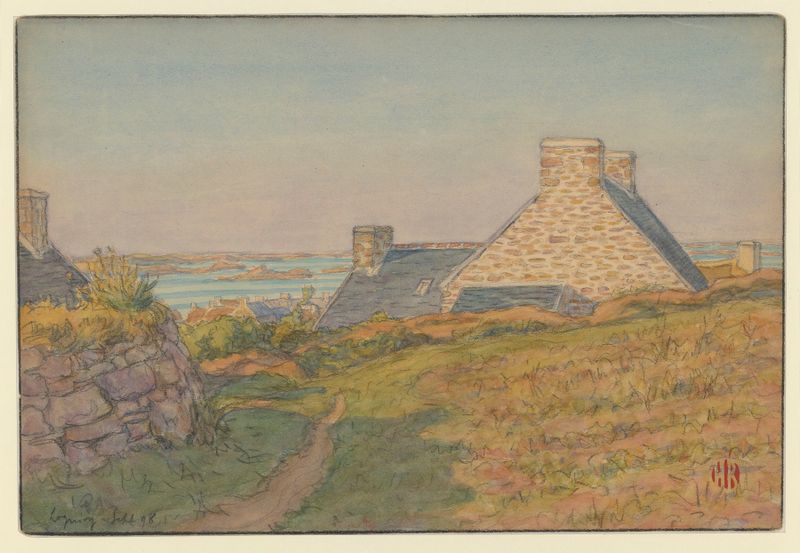
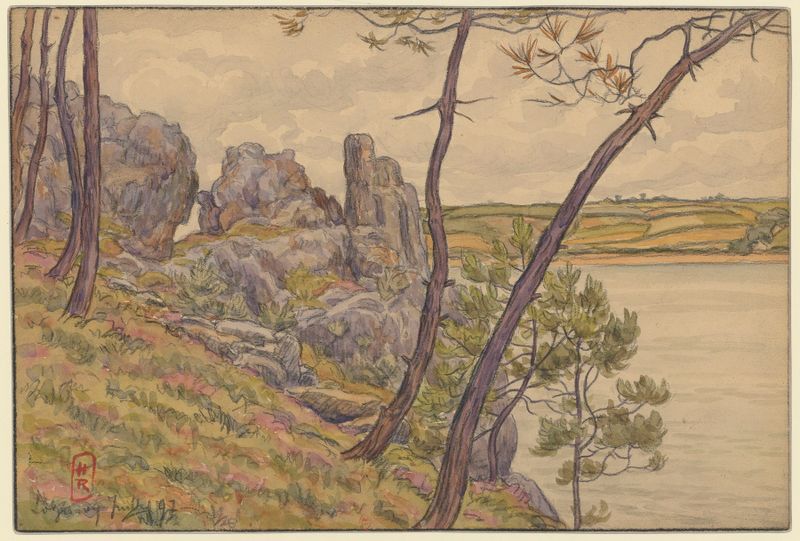
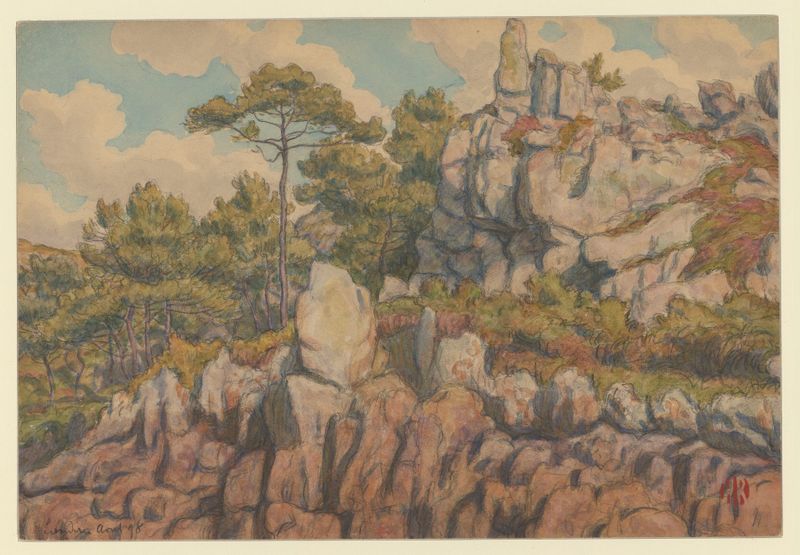
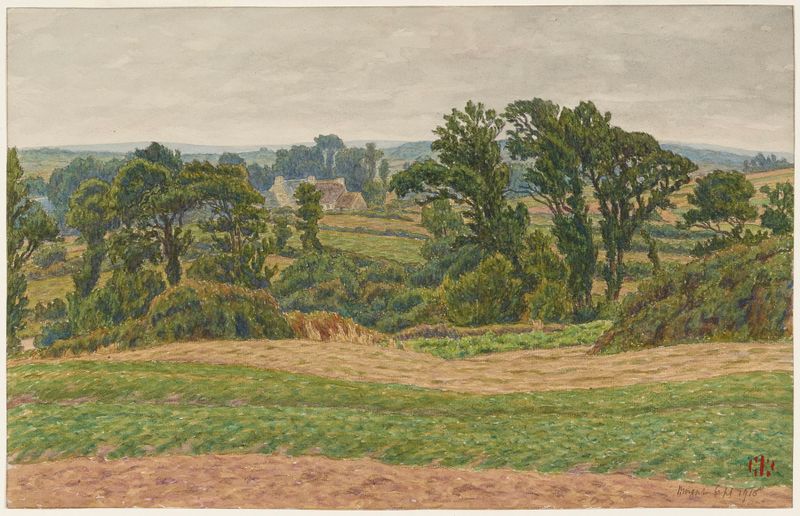
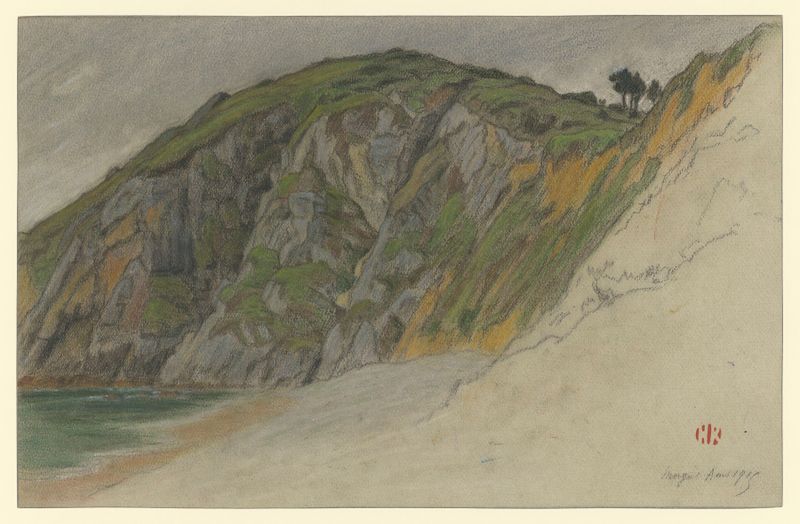
Did the painter know this moment would outlive them? In Bormes, Henri Rivière captures a fragile beauty that dances delicately on the precipice of violence, layering existence with an urgency that reverberates through time. Look to the foreground where muted earth tones resonate with the stillness of the landscape. Notice how the ochre cliffs rise defiantly against the horizon, their jagged edges softened by the warm embrace of twilight. The deep blues of the sky, streaked with hints of lavender, create an atmosphere that is both serene and foreboding.
Rivière's brushwork reveals a tension in the texture, as if the scene is poised for a shift, inviting the viewer to contemplate both its calm and its potential chaos. As you delve deeper, explore the interplay of light and shadow woven throughout the painting. The light gently caresses the cliffs, suggesting warmth, yet casts a long shadow that hints at the violence lurking just beneath the surface. This duality embodies the artist's struggle with the fragility of beauty and the inevitability of decay.
Each stroke pulls you into this world, evoking a sense of longing and apprehension that lingers in the air like the scent of impending rain. Created in 1924, Rivière painted Bormes during a period marked by the rise of modernism and the aftermath of the First World War. Living in France, he faced a shifting art world that increasingly embraced abstraction. This work reflects his exploration of natural forms and the emotional resonance of color, revealing both a personal and collective reckoning with the chaos of contemporary existence.