
Bormes — History & Facts
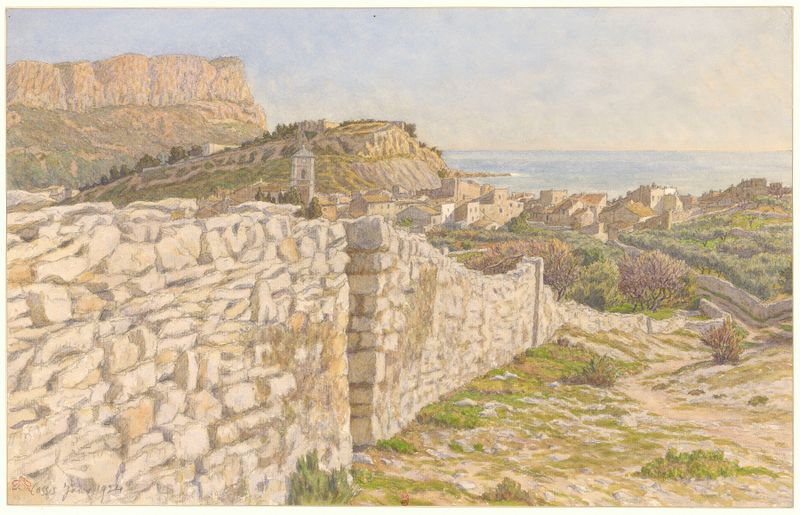
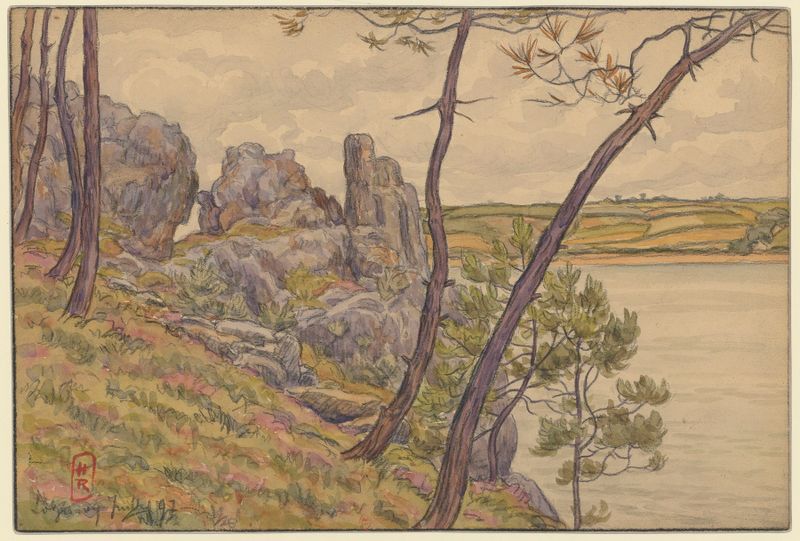
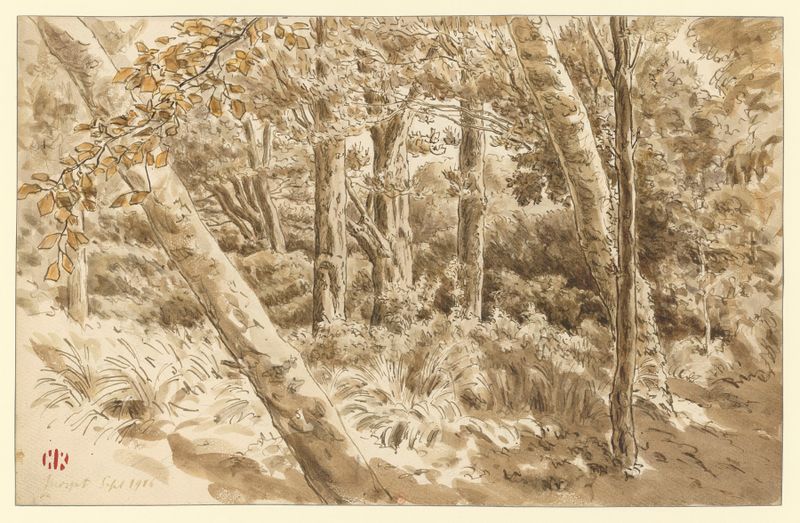
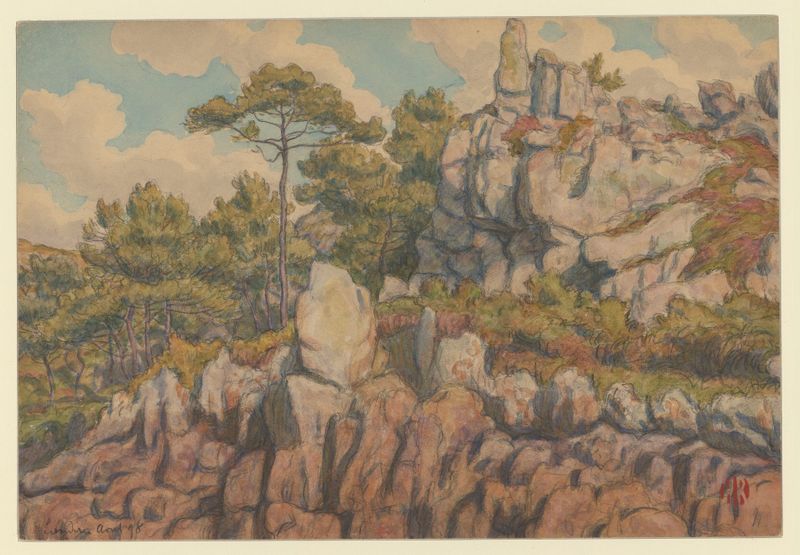
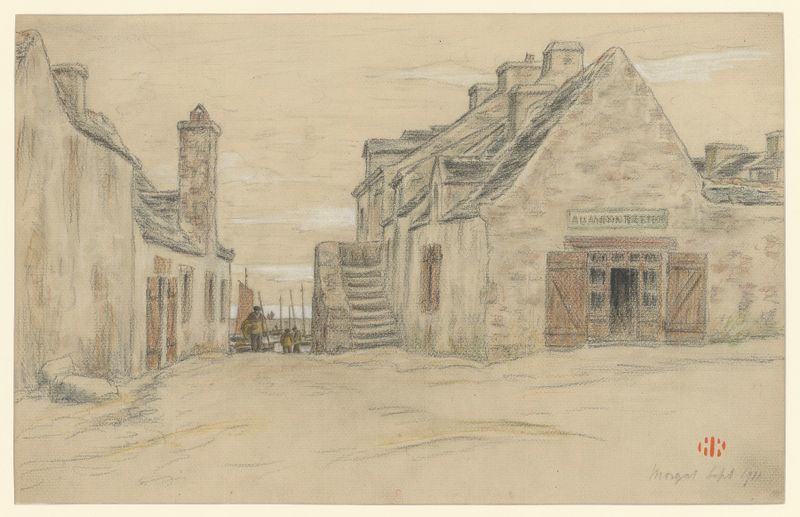
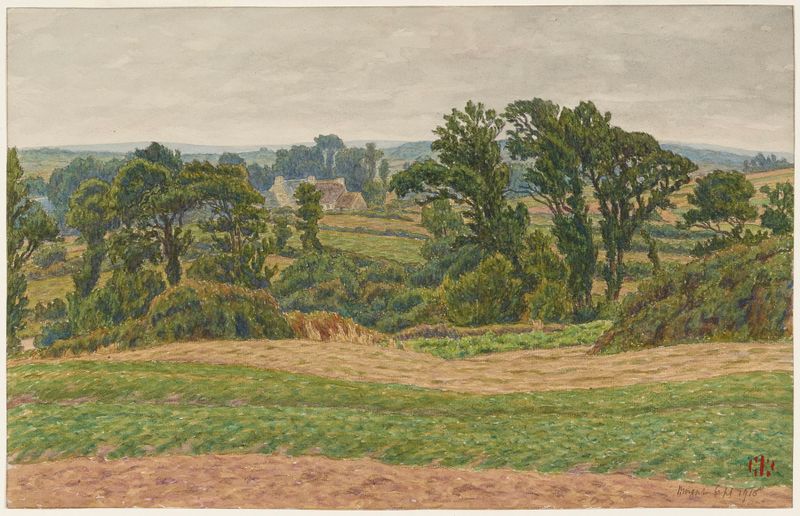
Could a single brushstroke hold eternity? In Bormes, Henri Rivière invites us to ponder the transient nature of life, captured within the intricate dance of decay and beauty. Look to the foreground, where soft hues of amber and ochre blend seamlessly, revealing the weathered stone of ancient architecture. Notice how the light filters through the muted palette, casting a gentle glow that highlights the textures of age, contrasting the vibrant greenery that clings to life. Rivière’s deft brushwork creates a tactile sense of presence, drawing you in to explore the silent stories etched within the landscape. Beneath the surface, the painting resonates with themes of impermanence and resilience.
The intertwining vines represent nature's reclaiming of human constructs, symbolizing life’s persistence even in decay. The juxtaposition of warm earth tones and cool shadows evokes a feeling of nostalgia, reminding us that beauty often resides in the fleeting moments, where life meets entropy. Each element breathes a quiet urgency, urging the viewer to reflect on their own passage through time. Created in 1925, this work emerged during a pivotal period for Rivière, who was deeply influenced by the Symbolist movement.
Living in the idyllic town of Bormes-les-Mimosas, he found inspiration in the interplay between architecture and nature, reflective of a broader artistic search for meaning in a changing world. His exploration of light, shadow, and decay speaks to a personal and collective reckoning with modernity's relentless advance.
More Artworks by Henri Rivière
Browse all →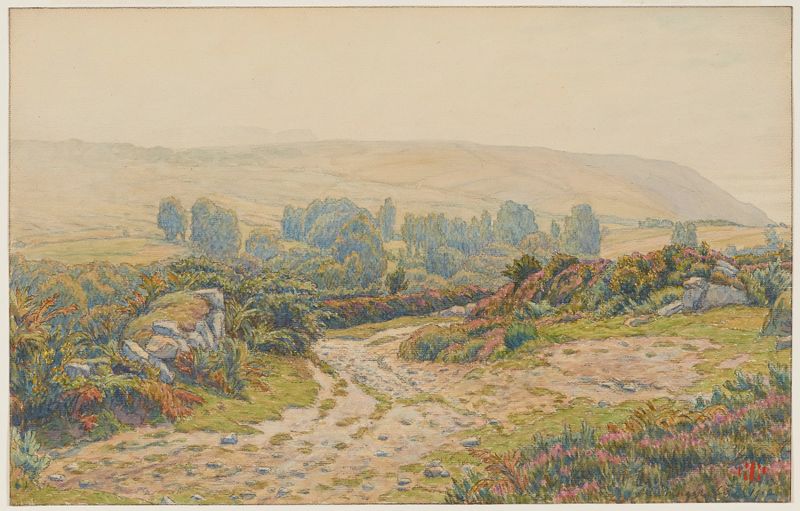
More Architecture Art
Browse all →
The statue of Liberty
Frédéric Auguste Bartholdi

View of Houses in Delft, Known as ‘The Little Street’
Johannes Vermeer

View of Houses in Delft, Known as ‘The Little Street’
Johannes Vermeer

The Cathedral in Rouen. The portal, Grey Weather
Claude Monet

The yellow house
Vincent van Gogh

The Church in Auvers-sur-Oise, View from the Chevet
Vincent van Gogh