
Boudewijn van Heusden (?-870) and his wife Sophia receiving homage from the legate of King Edmund — History & Facts
A single gesture draws the eye: the armored figure, Boudewijn van Heusden, extends his hand with a commanding calm, as if weighing the worth of the homage being offered. The artist, Adriaen Pietersz van de Venne, orchestrates the scene so that every gaze and posture converges on this moment of exchange. The legate, bent in deference, presents a letter—perhaps a token of reconciliation or demand—while Sophia, Boudewijn’s wife and the daughter of King Edmund, stands just behind, her presence both regal and watchful.
The muted, almost monochrome palette lends the scene a sense of historical distance, as if the figures have stepped out of legend and into a faded memory. Every detail, from the ornate armor to the attentive hound at the front, is chosen to reinforce the gravity of this encounter. Works like this, painted in the early seventeenth century, were often commissioned to evoke the virtues and dramas of a distant, sometimes mythic past. In the Dutch Republic, where van de Venne was active around 1626, history painting had become a vehicle for moral and political reflection, often celebrating local heroes or legendary episodes that could inspire contemporary viewers.
The inclusion of Boudewijn’s abduction of Sophia—a story laced with both romance and conflict—would have resonated with audiences attuned to the complexities of power, loyalty, and negotiation. Today, the painting resides in the Rijksmuseum’s collection, a reminder of how artists of the Dutch Golden Age used history not just to record, but to provoke and engage. Look again at the faces: each one is a study in the play of pride, uncertainty, and hope.
More Artworks by Adriaen Pietersz van de Venne
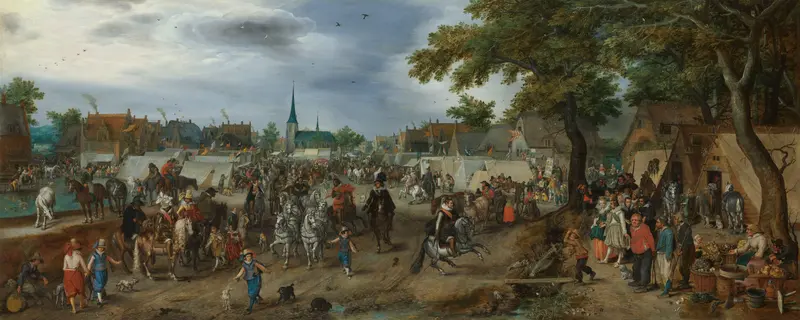
Princes Maurice and Frederick Henry at the Valkenburg Horse Fair
Adriaen Pietersz van de Venne
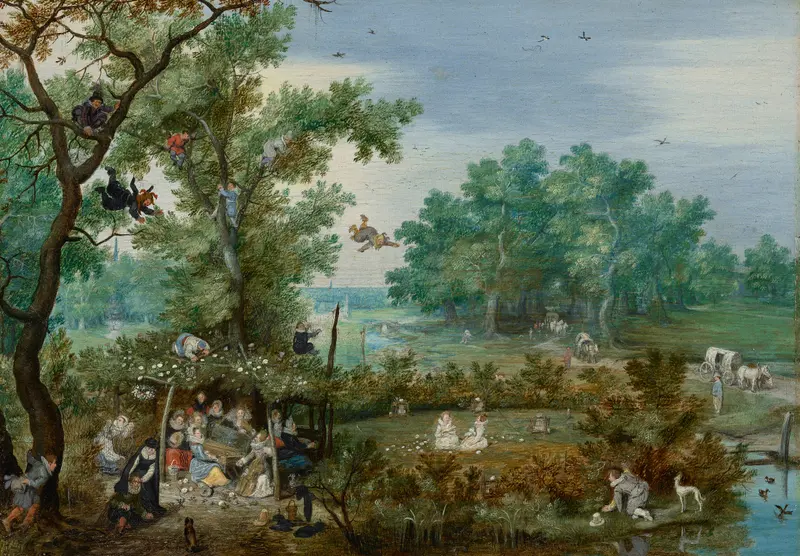
Merry Company in an Arbor
Adriaen Pietersz van de Venne
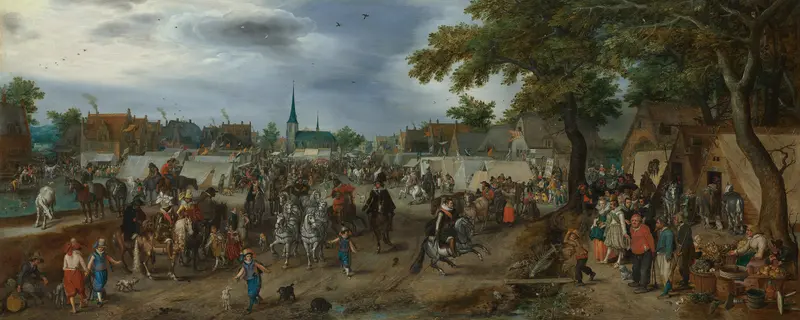
Princes Maurice and Frederick Henry at the Valkenburg Horse Fair
Adriaen Pietersz van de Venne
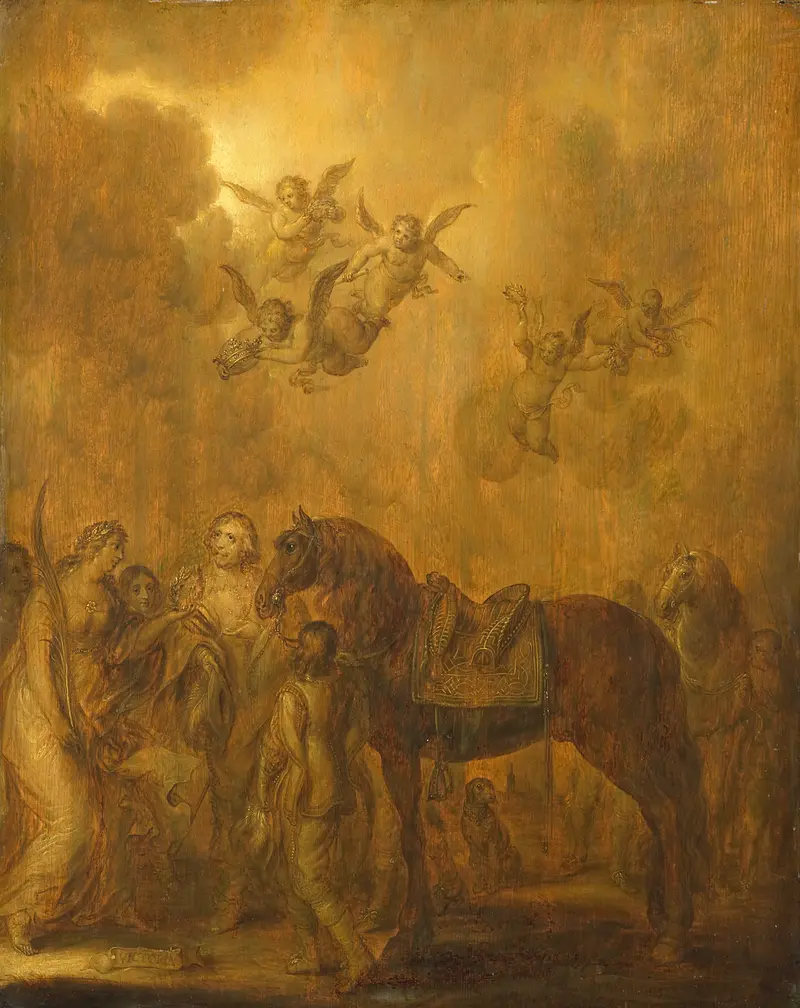
Allegory of the Stadtholdership of Prince Frederick Henry
Adriaen Pietersz van de Venne
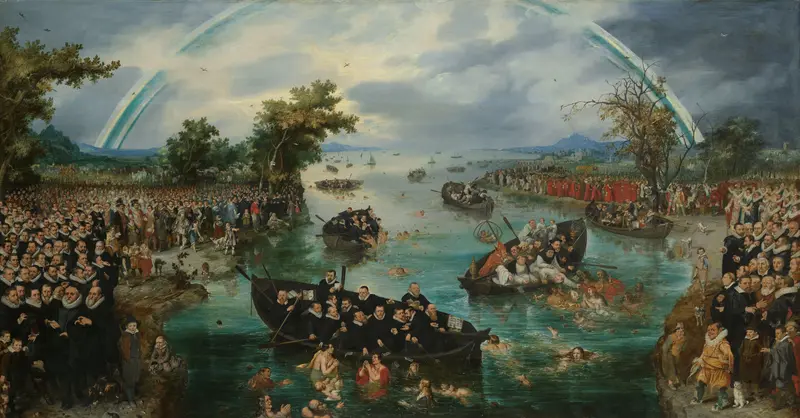
Fishing for Souls
Adriaen Pietersz van de Venne
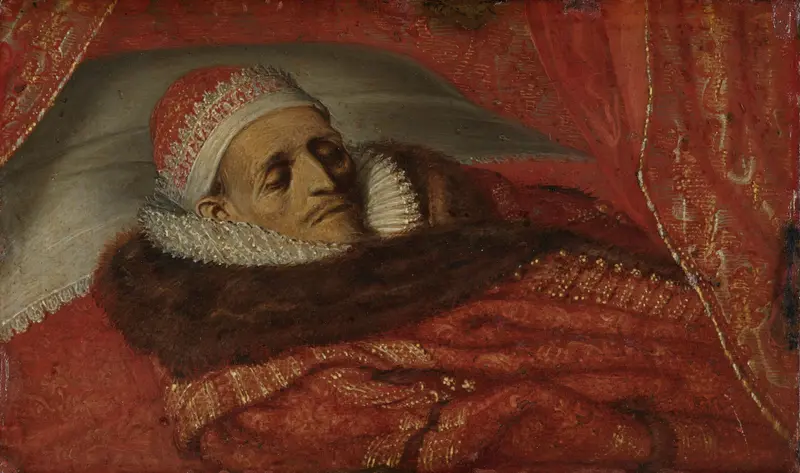
Stadtholder Prince Maurice Lying in State
Adriaen Pietersz van de Venne
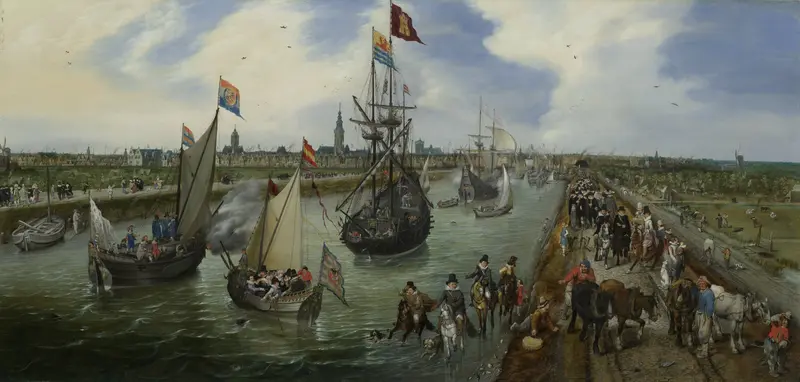
The Departure of a Dignitary from Middelburg
Adriaen Pietersz van de Venne
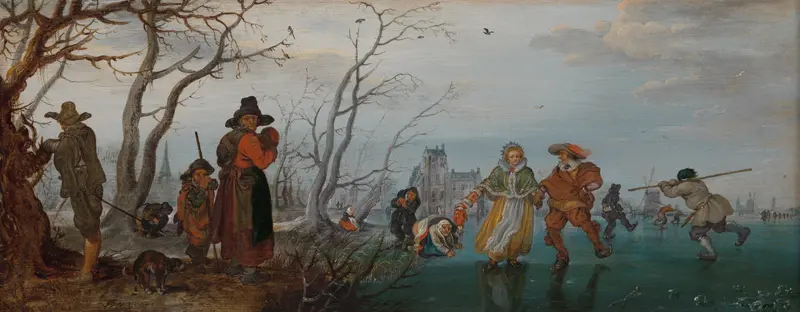
Winter
Adriaen Pietersz van de Venne

A Jeu de Paume Before a Country Palace
Adriaen Pietersz van de Venne
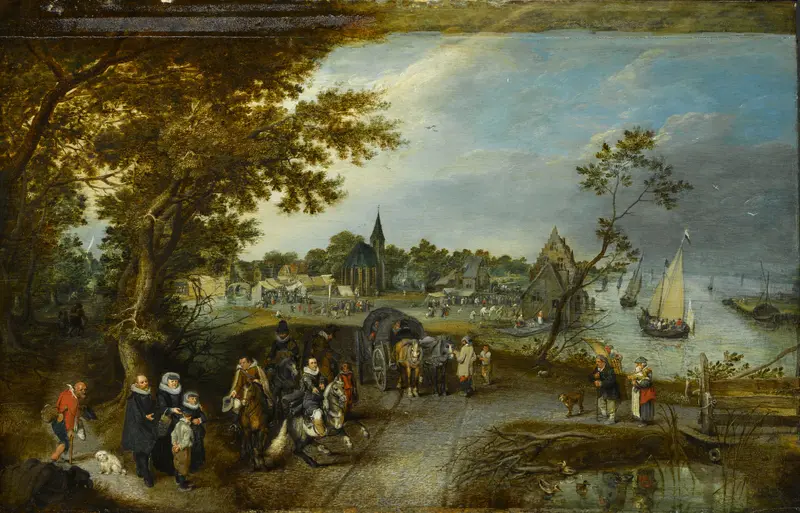
Landscape with Figures and a Village Fair (Village Kermesse)
Adriaen Pietersz van de Venne





