
Bovisand, near Plymouth — History & Facts
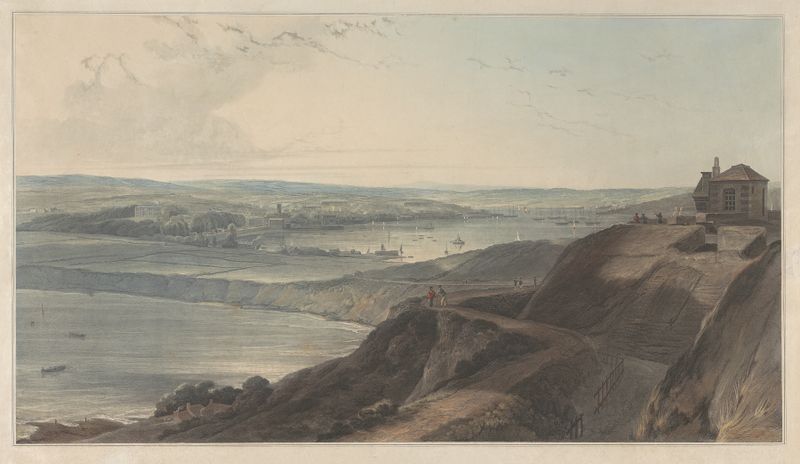
Art reveals the soul when the world turns away. What remains is a legacy etched in color and form, an invitation to explore the profoundly intimate relationship between nature and humanity. Begin your journey by looking to the center of the canvas, where the soft, rolling hills cradle the coastal scene. The gentle waves lap at the shore, each brushstroke carefully crafted to evoke the rhythm of the sea.
Pay attention to the delicate interplay of blues and greens that harmonizes the sky and water, creating a seamless transition from the terrestrial to the celestial. The squint of the sun breaking through wispy clouds invites warmth into the scene, grounding it in a moment ripe with tranquility. As you delve deeper, note the contrasting textures: the roughness of the rocky shoreline juxtaposed against the smooth surface of the water. This duality suggests a tension between stability and fluidity, reflecting nature's unpredictable beauty.
The presence of distant boats, almost ghostlike, hints at human ambition yet emphasizes their insignificance in the face of nature's expanse. Such details resonate with a sense of nostalgia, evoking thoughts of journeys taken and the marks we leave behind. In 1813, at the peak of his artistic career, this work emerged from William Daniell's time in Devon, England, where he was deeply influenced by the coastal landscapes. The early 19th century was marked by a burgeoning appreciation for the sublime in nature, as Romanticism gained momentum in the art world.
Daniell's meticulous technique in capturing these coastal vistas not only established his legacy as a topographical artist but also secured his place in the evolution of landscape painting.
More Artworks by William Daniell
Browse all →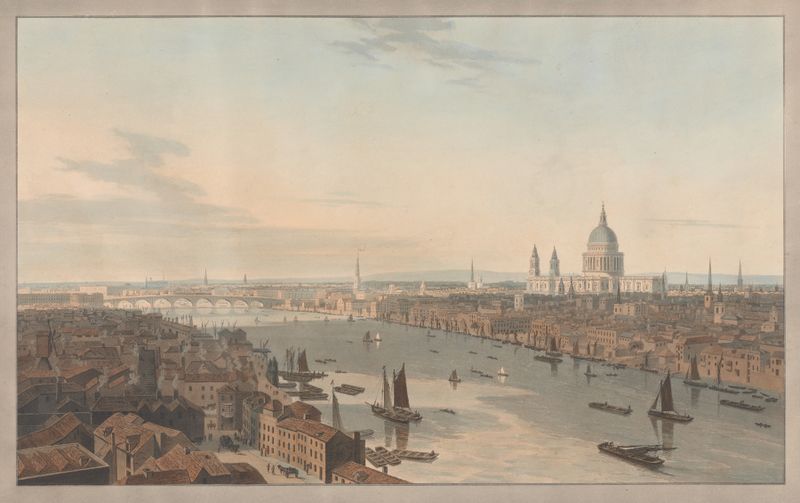
St. Paul’s and Blackfriars Bridge from Southwark
William Daniell
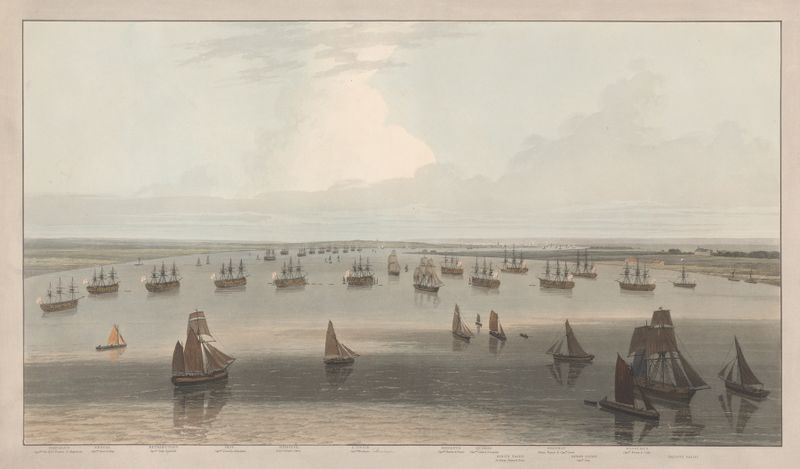
A View of the Frigates Stationed in the Hope under the Command of the Elder Brethen of the Trinity House, Thames Estuary
William Daniell

Main Entrance of the Jami Mosque, Jaunpur
William Daniell

London Bridge
William Daniell

London from Greenwich Park
William Daniell
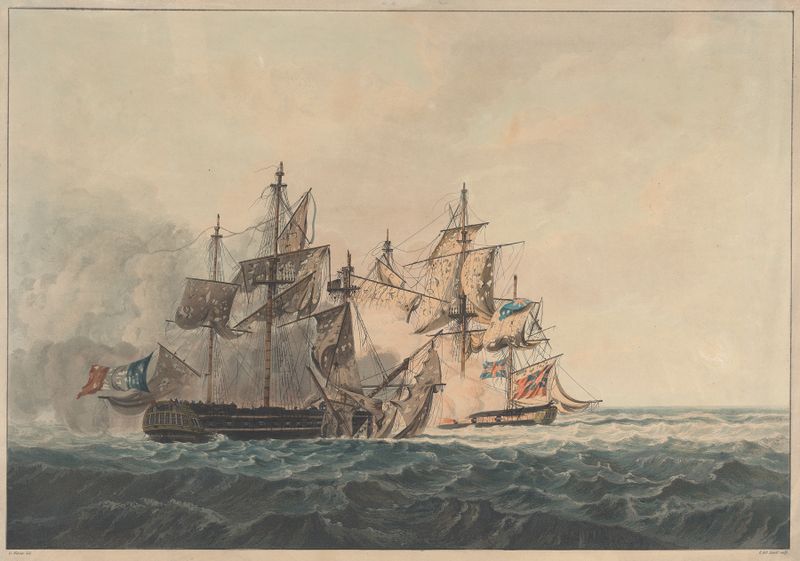
The Action between his Majesty’s Sloop ‘Bonne Citoyenne’ and the French Frigate ‘La Furieuse’
William Daniell
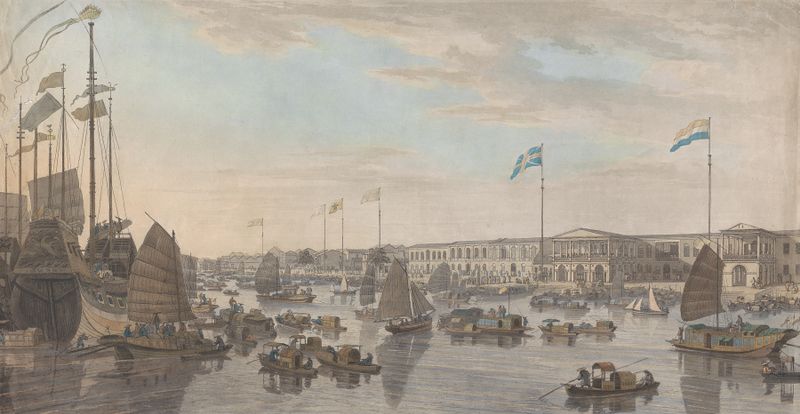
The European Factories at Canton in China
William Daniell

View of London Bridge and St. Paul’s Cathedral
William Daniell
View of the Town and Part of the Harbour of Falmouth from Pendennis Castel, Cornwall
William Daniell

Madras, or Fort St. George, in the Bay of Bengal — A Squall Passing Off
William Daniell





