
Bridge over a River — History & Facts
What if beauty was never meant to be finished? This poignant question echoes through the brushstrokes of a landscape that captures the fleeting essence of nature’s grace, inviting contemplation and a sense of yearning. Look to the foreground, where a delicate bridge arches gracefully over a shimmering river, its wooden beams harmonizing with the verdant surroundings. The light filters through the trees, dappling the water with soft reflections that dance with life. Notice how the subtle palette of greens and earthy tones combines with gentle blues and warm sunlight, creating a tranquil atmosphere that lures the eye deeper into the scene. Beneath the surface, there’s an emotional tension; the bridge, a symbol of connection, spans the flowing river, suggesting both a journey and a barrier.
The quiet solitude of the landscape evokes a sense of longing—perhaps for the past or for a moment that can never be recaptured. The stillness of the water contrasts with the bustling thoughts of the viewer, serving as a reminder of beauty's ephemerality and the desire to hold onto fleeting moments. In 1884, during a period of transition in his artistic journey, Rusiñol was living in Spain, where he began to embrace the Impressionist style. He sought to capture the emotional resonance of nature, fueled by the socio-political upheaval of the time.
This painting reflects not only his individual exploration but also a broader shift within the art world, as artists began to prioritize personal expression and the intimate connections forged with their surroundings.
More Artworks by Santiago Rusiñol
Browse all →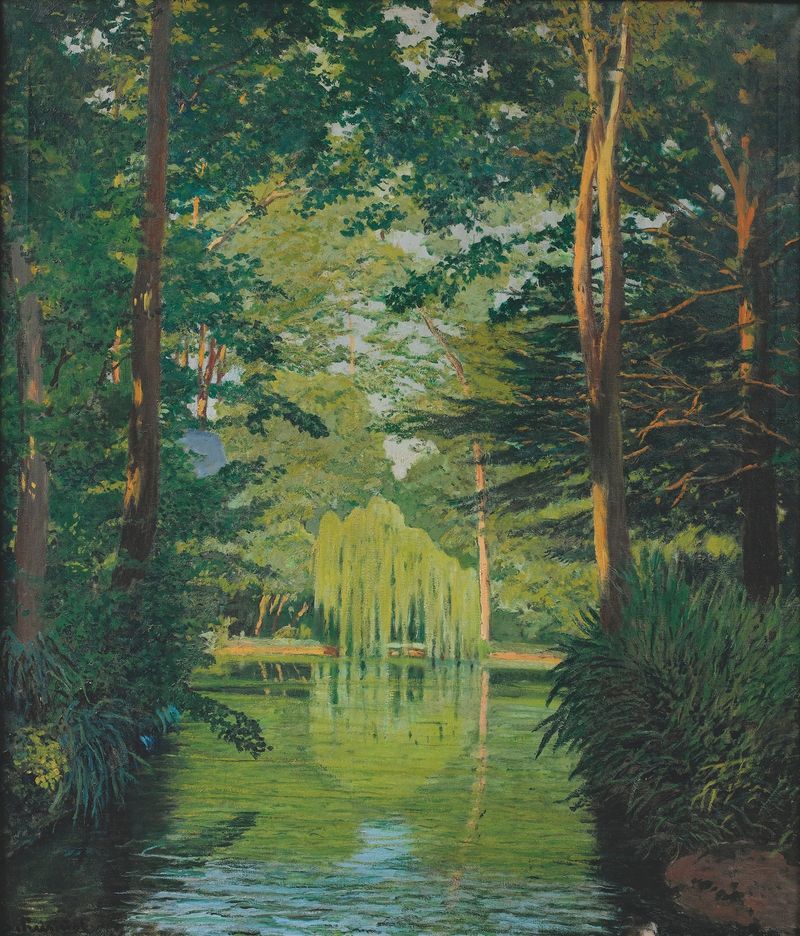
Parc Badés, Arbúcies
Santiago Rusiñol
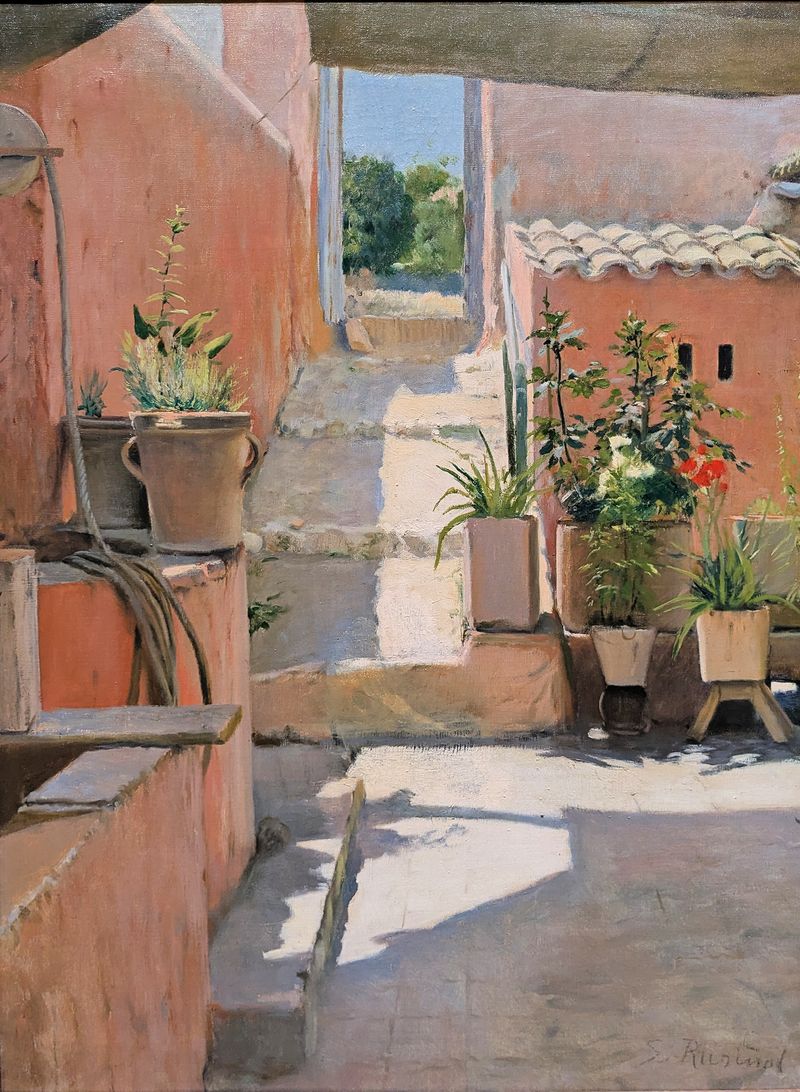
Patio in Sitges
Santiago Rusiñol
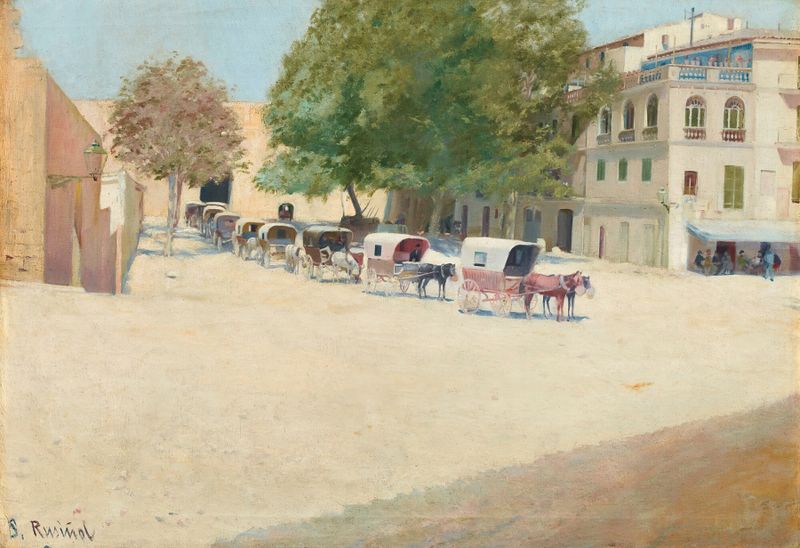
Paseo De Mallorca
Santiago Rusiñol
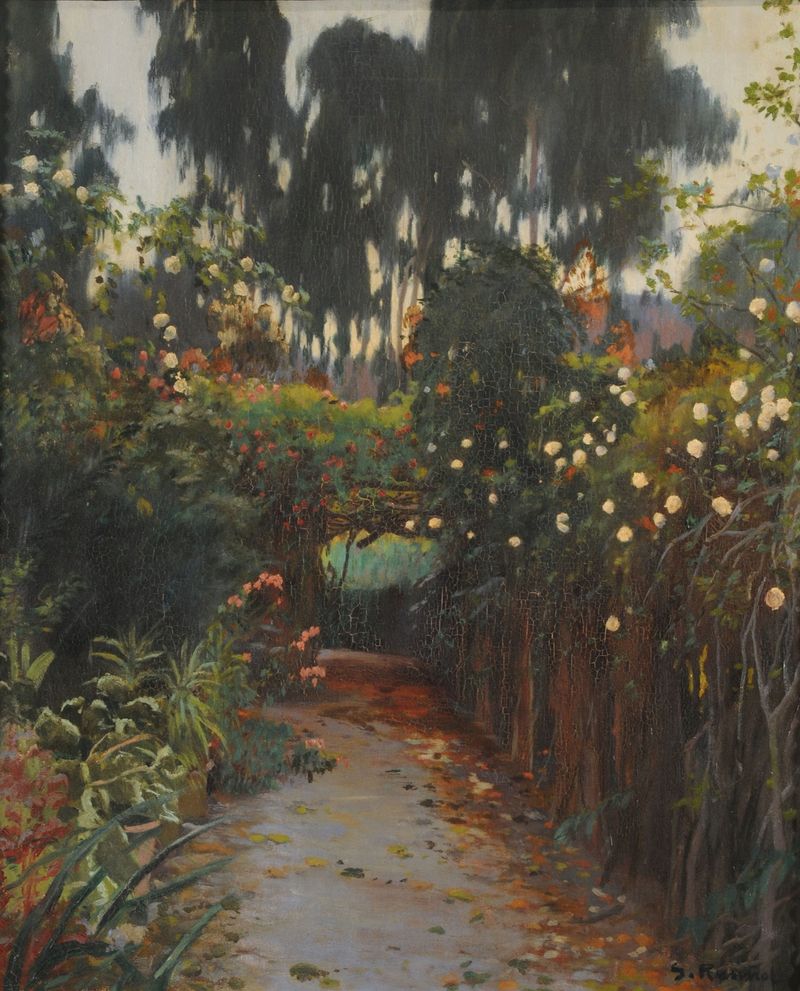
Camino de rosas
Santiago Rusiñol

Lavaderos De La Barceloneta
Santiago Rusiñol
Otoñal
Santiago Rusiñol

Cala Grisa
Santiago Rusiñol

Gardens of the Generalife
Santiago Rusiñol

Jardín De Sa Coma. Valdemosa
Santiago Rusiñol

La Fuente De Los Cipreses
Santiago Rusiñol





