
Otoñal — History & Facts
What secret hides in the quiet of the canvas? In a world filled with noise and chaos, Otoñal captures a moment where reflection awakens contemplation. Focus on the deep, warm hues that envelop the entire composition, wrapping it in a soft embrace. Look to the left, where the vibrant oranges and browns meld into one another, reminiscent of falling leaves. Notice how light filters softly through the branches, creating dappled shadows that dance across the ground.
The palette evokes a sense of nostalgia, inviting the viewer to linger in this tranquil autumn scene, where nature seems to pause and breathe. Yet, beneath this serene beauty lies a subtle tension. The stark contrast between the lively colors and the stillness of the setting suggests the fleeting nature of time. The layering of texture in the foliage hints at the complexities of life—each brushstroke a whisper of memories both cherished and lost.
This duality invites reflection on mortality, urging us to consider what remnants of joy and sorrow remain as seasons change. Santiago Rusiñol painted Otoñal in 1910 during a period of personal exploration and artistic evolution. Living in Barcelona, he was deeply influenced by the modernist movement, which sought to capture the essence of subjective experience. This work coincided with a time when Rusiñol was transitioning from vibrant, lively scenes to those that embrace a more introspective and contemplative mood, reflecting the emotional depth of human existence.
More Artworks by Santiago Rusiñol
Browse all →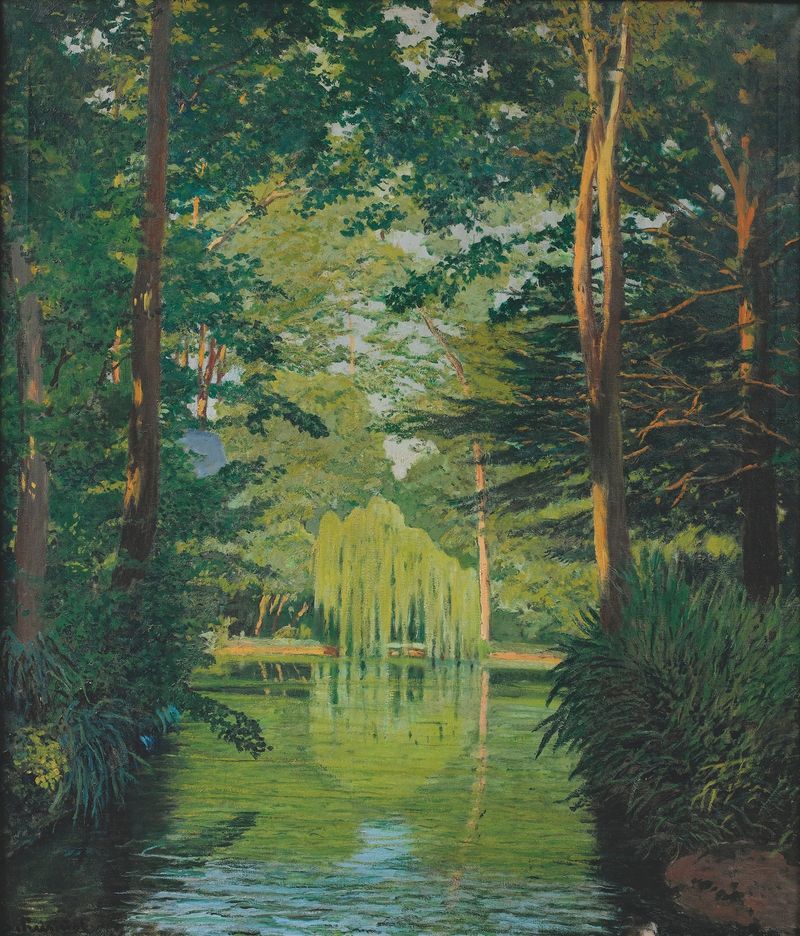
Parc Badés, Arbúcies
Santiago Rusiñol
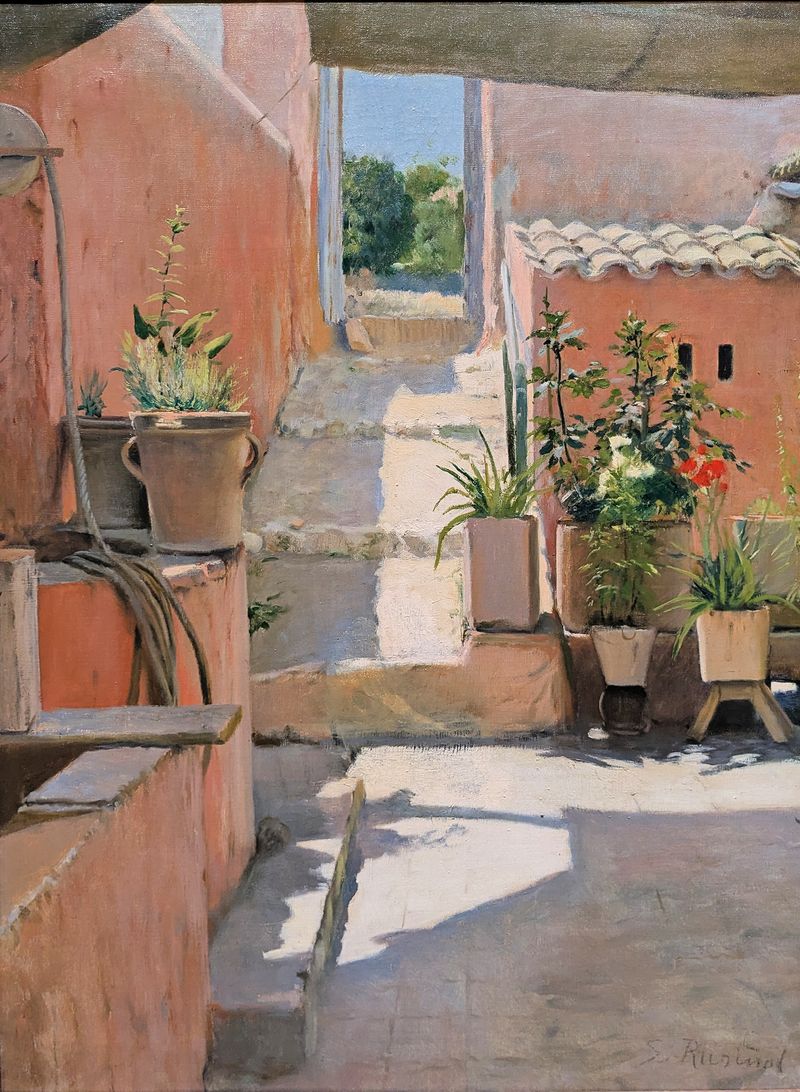
Patio in Sitges
Santiago Rusiñol
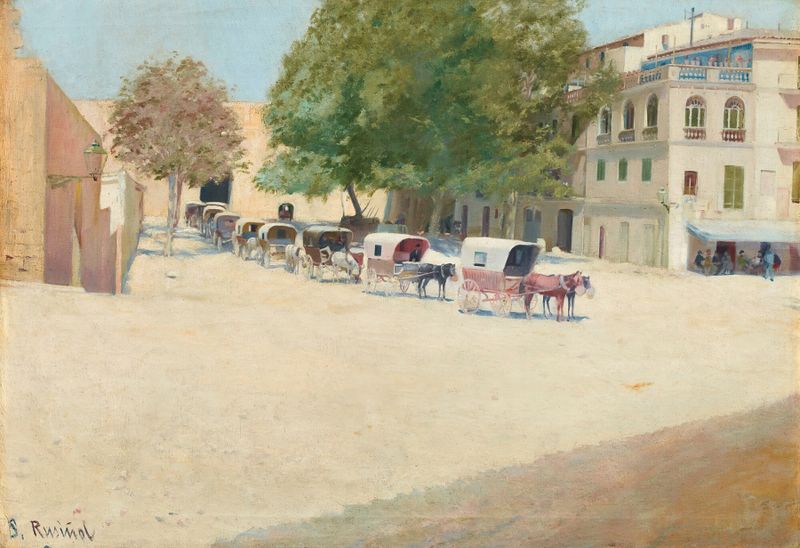
Paseo De Mallorca
Santiago Rusiñol
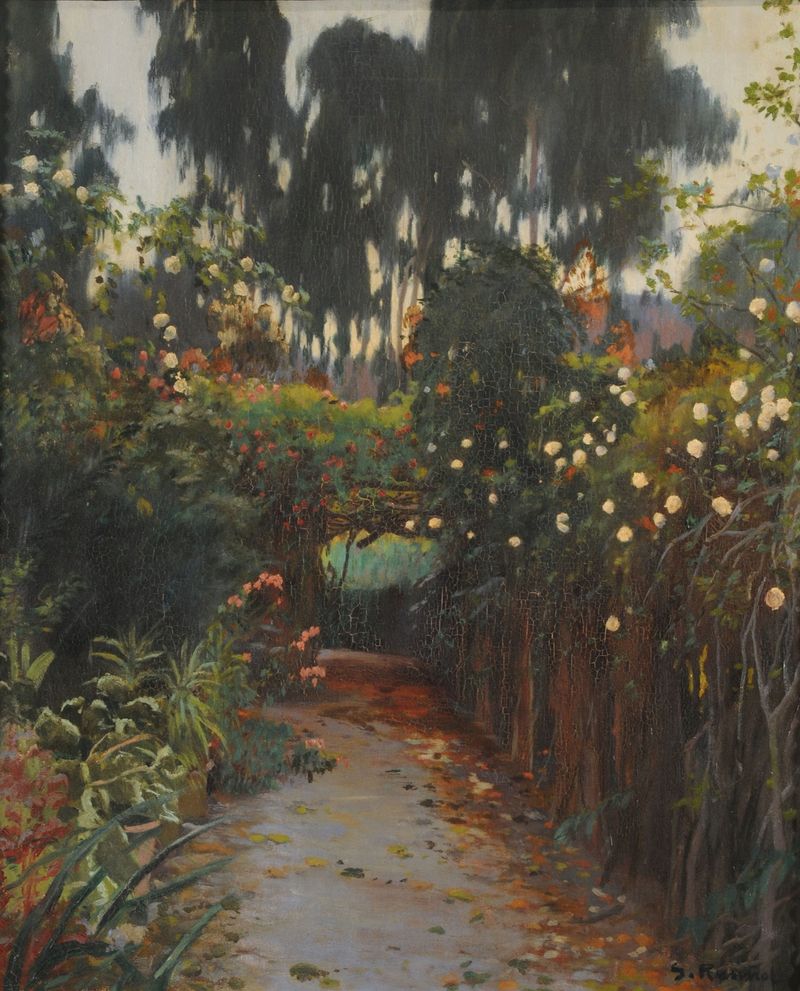
Camino de rosas
Santiago Rusiñol

Lavaderos De La Barceloneta
Santiago Rusiñol

Cala Grisa
Santiago Rusiñol

Gardens of the Generalife
Santiago Rusiñol

Jardín De Sa Coma. Valdemosa
Santiago Rusiñol

La Fuente De Los Cipreses
Santiago Rusiñol

The Blue Courtyard, Arenys
Santiago Rusiñol





