
Brook in the Forest II — History & Facts
What draws the eye first in Brook in the Forest II is the way sunlight seems to spill through the upper branches, scattering gold and pale green across the water’s surface. The brook itself acts as a silent mirror, doubling the tangled trees and luminous sky in a way that blurs the boundary between land and reflection. Notice how the painter’s brushwork shifts from quick, almost restless dashes in the foliage to broader, calmer sweeps in the water, inviting the viewer to linger on the play of light and shadow.
The palette is dominated by fresh greens and yellows, with sudden, earthy reds and browns anchoring the scene, suggesting a moment of quiet energy rather than stillness. The composition leads you gently from the shaded bank at the left, across the sunlit clearing, and into the mysterious depths beyond the bend. Painted by Antonín Hudeček by 1941, this work belongs to a long tradition of Central European landscape painting, where artists sought to capture the fleeting moods of nature rather than its grandest spectacles. By the early 20th century, painters like Hudeček were often working outdoors, embracing the Impressionist fascination with natural light and the changing seasons.
Such paintings were rarely grand commissions; more often, they were intimate studies, prized by collectors for their immediacy and freshness. Today, Brook in the Forest II is part of the Dorotheum collection, a reminder of how even a modest forest brook can become a stage for color, movement, and the quiet drama of observation. Let your gaze follow the water’s edge and imagine the hush of leaves overhead.
More Artworks by Antonín Hudeček
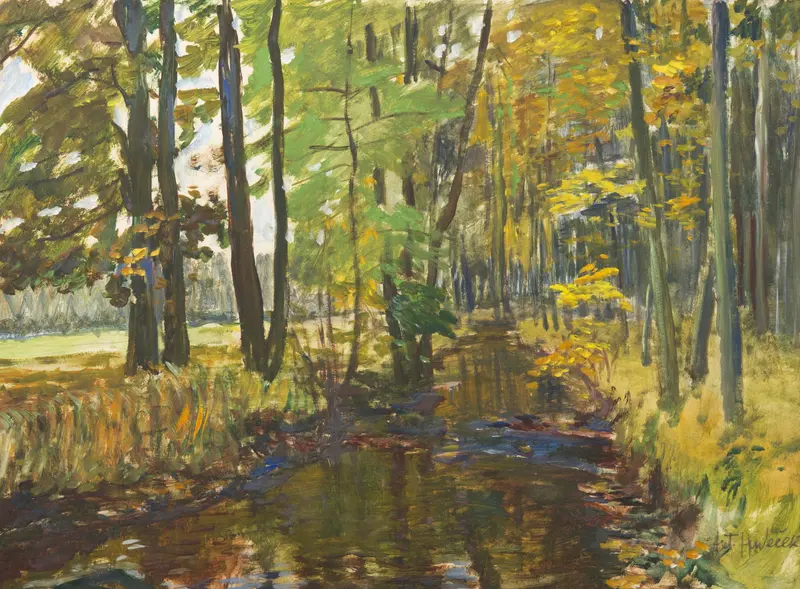
Brook In The Forest
Antonín Hudeček
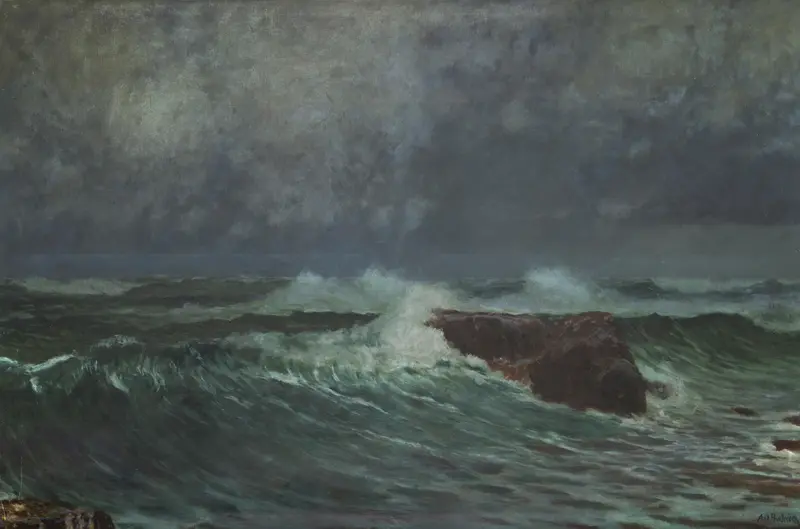
Before the Storm
Antonín Hudeček
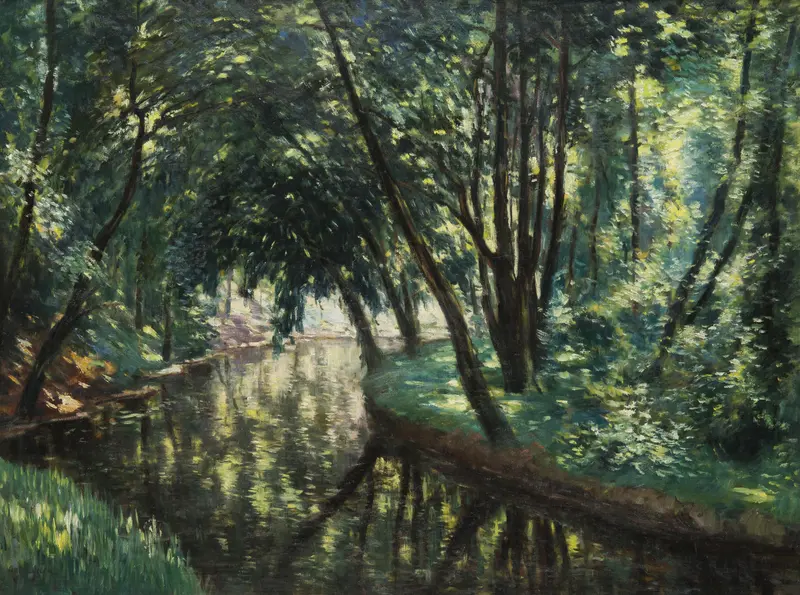
A Forest Still Life
Antonín Hudeček
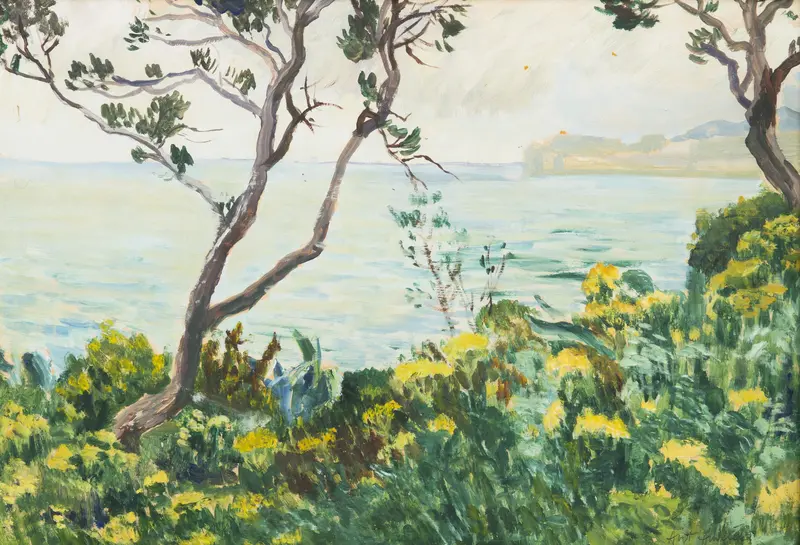
Seaside
Antonín Hudeček
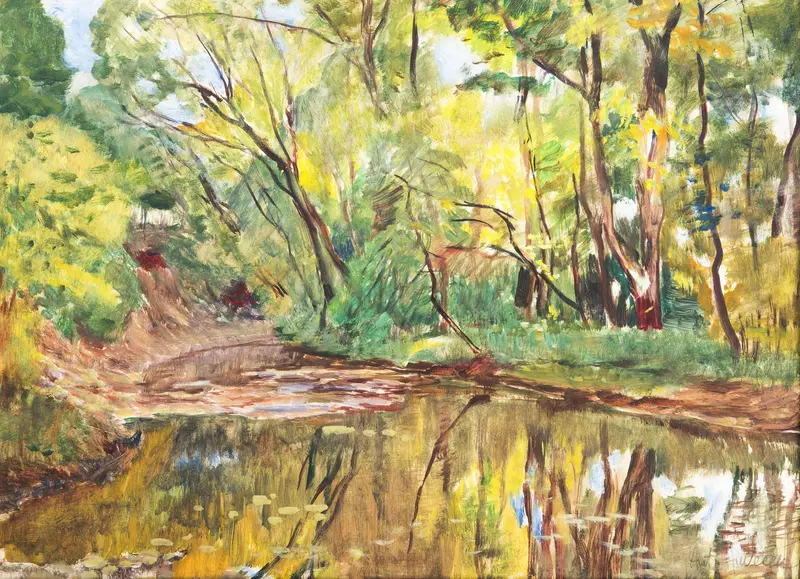
Brook In The Forest
Antonín Hudeček
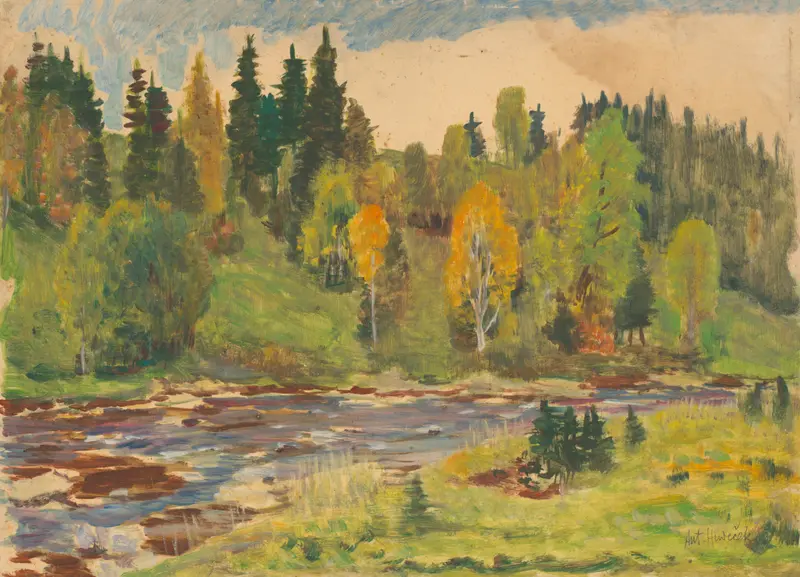
Krajina s potokom O 7009 Slovak National Gallery
Antonín Hudeček
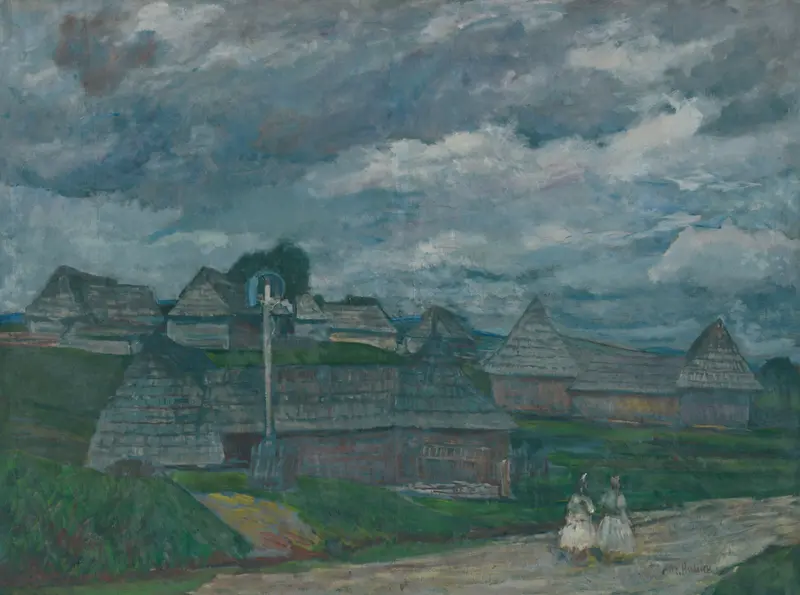
Motív z východného Slovenska O 1582 Slovak National Gallery
Antonín Hudeček
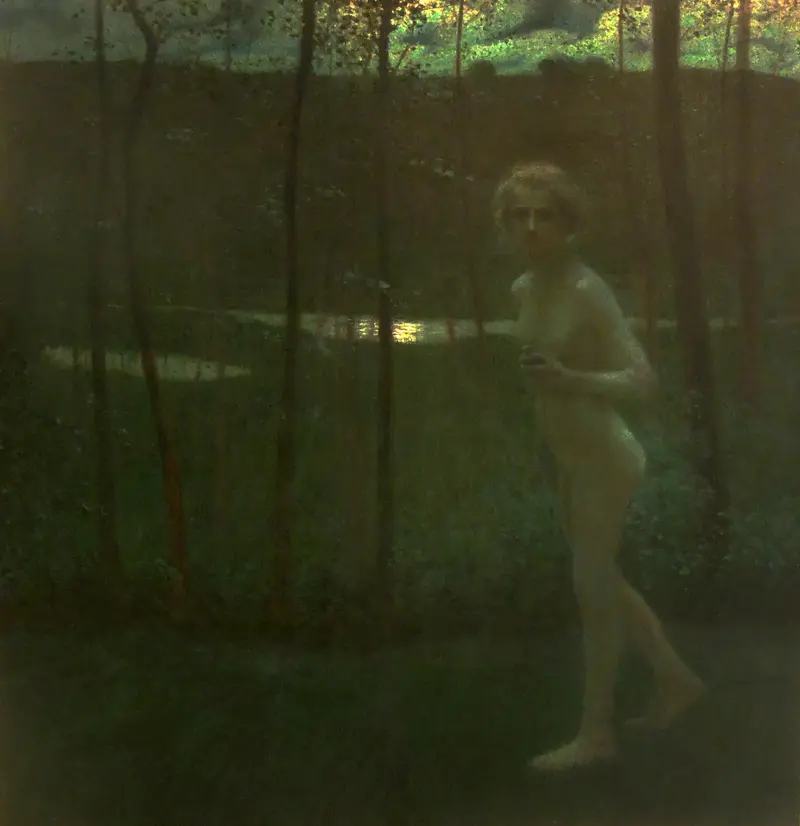
Psyche
Antonín Hudeček
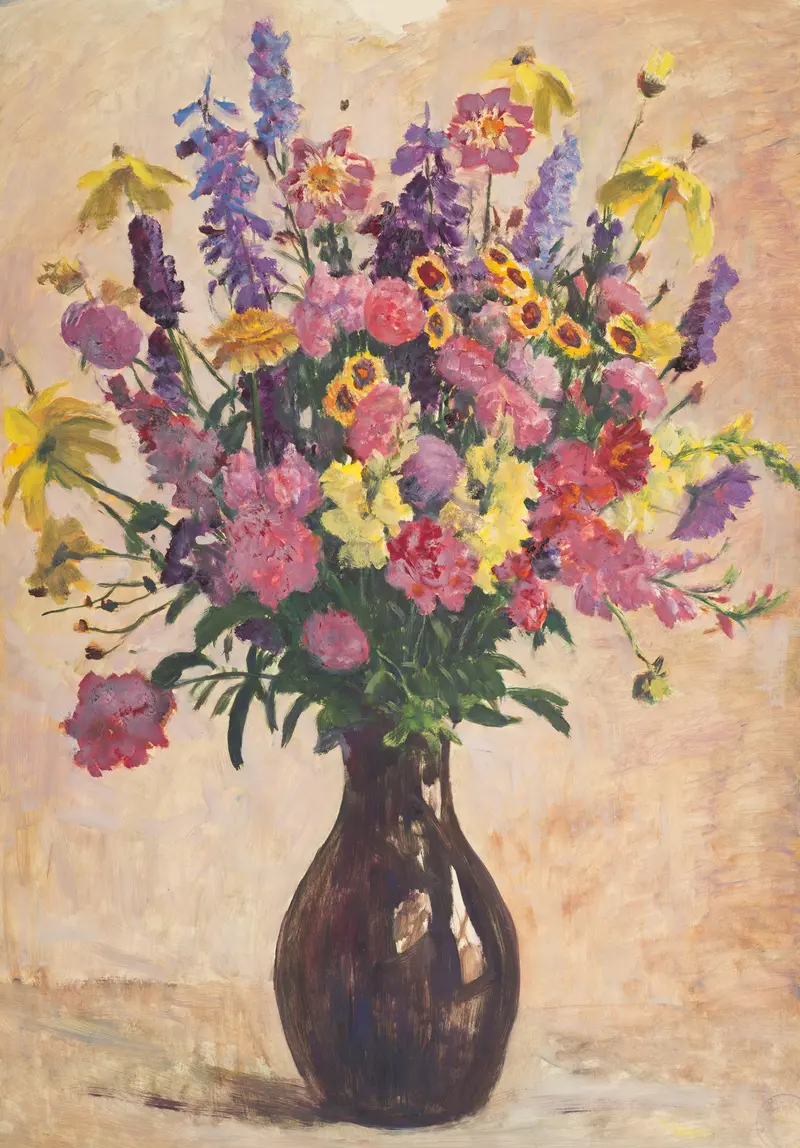
Bouquet in a Vase
Antonín Hudeček
More Landscape Art

The Starry Night
Vincent van Gogh

View of Delft
Johannes Vermeer

Water Lilies
Claude Monet

The Grand Canal, Venice, looking north-west from the Ca' Corner to the Ca' Contarini degli Scrigni, with the campanile of Santa Maria della Carità
Canaletto

Windsor Castle
Canaletto

The Grand Canal looking North-East from the Palazzo Dolfin-Manin to the Rialto Bridge
Canaletto