
Buckingham Palaces — History & Facts
What first catches the eye in Buckingham Palaces is the sweep of open sky, dwarfing the buildings below and lending a sense of quiet grandeur to the scene. The painter, Adriaen van Diest, leads us gently along a winding drive, where a carriage and riders animate the foreground, their presence hinting at life and movement within this ordered landscape. The main palace rises at the heart of the composition, its brickwork warm against the green of the park, while the enclosing wall and distant flocks of birds suggest both security and openness.
The light falls softly, casting long shadows and drawing attention to the careful geometry of the grounds—a world of symmetry and control, but never stillness. Painted in 1703, this view belongs to an era when grand country houses and palaces were not only homes but statements of power and taste. Such paintings were often commissioned to record estates at a moment of pride or transformation, serving as both documentation and display. The Royal Collection holds this work, a reminder of how these images once circulated among the elite, reinforcing status and lineage.
Little is recorded about this particular painting’s early journey, but its survival allows us to step into the world of early eighteenth-century England, where architecture, landscape, and society were in constant conversation. Look again, and notice how the painter’s careful balance of human activity and stately calm invites you to imagine the rhythms of life within those walls.
More Artworks by Adriaen van Diest
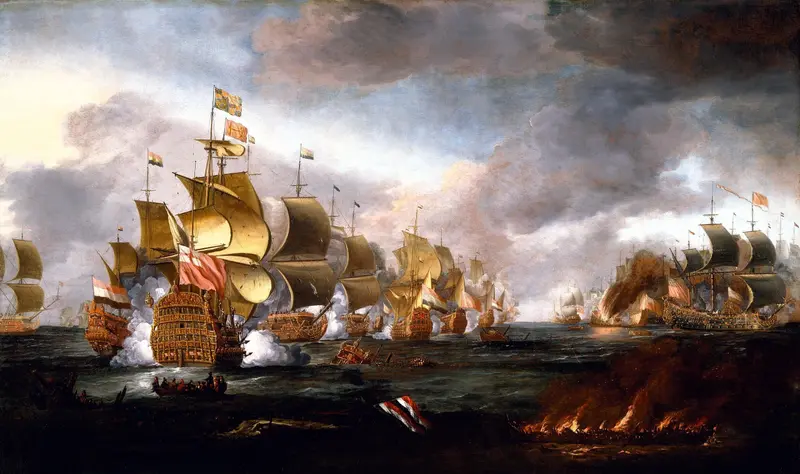
The Battle of Lowestoft, 3 June 1665; Engagement between the English and Dutch Fleets.
Adriaen van Diest
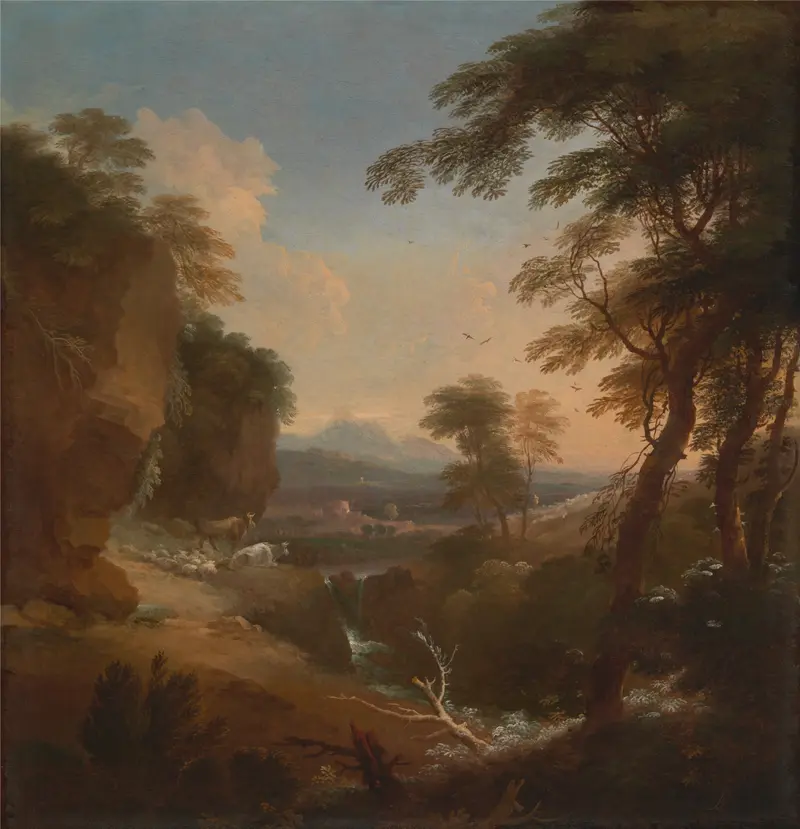
Landscape with Distant Mountains
Adriaen van Diest
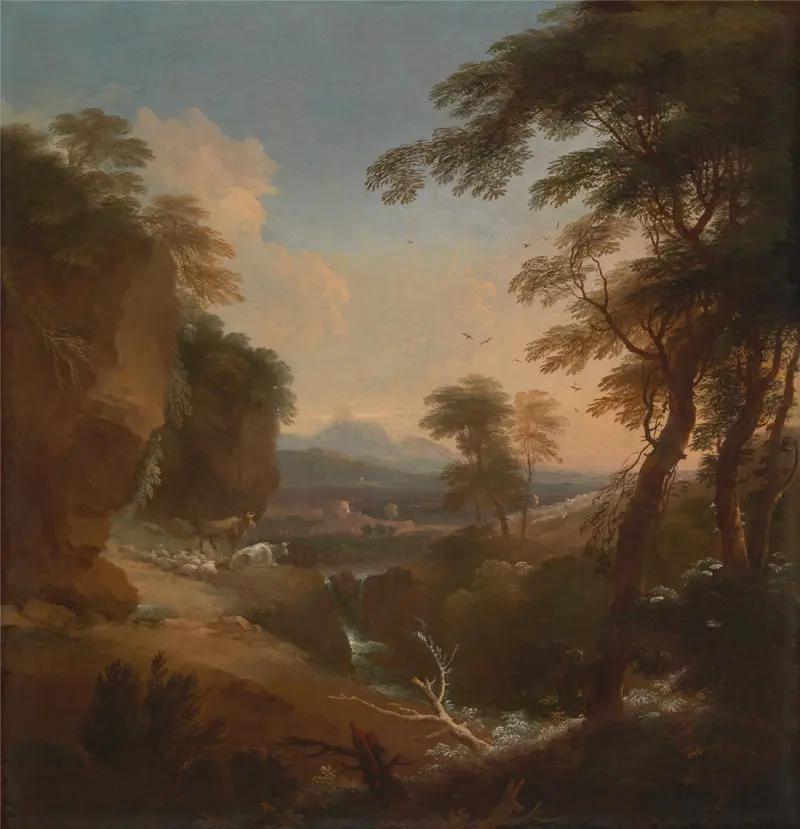
Landscape with Distant Mountain
Adriaen van Diest
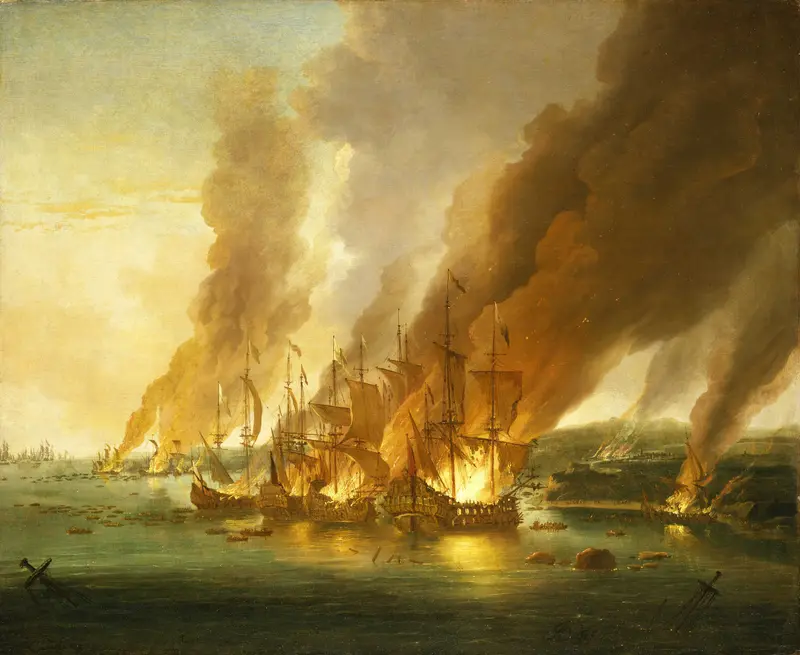
The Battle of La Hogue, 23 May
Adriaen van Diest
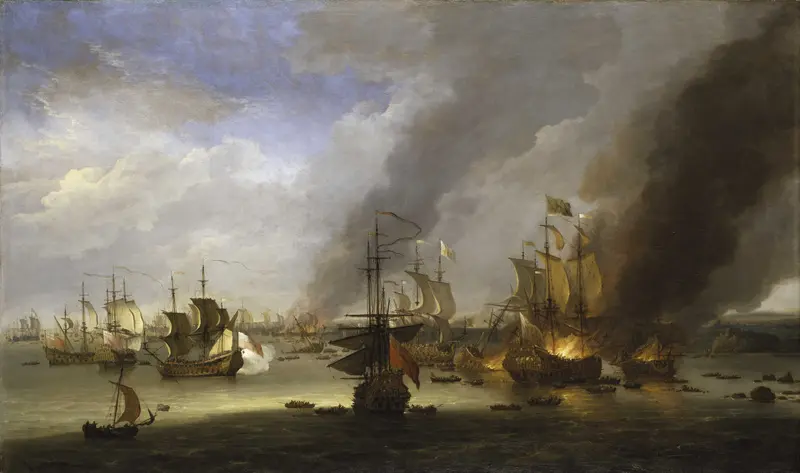
Destruction of the Soleil Royal at the Battle of La Hogue, 23 May
Adriaen van Diest
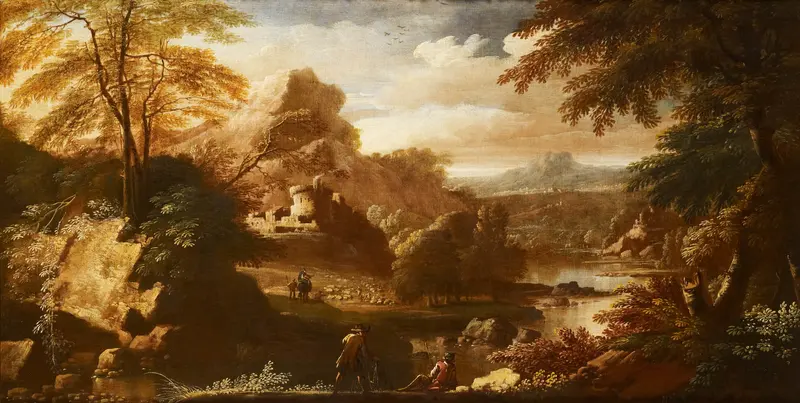
Landscape with Figures
Adriaen van Diest
More Landscape Art

The Starry Night
Vincent van Gogh

View of Delft
Johannes Vermeer

Water Lilies
Claude Monet

The Grand Canal, Venice, looking north-west from the Ca' Corner to the Ca' Contarini degli Scrigni, with the campanile of Santa Maria della Carità
Canaletto

Windsor Castle
Canaletto

The Grand Canal looking North-East from the Palazzo Dolfin-Manin to the Rialto Bridge
Canaletto