
Landscape with Figures — History & Facts
A golden haze settles over the valley, drawing the eye first to the ruins of a castle perched on a rocky rise—half-claimed by the wilderness, half-remembered by the figures who wander its shadow. In Landscape with Figures, Adriaen van Diest leads us through a world where nature and history intertwine, the past lingering in stone while daily life continues below. The path curves gently from the darkened foreground, where two travelers pause—one standing, one reclining—inviting us to step into their shoes and trace the journey ourselves.
Light pools on the water and dances across the foliage, guiding attention from the intimacy of human presence to the vastness of the distant mountains. The palette, rich with ochres and greens, sets a mood of quiet reflection, as if the land itself is caught between memory and possibility. Painted in 1690, this work belongs to a moment when landscape painting flourished across Europe, prized by collectors for its power to conjure both escape and contemplation. Artists like van Diest—often working for the English or Dutch elite—crafted these scenes for private enjoyment, offering windows onto imagined pasts or idealized natures.
The Royal Collection, where this painting now resides, holds many such visions, each a fragment of the era’s fascination with the interplay of civilization and wilderness. History has kept few traces of this particular canvas’s journey before it entered royal hands, but its enduring allure lies in how it balances the grandeur of nature with the stories of those who pass through it. Stand before it long enough, and the landscape seems to invite you to invent your own path among its trees and ruins.
More Artworks by Adriaen van Diest
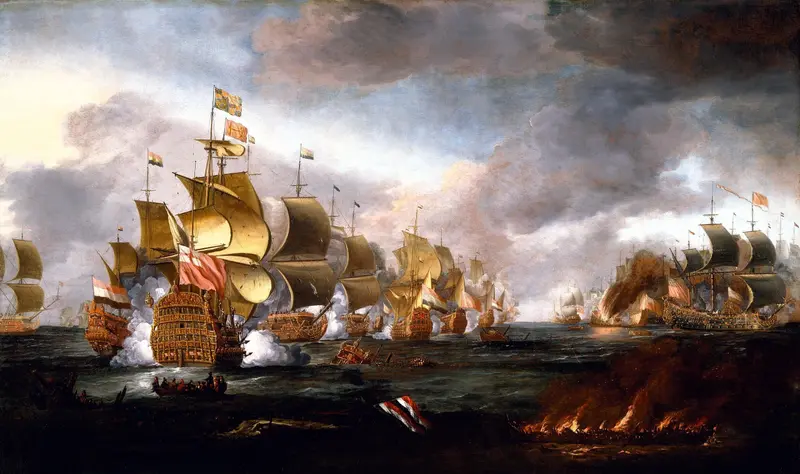
The Battle of Lowestoft, 3 June 1665; Engagement between the English and Dutch Fleets.
Adriaen van Diest
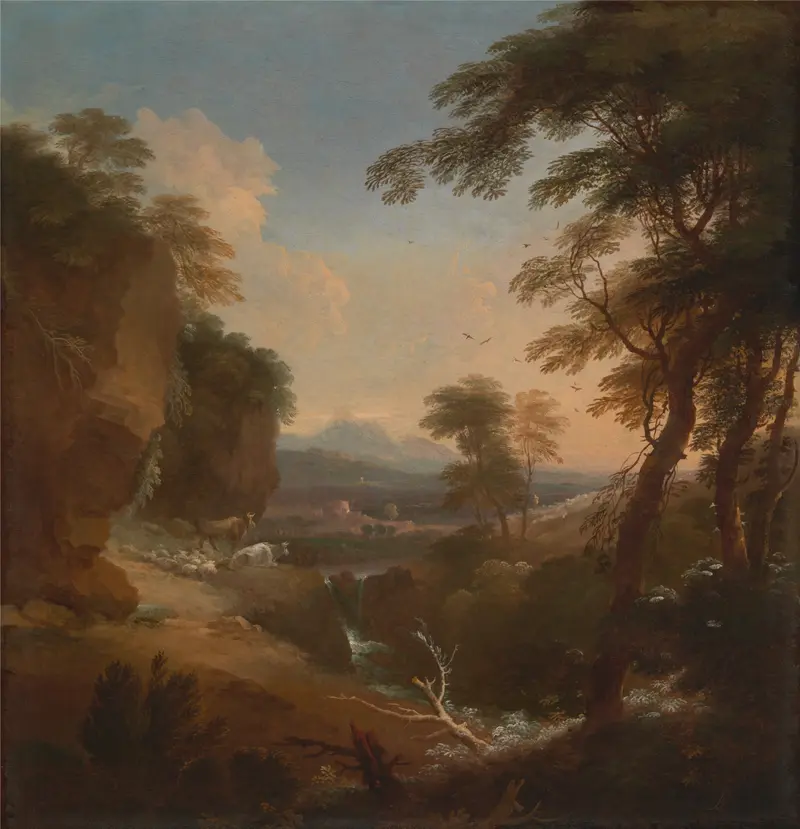
Landscape with Distant Mountains
Adriaen van Diest
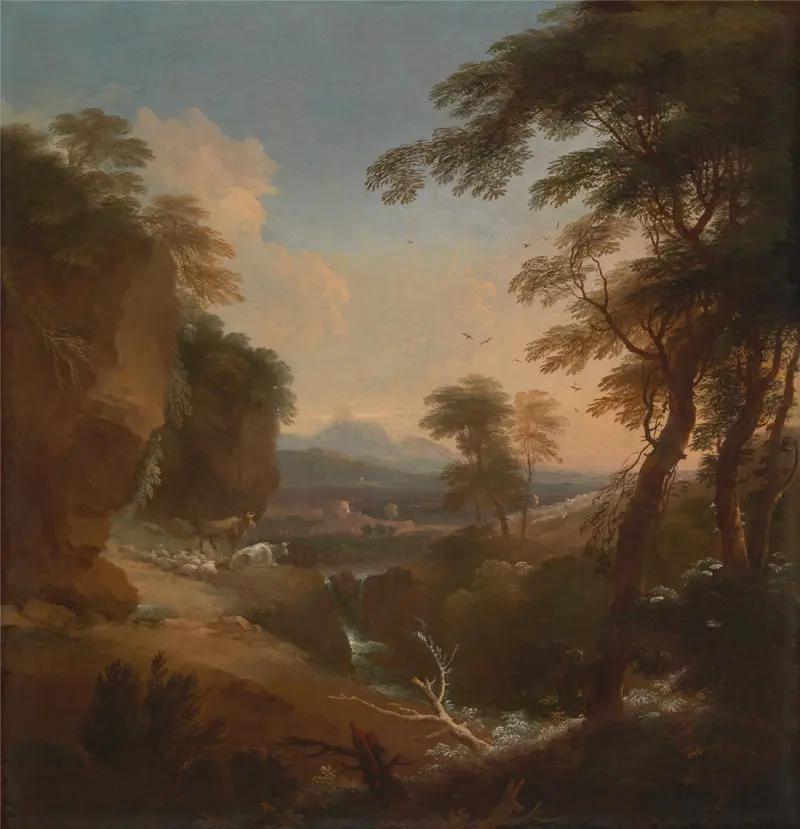
Landscape with Distant Mountain
Adriaen van Diest
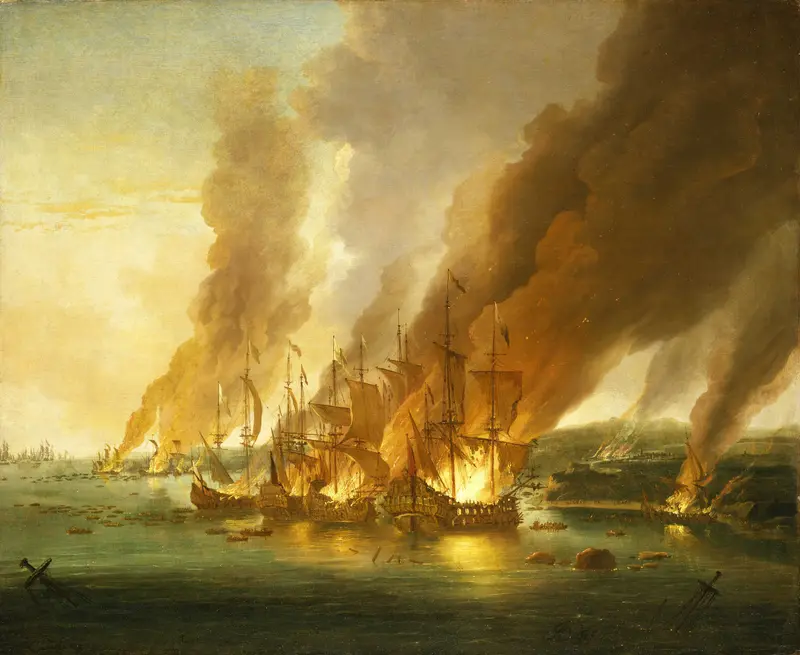
The Battle of La Hogue, 23 May
Adriaen van Diest
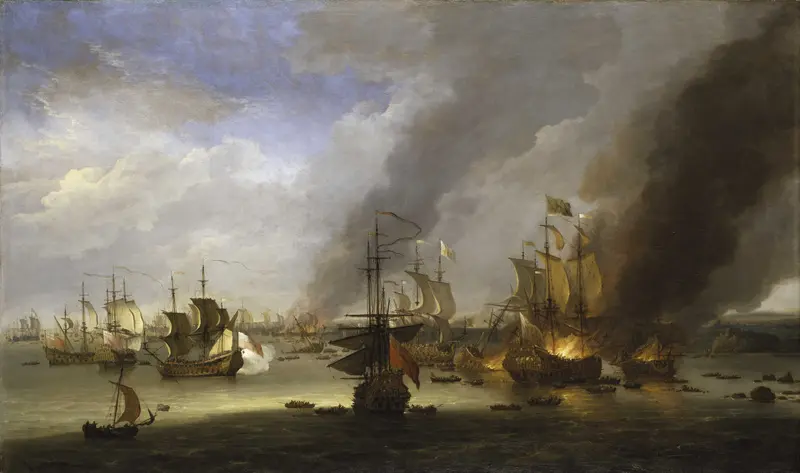
Destruction of the Soleil Royal at the Battle of La Hogue, 23 May
Adriaen van Diest
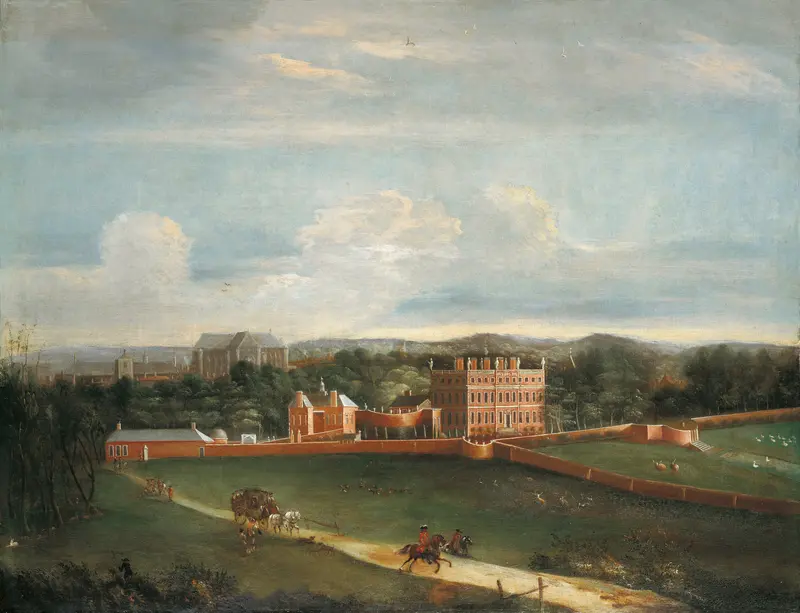
Buckingham Palaces
Adriaen van Diest
More Landscape Art

The Starry Night
Vincent van Gogh

View of Delft
Johannes Vermeer

Water Lilies
Claude Monet

The Grand Canal, Venice, looking north-west from the Ca' Corner to the Ca' Contarini degli Scrigni, with the campanile of Santa Maria della Carità
Canaletto

Windsor Castle
Canaletto

The Grand Canal looking North-East from the Palazzo Dolfin-Manin to the Rialto Bridge
Canaletto