Burgruine — History & Facts
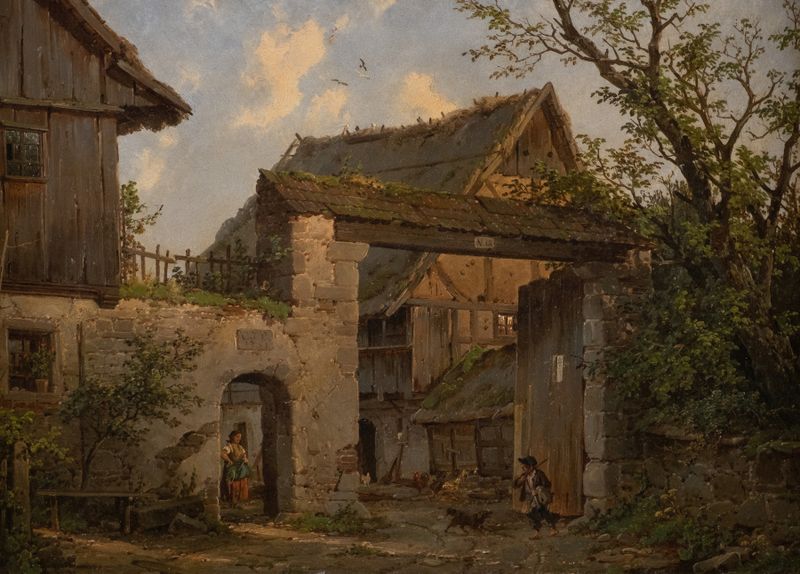
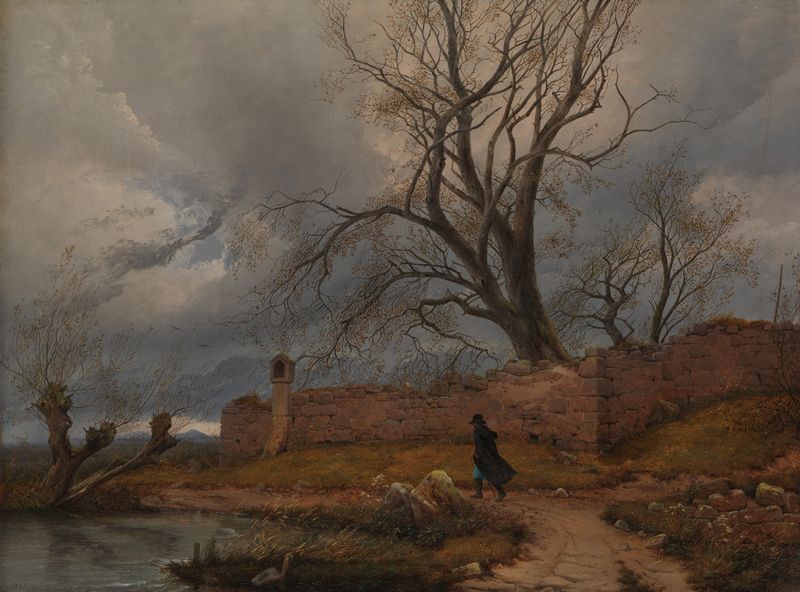
In the stillness of time, echoes of the past linger, whispering secrets of bygone eras. The interplay between nostalgia and memory breathes life into this artwork, inviting us to traverse the realm of history. Look to the left at the crumbling facades of the castle, where shadows dance around the weathered stones. Notice how the light filters through the trees, casting soft glimmers upon the rugged architecture that stands proudly against a backdrop of rolling hills.
The palette of muted greens and browns evokes both decay and resilience, while the artist’s delicate brushwork captures the texture of stone and foliage, bridging the gap between the natural and the man-made. There’s a poignant contrast between the solidity of the castle and the soft, ephemeral light that envelops it, revealing a tension between permanence and transience. Each fragment of the structure tells a story of strength challenged by time, while the surrounding verdant landscape suggests a cycle of rebirth that continually intertwines with human endeavors. The nostalgia woven into the composition invites viewers to reflect on their own experiences with history, loss, and the passage of time. In 1840, while residing in Germany, Carl Julius von Leypold painted this evocative scene during a period marked by Romanticism’s rise, a movement that sought to explore emotional depth and individual experience.
The world was in a state of transformation, grappling with ideas of identity and heritage, which profoundly influenced his work. Leypold's fascination with ruins often mirrored the cultural introspection of his time, revealing how art can serve as both a refuge and a reminder of what has been lost.